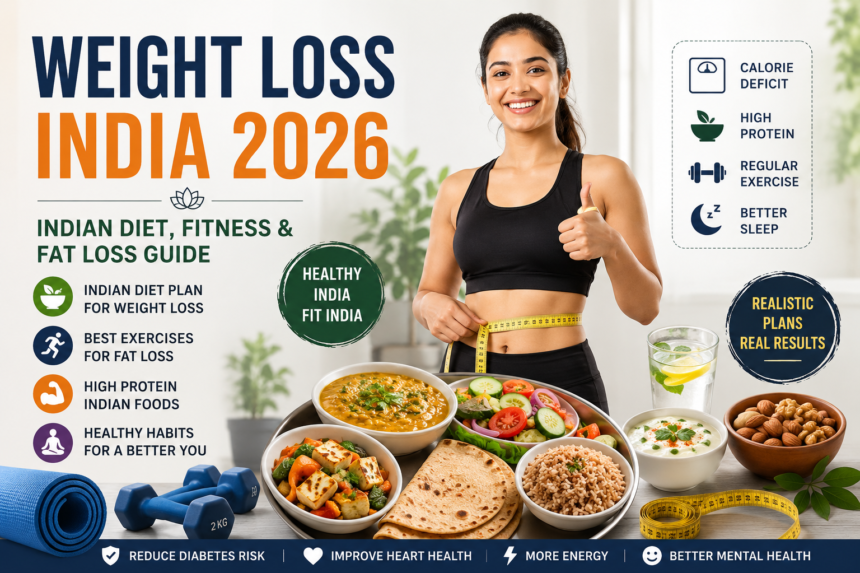
Weight Loss India 2026, Obesity and overweight conditions have reached epidemic proportions in India. The National Family Health Survey (NFHS-5) data shows that overweight and obesity rates have increased across virtually all age groups, states, and income levels. In urban India, where sedentary desk jobs, food delivery apps, and increasingly processed diets have replaced physical activity and home-cooked meals, weight gain has become one of the most common and consequential health challenges of 2026.
Yet for all the noise around weight loss in India — the celebrity diets, the keto apps, the detox teas, the gym memberships that go unused — the fundamental science of weight loss remains simple and unchanged. This guide cuts through the confusion and gives you an honest, evidence-based, culturally appropriate approach to weight loss that actually works for Indian bodies, Indian food, and Indian lifestyles.
Why Weight Loss Is Different for Indians: Understanding Indian Body Types
The Indian Paradox
Indian bodies face a unique metabolic challenge: Indians develop obesity-related health complications — diabetes, heart disease, fatty liver — at significantly lower BMI levels than Western populations. An Indian with BMI 25 (technically ‘normal’ by Western standards) may have the metabolic profile of an obese Westerner. This is because Indians tend to store excess fat preferentially in the abdominal and visceral (internal organ) fat depots rather than subcutaneous fat — and visceral fat is metabolically far more dangerous.
Practical implication: Waist circumference is a more important metric for Indians than BMI. Target waist below 90cm for Indian men and below 80cm for Indian women — regardless of your overall weight.
The Carbohydrate Issue
Weight Loss India 2026, Indian cuisine is built around high-glycaemic-index carbohydrates — white rice, wheat rotis, maida, sugar, and potatoes. While these foods are not inherently ‘bad’, the quantities in which they are consumed — particularly in the absence of sufficient protein, fibre, and physical activity — drive insulin spikes, promote fat storage, and disrupt appetite regulation. The most impactful dietary change most Indians can make is moderating their refined carbohydrate intake.
The Best Indian Diet Plan for Weight Loss in 2026
Core Principles
Forget the crash diets, the soup cleanses, and the meal replacement shakes. Sustainable weight loss for Indians comes from applying four evidence-based principles consistently:
- Caloric deficit: You must consume fewer calories than you burn — typically 300-500 calories less per day for healthy 0.5-1 kg per week weight loss
- High protein: Protein increases satiety, preserves muscle mass during weight loss, and has the highest thermic effect (burns most calories during digestion). Most Indians eat far too little protein
- Fibre-first: Eating high-fibre foods (vegetables, legumes, whole grains) first at each meal slows glucose absorption and increases satiety
- Meal timing: Avoid eating within 2-3 hours of bedtime — late-night eating promotes fat storage
What to Eat: Indian Weight Loss Diet
- Breakfast: Eggs (2-3) with vegetables, or besan chilla with curd, or oats with protein powder — high protein start is essential
- Lunch: 1-2 small rotis (whole wheat) or half cup brown rice + 1 cup dal or sabzi + 100-150g paneer or lean meat + large vegetable salad
- Evening snack: Handful of unsalted nuts + 1 piece fruit OR Greek yogurt — avoid biscuits, chips, or fried snacks
- Dinner: Skip rice or roti — instead have 150-200g protein (chicken, fish, eggs, paneer, tofu) + 2-3 cups vegetables (sabzi) + dal
- Drink: 2.5-3 litres of water daily — replace chai with sugar with black coffee, green tea, or jeera water
Indian Superfoods for Weight Loss
- Dals and legumes: High protein, high fibre, low calorie — eat at every meal
- Ragi (finger millet): Low GI, high calcium and fibre — excellent rice replacement
- Methi seeds: Soaked methi water in morning reduces appetite and improves insulin sensitivity
- Coconut (in moderation): Provides MCTs which are more readily burned for energy than other fats
- Turmeric: Curcumin reduces inflammation associated with obesity
- Curd (plain, unsweetened): Probiotic benefits improve gut health which affects weight regulation
What to Avoid or Reduce
- White rice in large portions — switch to smaller portions or ragi, jowar alternatives
- Maida-based foods: Bread, biscuits, naan, paratha with excess ghee, samosa, kachori
- Sugary beverages: Chai with sugar, packaged juices, cola — these are liquid calories that don’t satisfy hunger
- Deep-fried snacks: Chips, pakoda, bhujia — high calorie density with minimal nutrition
- Late-night eating: Most dangerous pattern for abdominal fat accumulation in Indians
Exercise for Weight Loss: What Works for Indians in 2026
The Best Exercise Combination
Weight Loss India 2026, Research consistently shows that the most effective exercise protocol for fat loss combines resistance training (building and maintaining muscle) with cardiovascular exercise. Muscle is metabolically active — it burns calories even at rest — making resistance training the long-term foundation of sustainable weight management.
- Resistance training: 3 times per week — bodyweight exercises at home (squats, push-ups, lunges, planks) or gym weights
- Cardio: 150 minutes per week of moderate intensity — brisk walking, cycling, swimming, dancing
- Steps: 8,000-10,000 steps per day — a brisk 45-minute walk typically covers 5,000-6,000 steps
- HIIT (High Intensity Interval Training): 2-3 times per week — 20 minutes of intense intervals burns significant calories and improves metabolic rate
Exercise for Different Indian Lifestyles
Office workers in Indian cities face the twin challenges of long commutes and sedentary desk jobs. Practical solutions: cycle or walk the last kilometre of your commute; use stairs instead of lifts; do 5-minute standing and stretching breaks every hour; use lunch breaks for a 20-minute walk.
For homemakers: YouTube workout videos, yoga sessions (which also provide mental health benefits), and household activities like mopping, gardening, and climbing stairs all contribute to daily calorie burning. Structure them intentionally rather than treating them as background activities.
Why Most Indian Weight Loss Attempts Fail
The Crash Diet Trap
Indian social media is full of ‘7-day detox’ and ’10kg in a month’ diet promises. These extreme caloric restrictions cause rapid initial weight loss (mostly water and muscle) followed by metabolic adaptation, intense hunger, and inevitable weight regain — often beyond the starting weight. This cycle of yo-yo dieting is genuinely harmful, reducing muscle mass and making subsequent weight loss harder each time.
The Protein Gap
The average Indian diet is dramatically protein-deficient. Plant-based protein sources (dal, paneer, soy) are underconsumed, and many vegetarians eat insufficient quantities even of these. Inadequate protein during weight loss causes muscle loss rather than fat loss — reducing metabolic rate and making weight maintenance impossible without perpetual caloric restriction.
The Sleep Connection
Poor sleep is dramatically underrecognised as a weight gain driver in India. Sleep deprivation increases ghrelin (hunger hormone) and reduces leptin (satiety hormone) — causing increased appetite and specifically craving for high-calorie processed foods. The combination of India’s long working hours, screen time, and late-night eating habits creates chronic sleep deficiency that actively sabotages weight loss efforts.
Ozempic and Weight Loss Injections in India 2026
Semaglutide (Ozempic, Wegovy) — the GLP-1 receptor agonist medication that has transformed weight loss outcomes in the US and Europe — is now available in India in 2026, though supply remains limited and cost is significant (Rs 8,000-15,000 per month). These medications reduce appetite powerfully and help patients lose 15-20% of body weight over 1-2 years. They are prescription medications and should only be used under medical supervision for patients with obesity (BMI 30+) or overweight (BMI 27+) with co-morbidities like diabetes or hypertension.
Realistic Weight Loss Timeline for Indians
- Week 1-2: 1-2 kg loss (mostly water weight from reduced carbohydrates)
- Month 1: 2-4 kg fat loss if following diet and exercise consistently
- Month 3: 6-10 kg total loss is realistic and sustainable
- Month 6: 10-15 kg total loss with sustained lifestyle changes
Expect plateaus — they are normal and do not mean failure. When a plateau hits, reassess your portion sizes, increase exercise intensity, or consult a registered dietitian.
Read More: Health Insurance in India 2026: Best Policies, Coverage & Buying Guide
Conclusion
Weight Loss India 2026, The most important insight about weight loss for Indians in 2026 is this: there is no shortcut. The body responds to consistent caloric deficit, adequate protein, regular exercise, good sleep, and stress management — applied over months, not days. But the health rewards — reduced diabetes risk, better blood pressure, more energy, improved mental health, and a longer life — are extraordinary.
Taza Newsz covers health, nutrition, fitness, and wellness news for Indian audiences. Follow us for evidence-based health guidance, diet tips, and fitness resources relevant to Indian lives.