
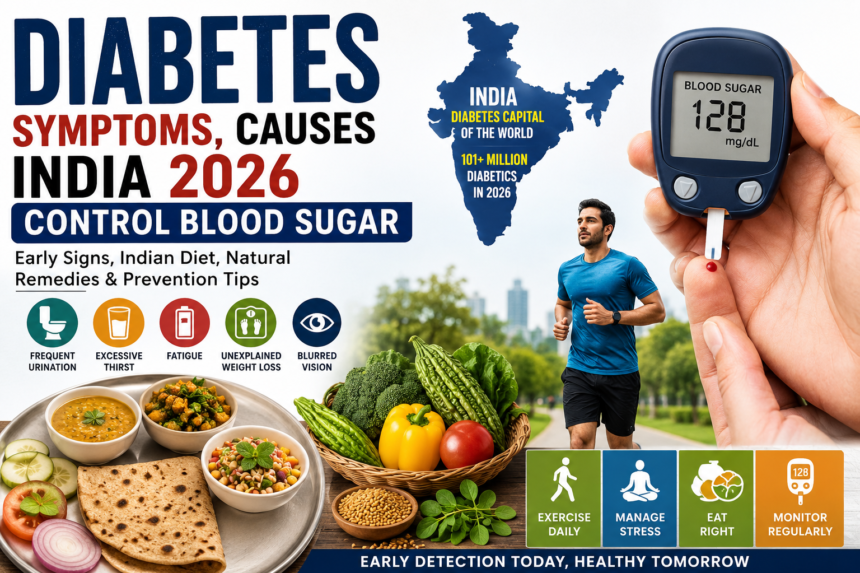
Diabetes Symptoms Causes India 2026 Control Blood Sugar, India is now officially the diabetes capital of the world. With over 101 million diabetics as of 2026, India has surpassed every other nation in the sheer number of people living with this chronic metabolic condition. The Economic Survey 2025-26 specifically flagged rising diabetes as a major public health emergency, warning that sedentary lifestyles, unhealthy diets, and excessive screen time are accelerating the epidemic among younger Indians at an alarming rate.
What makes this particularly concerning is that millions of Indians are diabetic without knowing it. The disease is often silent in its early stages, progressing quietly while causing damage to the eyes, kidneys, nerves, and heart. Early detection and lifestyle changes can prevent or significantly delay the most serious complications — making awareness the single most powerful weapon against India’s diabetes crisis.
This comprehensive guide covers everything you need to know — early symptoms, causes, the difference between Type 1 and Type 2 diabetes, a practical Indian diet chart for diabetics, and natural, evidence-based ways to control your blood sugar.
What Is Diabetes? A Simple Explanation
Diabetes Symptoms Causes India 2026 Control Blood Sugar, Diabetes is a condition in which the body either does not produce enough insulin (Type 1) or cannot use insulin effectively (Type 2), resulting in elevated blood sugar (glucose) levels. Insulin is a hormone produced by the pancreas that acts like a key — it allows glucose from the food you eat to enter cells and be used as energy. Without effective insulin, glucose accumulates in the bloodstream instead of entering cells, causing damage over time.
Type 1 Diabetes
Type 1 diabetes is an autoimmune condition in which the body’s immune system destroys insulin-producing beta cells in the pancreas. It typically develops in childhood or early adulthood and requires lifelong insulin injections. 1 accounts for roughly 5-10% of all diabetes cases in India.
Type 2 Diabetes
Type 2 diabetes is the most common form — accounting for 90-95% of all Indian diabetics. In Type 2, the body produces insulin but cells become resistant to it (insulin resistance), meaning glucose cannot enter cells effectively. Over time, the pancreas may also reduce insulin production. Type 2 is strongly linked to lifestyle factors — sedentary behaviour, unhealthy diet, obesity, and stress.
Prediabetes: The Warning Zone
Prediabetes is a condition where blood sugar is higher than normal but not yet high enough to be classified as Type 2 diabetes. India has an estimated 136 million prediabetics — people who are at high risk of developing full diabetes within 5-10 years. Prediabetes is completely reversible with lifestyle changes — making it the most important stage to catch.
Early Symptoms of Diabetes: Warning Signs Indians Often Miss
- Frequent urination — especially at night (waking multiple times to use the toilet)
- Excessive thirst — drinking large amounts of water without feeling satisfied
- Unexplained weight loss — losing weight without trying to
- Extreme fatigue — feeling tired even after a full night’s sleep
- Blurred vision — glucose affects the lens of the eye, causing temporary vision changes
- Slow-healing wounds — cuts and bruises taking much longer than usual to heal
- Frequent infections — especially urinary tract infections, skin infections, gum disease
- Tingling or numbness in hands and feet — a sign of early diabetic neuropathy
- Darkening of skin in neck, armpits, or groin (Acanthosis Nigricans) — a strong signal of insulin resistance
Many of these symptoms develop gradually and are easy to dismiss. If you have two or more of these symptoms together, get a blood sugar test done immediately. A fasting blood glucose above 126 mg/dL or HbA1c above 6.5% on two separate occasions confirms diabetes.
Who Is at Risk? Causes of Diabetes in India
Genetic Predisposition
Indians are genetically more susceptible to developing Type 2 diabetes at lower BMI levels and younger ages compared to Western populations. If a parent or sibling has diabetes, your risk is significantly elevated. Indian genetics appear to make fat storage in the pancreas and liver more likely, increasing insulin resistance.
Unhealthy Diet
The typical modern Indian diet — heavy in refined carbohydrates (white rice, maida/refined flour), sugary drinks, fried foods, and packaged snacks — spikes blood sugar rapidly and contributes to insulin resistance. The shift from traditional whole foods (millets, dal, vegetables) to processed foods has been a major driver of India’s diabetes epidemic.
Physical Inactivity
India’s rapid urbanisation has created a nation of desk workers, car commuters, and sofa-bound TV and smartphone users. The Economic Survey 2025-26 specifically highlighted sedentary lifestyle as a critical risk factor, noting that physical activity levels among urban Indians have dropped sharply in the past decade.
Stress and Sleep Deprivation
Chronic stress elevates cortisol — a hormone that raises blood sugar. India’s high-pressure work culture, long commutes, job insecurity, and financial stress are all contributing to a hormonal environment that promotes insulin resistance. Poor sleep — increasingly common among urban Indians — independently raises diabetes risk.
Indian Diet Chart for Diabetics: What to Eat and Avoid
Foods Diabetic Indians Should Eat
- Millets — ragi, jowar, bajra: low glycaemic index, high fibre, excellent blood sugar control
- Dal and legumes: high protein and fibre, slow glucose release — eat at every meal
- Non-starchy vegetables: bottle gourd, bitter gourd (karela), spinach, brinjal, cauliflower
- Bitter gourd (karela): research shows active compounds that mimic insulin action
- Fenugreek (methi): soaking methi seeds overnight and consuming with water reduces fasting blood sugar
- Whole grains: brown rice, whole wheat roti — smaller portions than white rice
- Nuts and seeds: walnuts, almonds, flaxseeds — healthy fats that improve insulin sensitivity
- Curd (plain, unsweetened): probiotic-rich, low glycaemic impact
Foods Diabetic Indians Must Strictly Avoid or Limit
- White rice in large portions — switch to smaller portions or red/brown rice
- Maida (refined flour) — bread, biscuits, samosa, puri, bhatura
- Sugary drinks — cola, fruit juice, packaged chaas with sugar, sweetened lassi
- Deep-fried snacks — chips, namkeen, pakoda, vada
- Full-fat sweets — mithai, gulab jamun, jalebi, barfi
- Processed and packaged foods — biscuits, instant noodles, packaged soups
How to Control Blood Sugar Naturally: Evidence-Based Methods
Exercise — The Most Powerful Natural Intervention
Exercise is arguably the most effective non-drug treatment for Type 2 diabetes. Physical activity makes cells more sensitive to insulin and directly removes glucose from the bloodstream. The recommended target for diabetics is 150 minutes of moderate exercise per week — brisk walking, cycling, swimming, yoga, or dancing all count. Even a 30-minute walk after each major meal significantly reduces post-meal blood sugar spikes.
Portion Control and Meal Timing
Eating smaller, more frequent meals prevents large blood sugar swings. Do not skip meals — particularly breakfast — as this can lead to compensatory overeating and sharp glucose spikes later. The ‘plate method’ is a simple guide: fill half your plate with non-starchy vegetables, one quarter with protein (dal, fish, egg, paneer), and one quarter with complex carbohydrates (roti, rice, or millets).
Stress Management
Yoga, meditation, pranayama, and adequate sleep (7-8 hours per night) all contribute to lower cortisol levels and improved blood sugar regulation. Indian systems of yoga and Ayurveda have been scientifically validated for their blood sugar-lowering effects — Surya Namaskar, Pranayama, and mindfulness-based stress reduction are all effective.
Regular Monitoring
Diabetics should monitor their fasting and post-meal blood sugar regularly. Target values for most Indian diabetics: fasting blood glucose 80-130 mg/dL, post-meal (2 hours after eating) below 180 mg/dL, and HbA1c below 7.0%. Your doctor may set slightly different targets based on your individual situation.
When to See a Doctor Immediately
- Blood sugar consistently above 250 mg/dL despite medication
- Symptoms of hypoglycaemia (low blood sugar): sweating, shaking, confusion, loss of consciousness
- Chest pain, shortness of breath, or sudden vision loss
- Non-healing wounds or foot ulcers — diabetic foot is a medical emergency
- Sudden severe fatigue, nausea, or abdominal pain — could indicate diabetic ketoacidosis
Read More: Anxiety Symptoms in Hindi Explained: Lakshan, Causes aur Treatment Guide 2026
Conclusion
Diabetes Symptoms Causes India 2026 Control Blood Sugar, A diabetes diagnosis is not a life sentence. With the right diet, regular exercise, medication adherence, and regular monitoring, millions of Indians live full, healthy, and active lives with diabetes. The key is to act early — do not wait until complications develop.
Get tested if you have risk factors. Make one lifestyle change today. And follow Taza Newsz for regular health guidance, diabetes news, and practical wellness tips tailored to Indian lives.