
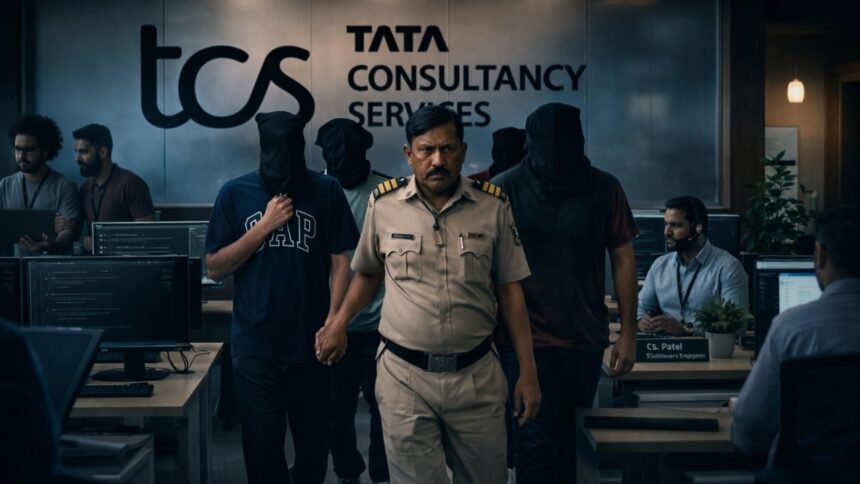
TCS Case, The ongoing controversy surrounding Tata Consultancy Services (TCS) has taken yet another serious turn. A court in Nashik has refused to grant interim protection from arrest to a 31-year-old software professional, Danish Shaikh, in connection with a broader investigation involving allegations of sexual harassment, coercion, and religious misconduct.
So, what exactly is happening here? Why has this case escalated to such a high level? Let’s break it down in simple terms.
Background: What Is the TCS Nashik Case About?
At its core, this case revolves around multiple allegations made by female employees at TCS’s Nashik unit. These include claims of:
- Sexual harassment
- Mental harassment
- Attempted forced religious conversion
- Outraging religious sentiments
Authorities have registered nine separate FIRs, indicating the scale and seriousness of the accusations.
Think of it like a puzzle—each FIR is a piece, and investigators are trying to assemble the full picture.
Who Is Danish Shaikh and Why Is He in Custody?
Danish Shaikh, the central figure in this particular hearing, is already under arrest in one of the FIRs. He is currently in judicial custody, meaning he remains behind bars while the investigation proceeds.
But here’s the twist—he sought interim protection from arrest in another related case. In legal terms, that’s like asking for temporary immunity until the court fully hears your bail application.
Court Proceedings: What Happened in the Hearing?
TCS Case, The hearing took place in a Nashik court on April 21, 2026. Here’s how things unfolded:
- The defense requested interim protection from arrest.
- The prosecution argued they needed more time to respond.
- The court weighed both sides and ultimately denied relief.
Instead, the court directed the prosecution to submit its reply by April 27, 2026.
In simple words: the court pressed pause on relief but kept the legal process moving.
Legal Charges: What Laws Are Being Invoked?
In this specific case, Shaikh has been booked under provisions of the Bharatiya Nyaya Sanhita (BNS), including:
- Section 75 – Sexual harassment
- Section 299 – Deliberate acts intended to outrage religious feelings
These aren’t minor charges. They carry serious legal consequences if proven.
The Bigger Picture: Nine FIRs and Multiple Accused
This isn’t an isolated case. Authorities have registered nine FIRs, each pointing toward a pattern of alleged misconduct within the Nashik unit.
So far:
- Eight individuals have been arrested, including a woman HR manager
- Several accused have filed bail applications
- Hearings for these applications are expected soon
It’s like peeling layers of an onion—the deeper investigators go, the more complexity emerges.
Role of the SIT: Who Is Investigating the Case?
TCS Case, A Special Investigation Team (SIT) has been constituted to handle the probe.
Why an SIT?
Because cases involving multiple FIRs, serious allegations, and corporate environments require:
- Coordinated investigation
- Evidence consolidation
- Witness protection
In other words, this isn’t routine policing—it’s a specialized operation.
Location Spotlight: Mumbai Naka Police Station
One of the cases involving Shaikh was registered at the Mumbai Naka Police Station.
This station is now a focal point in the investigation, handling critical aspects of the case.
Why This Case Matters Beyond TCS
You might be wondering—why is this case such a big deal?
Here’s why:
- Corporate Accountability
It raises questions about workplace culture in large organizations. - Employee Safety
Are internal grievance mechanisms strong enough? - Legal Precedent
The outcome could influence how similar cases are handled in the future. - Public Trust
High-profile companies are expected to set standards—not fall short.
The Legal Strategy: What Lies Ahead?
For Shaikh and the other accused, the immediate focus is on bail hearings.
For prosecutors, it’s about:
- Gathering evidence
- Recording witness statements
- Building a strong case
The next key date is April 27, when the prosecution is expected to file its response.
Think of it as the next checkpoint in a long legal marathon.
Human Angle: The Impact on Employees
Behind the legal jargon and court proceedings are real people—employees who have alleged harassment and trauma.
Cases like this often leave lasting effects:
- Emotional distress
- Career disruptions
- Loss of workplace trust
It’s a reminder that workplace issues aren’t just HR matters—they can become full-blown legal battles.
Corporate Culture Under the Microscope
TCS Case, this case puts a spotlight on corporate environments.
Questions naturally arise:
- Are companies doing enough to prevent harassment?
- Are complaints taken seriously?
- Is there accountability at every level?
When a major IT giant faces such allegations, the ripple effects are felt across the industry.
What Should Employees Learn From This?
If there’s one takeaway, it’s this: awareness matters.
Employees should:
- Know their rights
- Report misconduct promptly
- Use official channels
And companies? They must ensure those channels actually work.
TCS Responds: Zero Tolerance Policy Reaffirmed
Amid growing scrutiny, Tata Consultancy Services has issued a clear statement:
- The company maintains a zero-tolerance policy toward harassment
- Employees accuse in the case have been suspend
- Internal protocols are be follow
From a corporate standpoint, this is damage control—but also a signal to employees and stakeholders that misconduct won’t be ignore.
Read More: Why TCS Share Price Is Falling Today as IT Stocks Drag Sensex and Nifty50
Conclusion
TCS Case Update, The denial of interim relief to Danish Shaikh is just one chapter in a much larger story.
With multiple FIRs, ongoing investigations, and pending bail hearings, the case is far from over. The involvement of a Special Investigation Team suggests that authorities are treating the matter with the seriousness it deserves.
For now, all eyes remain on the next court date—and what it might reveal.
Cases like this aren’t just headlines—they’re signals.
Signals that workplace environments need constant vigilance.
Signals that legal systems are evolving.
And signals that accountability, no matter how delayed, is inevitable.
Because at the end of the day, justice isn’t just about punishment—it’s about setting things right.