
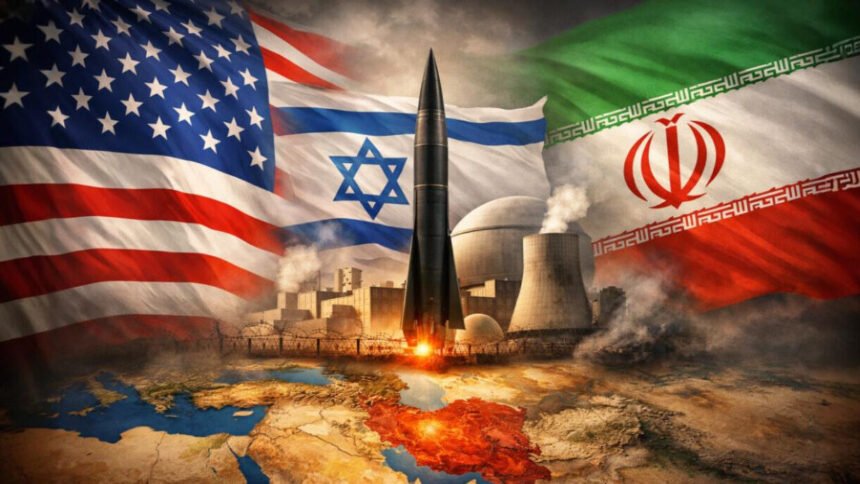
US Iran Conflict 2026, The unfolding confrontation between the United States and Iran has entered a volatile and deeply uncertain phase. What began as a strategic military campaign now feels like a high-stakes gamble, where every move risks spiraling into something far bigger—and far more dangerous. This rapidly escalating situation is now widely being referred to as the US Iran conflict 2026, reflecting its growing global significance and long-term implications.
Over the past few weeks, Donald Trump has delivered a series of mixed and often contradictory messages about the war. One moment, he hints at winding things down. The next, he threatens devastating strikes that could reshape the entire conflict. So, what’s really going on here? And more importantly—where does this all lead?
Let’s break it down.
A War Defined by Contradictions
At first glance, the messaging from Washington feels like a pendulum swinging wildly.
One day, Trump suggests he may scale back military operations. The next day, he warns of “obliterating” Iran’s power infrastructure. That’s not just a shift in tone—it’s a complete reversal of strategy.
This inconsistency isn’t just confusing for observers. It sends mixed signals to allies, adversaries, and global markets. In war, clarity often matters as much as القوة (power). Without it, even strong positions can weaken.
The Strait of Hormuz: The World’s Most Critical Chokepoint
US Iran Conflict 2026, At the center of this crisis lies one narrow stretch of water—the Strait of Hormuz.
Why does it matter so much?
Because nearly a fifth of the world’s oil passes through it.
Iran’s threat to block or disrupt traffic in this channel has already triggered global ripple effects:
- Oil tankers stranded at sea
- Shipping routes disrupted
- Energy prices surging
- Economic anxiety spreading worldwide
Think of it like a clogged artery in the global economy. The longer it stays blocked, the greater the damage.

A Self-Imposed Red Line
Trump has now drawn a new line in the sand: reopen the strait—or face severe consequences, including attacks on Iran’s power plants.
But here’s the catch.
Iran has shown no indication it will comply within the given deadline. That puts the US president in a bind:
- Act, and risk massive escalation
- Hold back, and appear weakened
It’s a classic lose-lose scenario.
What Happens If Power Plants Are Targeted?
Targeting Iran’s power grid might sound like a strategic move. After all, infrastructure is the backbone of any nation.
But the reality is more complicated—and far more dangerous.
A strike on power plants could:
- Cripple essential services like hospitals and water systems
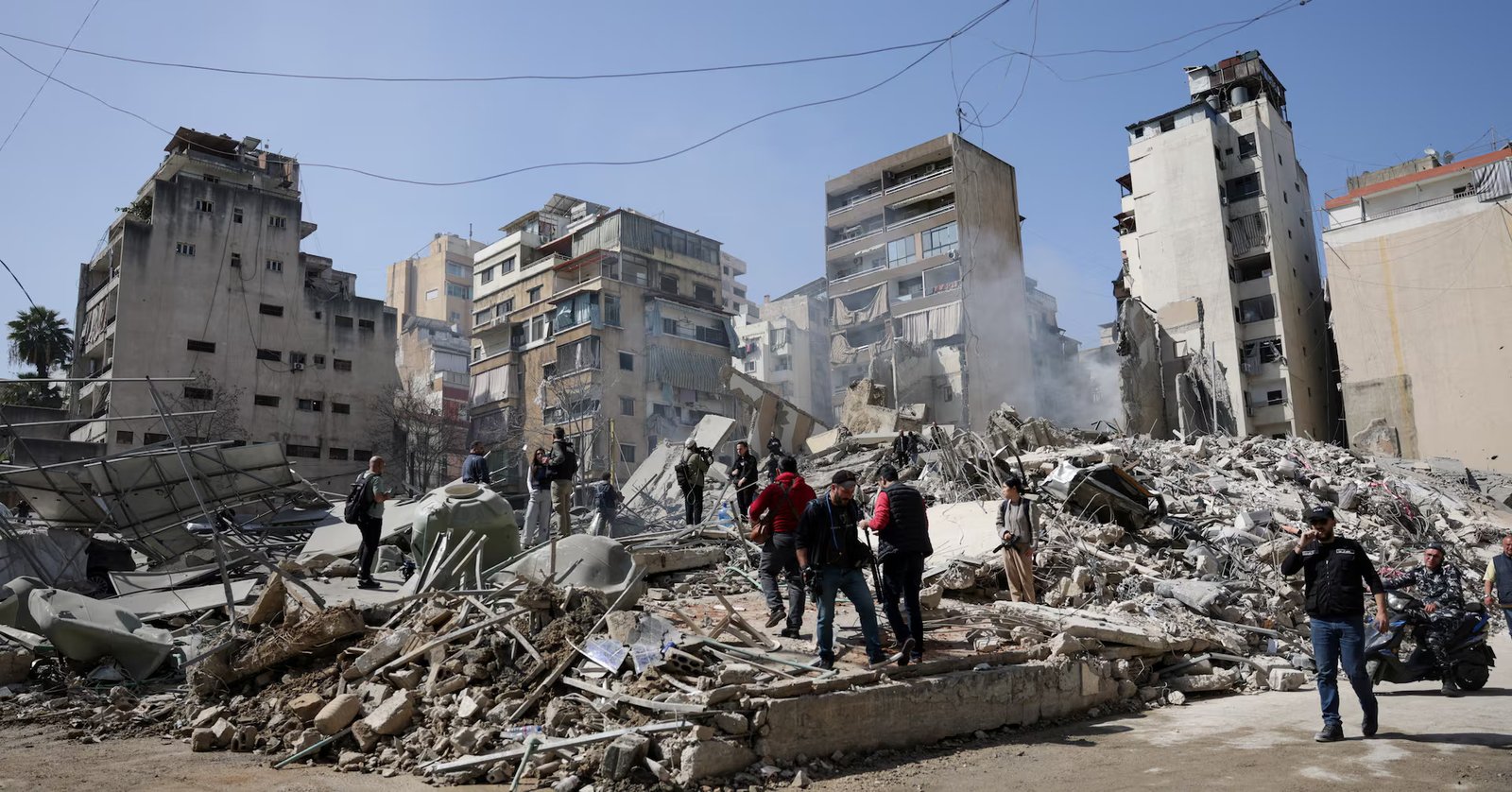
- Deepen humanitarian suffering
- Provoke severe retaliation from Iran
In modern warfare, infrastructure attacks don’t just hit governments—they hit civilians hardest.
Iran’s Warning: Escalation Will Be Met With Force
Iran hasn’t stayed silent.
Officials have made it clear: any further escalation will trigger a broader response. This could include:
- Strikes on US military bases
- Attacks on allied nations hosting American forces
- Expanded disruption of global energy networks
Recent missile launches—even those that missed targets—sent a clear message: Iran still has reach.
And that reach matters.
The Economic Fallout Is Already Here
Let’s talk money—because wars today aren’t just fought with weapons.
They’re fought in markets too.
Global oil prices have already surged past $110 per barrel. That might not sound like much at first—but it translates into:
- Higher fuel prices
- Increased transportation costs
- Inflation spikes across economies
For everyday people, this means one thing: life gets more expensive.
And fast.
Criticism Mounts Over Lack of Strategy
US Iran Conflict 2026, criticism is growing louder.
Hakeem Jeffries didn’t mince words, pointing out the absence of a clear plan or exit strategy.
Similarly, Chris Murphy warned that the war is “spinning out of control,” highlighting the domestic consequences Americans are already feeling.
The core issue?
There doesn’t appear to be a clearly defined endgame.
Supporters See a Different Picture
Not everyone agrees with the criticism.
Some defense analysts argue that the sustained air campaign has already weakened Iran significantly. According to voices like Robert Harward, continued pressure could eventually break Iran’s resistance.
Their argument is simple:
- Keep the pressure on
- Exploit internal weaknesses
- Force strategic concessions
But that’s a long game—and not without risks.
Could the War Expand Even Further?
There’s growing speculation about what comes next.
Potential escalation paths include:
- Targeting Iran’s oil export hubs
- Expanding naval operations
- Even deploying ground troops
Each of these options carries increasing levels of risk.
And here’s the reality: once boots hit the ground, wars tend to become far harder to contain.
The Illusion of Control
At this point, the situation resembles a high-speed car heading toward a sharp curve.
The driver—Trump—can:
- Slam the brakes (de-escalate)
- Accelerate (escalate further)
- Or try to steer through uncertainty
But the margin for error is shrinking.
And the consequences? Potentially global.
A Conflict at a Defining Moment
The war is now at a critical crossroads.
Trump’s next move won’t just shape the outcome of this conflict—it could redefine geopolitical dynamics across the Middle East and beyond.
Will escalation force a breakthrough?
Or will it drag the world deeper into crisis?
That’s the question hanging over everything right now.
‘Only Bad Options’ Ahead
Experts like Danny Citrinowicz have summed it up bluntly: there are no good choices left—only bad ones.
That’s the harsh truth of this moment.
Every available path comes with serious downsides:
- Escalation risks wider war
- Diplomacy may appear weak
- Inaction could embolden adversaries
It’s not about choosing the best option anymore—it’s about choosing the least damaging one.
Read More: Saudi Aramco Oil Facility Attack: Ras Tanura Hit by Drone Debris Amid Iran–US–Israel Escalation
Conclusion
US Iran Conflict 2026, this isn’t just a regional conflict—it’s a global pressure point.
The combination of military tension, economic instability, and political uncertainty creates a perfect storm. And Trump’s shifting strategy only adds to the unpredictability.
Here’s the uncomfortable reality: there’s no clean exit.
Every decision from here carries weight—not just for the US and Iran, but for millions of people worldwide. Energy markets, global trade, and regional stability all hang in the balance.
So, where does this leave us?
Watching. Waiting. And hoping that the next move doesn’t push the situation past the point of no return.