
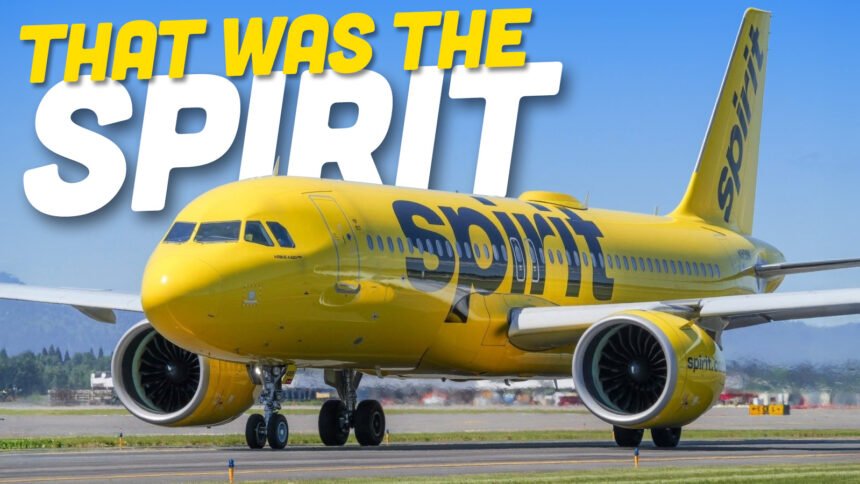
Spirit Airlines Shutdown, The end of an era rarely arrives quietly—and that’s exactly what we’re witnessing with the sudden shutdown of Spirit Airlines. After more than three decades of redefining budget air travel in the United States, the airline has officially grounded all flights and begun an “orderly wind-down” of operations.
So, how did a once-disruptive airline collapse so abruptly? And what does this mean for passengers, employees, and the broader aviation industry? Let’s unpack it step by step.
A Sudden Halt: All Flights Cancelled
Imagine planning a trip, packing your bags, and then being told not to even go to the airport. That’s the reality Spirit customers faced.
The airline abruptly cancelled all flights, leaving thousands stranded or scrambling for alternatives. Its website displayed a blunt message: customer service was no longer available. In other words, the lights were out—and no one was home.
For an airline that once thrived on offering ultra-low fares, this abrupt silence was both shocking and symbolic.
The “Orderly Wind-Down” Explained
Spirit Airlines Shutdown, What exactly does an “orderly wind-down” mean? It sounds calm, almost gentle—but the reality is far more serious.
An orderly wind-down is essentially a structured shutdown. Instead of collapsing overnight in chaos, the company halts operations, processes refunds, and attempts to settle financial obligations responsibly.
In Spirit’s case, this meant:
- Immediate cancellation of all flights
- Refund processing for customers
- Gradual closure of business operations
Still, for passengers and employees, there’s nothing “orderly” about the disruption it caused.
Fuel Prices: The Breaking Point
Let’s talk about the elephant in the room—fuel costs.
Jet fuel prices have surged dramatically in recent months, largely due to geopolitical tensions, including conflict involving Iran. Prices reportedly doubled, putting immense pressure on airlines already operating on thin margins.
For a budget airline like Spirit, which depends on ultra-low fares and high volume, rising fuel costs are like a slow leak in a tire—you can keep going for a while, but eventually, you’re forced to stop.
Economist Jan Brueckner described it perfectly: this wasn’t the only problem, but it was “the straw that broke the camel’s back.”
A Fragile Financial Foundation
Spirit wasn’t exactly in perfect health before this crisis hit.
The airline had already faced financial turbulence, including multiple bankruptcy proceedings within a short span. Its parent company, Spirit Aviation Holdings, had been working on restructuring plans to stabilize the business.
CEO Dave Davis even confirmed that a deal with bondholders had been reached earlier in the year. The hope? To emerge stronger and continue operations.
But hope alone doesn’t pay fuel bills.
When costs skyrocketed, Spirit needed hundreds of millions of dollars in additional liquidity—money it simply didn’t have.
The Failed Bailout Attempt
Spirit Airlines Shutdown, Could this shutdown have been avoided? Possibly.
There were discussions about a potential bailout involving the White House under Donald Trump. A “final proposal” was reportedly reviewed, but no agreement materialized.
Why? Because bailouts aren’t charity—they’re investments. And if the numbers don’t make sense, even governments hesitate.
Without that financial lifeline, Spirit was left with no runway.
The JetBlue Deal That Never Happened
Here’s where things get even more interesting.
Spirit had previously been the subject of a proposed $3.8 billion acquisition by JetBlue Airways. That deal, however, was blocked by regulators during Joe Biden administration over concerns it would reduce competition and harm consumers.
Ironically, the intention was to protect travelers from higher fares.
But now, with Spirit gone entirely, the market may become even less competitive—raising the very concerns regulators hoped to avoid.
It’s a classic case of unintended consequences.
Impact on Travelers: What Should You Do Now?
If you had a Spirit flight booked, here’s the bottom line:
- Don’t go to the airport
- Expect a refund
- Look for alternative airlines
Major carriers have stepped in to soften the blow.
American Airlines is offering “rescue fares” on routes previously served by Spirit, while United Airlines has introduced price-capped one-way tickets.
Think of it as emergency support—but not a perfect replacement.
What Happens to Employees?
Spirit Airlines Shutdown, Behind every airline are thousands of people—and Spirit employed over 11,000 individuals as of 2024.
Pilots, cabin crew, ground staff, engineers—each now faces uncertainty.
While some may be absorbed by other airlines, many will likely face layoffs or career disruptions. The aviation industry is cyclical, but transitions like this are rarely smooth.
Spirit’s Legacy: A Pioneer of Budget Travel
Let’s not forget what Spirit achieved.
Founded in 1992, the airline carved out a niche with its no-frills, ultra-low-cost model. Bright yellow planes became its signature, and its pricing strategy forced larger airlines to rethink their own fares.
Love it or hate it, Spirit changed the game.
It made flying accessible to millions who might not otherwise have afforded it. That’s no small legacy.
The Bigger Picture: What This Means for the Airline Industry
Spirit’s collapse sends a clear message: the airline industry remains fragile.
Even established carriers can falter under:
- Rising fuel costs
- Economic uncertainty
- Regulatory challenges
- Limited access to capital
Low-cost carriers, in particular, walk a tightrope. Their margins are razor-thin, leaving little room for unexpected shocks.
Could other airlines face similar challenges? It’s not impossible.
Is This the End of Ultra-Low-Cost Travel?
Not quite—but it’s definitely a warning sign.
Budget travel isn’t disappearing, but it may become less aggressive. Airlines might:
- Increase base fares slightly
- Add more fees
- Reduce route networks
In other words, the era of “too good to be true” ticket prices might be fading.
A Wake-Up Call for Regulators and Investors
This situation also raises tough questions:
- Should struggling airlines be support more aggressively?
- Did blocking mergers unintentionally weaken the market?
- How can the industry prepare for fuel volatility?
There are no easy answers—but one thing is clear: decisions made today can have ripple effects for years.
Read More: Airbus A320 Software Update: How American, United & Alaska Airlines Are Handling the Disruption