Raghav Chadha BJP, Indian politics thrives on surprises—but this one hit differently. Raghav Chadha, once considered a close confidant of Arvind Kejriwal, has announced his decision to join the Bharatiya Janata Party. And he’s not going alone.
In a dramatic move, Chadha claims that nearly two-thirds of the Aam Aadmi Party’s Rajya Sabha MPs will merge with the BJP. That’s not just a defection—it’s a full-blown political tremor.
This unfolding story of AAP MPs joining BJP is rapidly becoming one of the most talked-about political shifts in recent times, signaling a major realignment in India’s power dynamics.
So what really happened? And why does this matter so much right now?
The Big Announcement: What Chadha Said
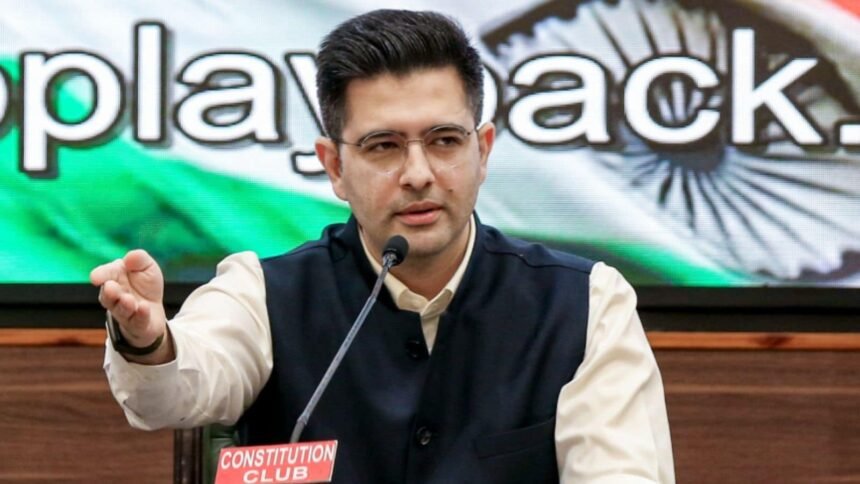
Standing before the media, Chadha didn’t mince words. He confirmed that the required paperwork for merging with the BJP had already been submitted to the Rajya Sabha Chairman.
His justification? Simple, yet loaded: the AAP, he claimed, has drifted far from its original ideals.
He described himself as “the right man in the wrong party.” Strong statement, right? It suggests not just disagreement—but disillusionment.
Who’s Switching Sides Alongside Him?
Chadha isn’t acting solo. According to his announcement, several prominent MPs are making the jump with him, including:
- Harbhajan Singh
- Swati Maliwal
- Rajinder Gupta
- Vikram Sahney
- Ashok Mittal
- Sandeep Pathak
That’s a significant chunk of AAP’s presence in the Upper House. When numbers like these move, the political balance shifts—fast.
Why This Move Matters: The Anti-Defection Angle
India’s anti-defection law usually penalizes lawmakers for switching parties. But there’s a catch.
If two-thirds of a party’s legislators agree to merge with another party, they’re exempt.
That’s exactly the route Chadha and his colleagues appear to be taking. It’s not just a political gamble—it’s a legally calculated maneuver.
AAP’s Immediate Reaction: Betrayal or Strategy?
Raghav Chadha BJP, The response from AAP was swift—and sharp.
Senior leader Sanjay Singh didn’t hold back. He accused Chadha of betrayal and warned that the people of Punjab would remember this move.
Meanwhile, Kejriwal issued a terse but pointed remark, accusing the BJP of “betraying Punjabis.” Short sentence, heavy implication.
AAP has also indicated it will push for disqualification of the MPs involved, arguing that their actions violate constitutional provisions.
Inside Chadha’s Justification: ‘AAP Has Changed’
Chadha’s central argument revolves around one idea: AAP isn’t what it used to be.
He emphasized his long association with the party—over 15 years—and claimed that its commitment to clean politics has eroded.
Think of it like a startup losing its founding vision as it grows. That’s essentially the metaphor Chadha is drawing.
But is this a genuine ideological shift—or political repositioning? That’s the million-dollar question.
Swati Maliwal’s Explosive Allegations
Adding fuel to the fire, Swati Maliwal made serious allegations against the party leadership.
She cited:
- Rising corruption
- Incidents of harassment against women
- Promotion of questionable elements within the party
- Betrayal of Punjab’s interests
These aren’t minor criticisms—they strike at the core identity AAP built its reputation on.
The Fallout: What Happens to AAP Now?
Raghav Chadha BJP, With most of its Rajya Sabha MPs exiting, AAP’s presence in the Upper House shrinks drastically.
Only a handful of leaders remain, including:
- Sant Balbir Singh Seechewal
- Sanjay Singh
- ND Gupta
This isn’t just about numbers. It’s about perception. Political parties run as much on narrative as they do on votes—and right now, AAP’s narrative has taken a hit.
The Backstory: A Rift That Was Brewing
If you’ve been following closely, this didn’t come out of nowhere.
Earlier this month, Chadha was removed as AAP’s deputy leader in the Rajya Sabha. That was the first visible crack.
Then came:
- Accusations that he avoided opposition protests
- Claims he refused to sign key motions
- Allegations he had grown politically “inactive”
Chadha fired back, calling it a “coordinated campaign” against him.
At that point, the writing was already on the wall.
Security Controversy and Political Signals
In another intriguing development, the Punjab government withdrew Chadha’s Z-plus security cover.
Soon after, the Union Home Ministry stepped in and restored it.
Coincidence? Maybe. But in politics, timing is rarely accidental.
Moves like these often signal deeper alignments long before public announcements are made.
What This Means for Indian Politics
This episode isn’t just about one leader switching sides.
It highlights broader trends:
- Increasing fluidity in political loyalties
- Strategic use of legal provisions like anti-defection rules
- Intensifying competition between national and regional parties
In short, it’s a reminder that Indian politics is as dynamic—and unpredictable—as ever.
Could Chadha Become a Union Minister?
Sources suggest that Raghav Chadha might be rewarded with a Union Minister position after joining the BJP.
If that happens, it would mark a rapid political ascent—and a clear endorsement from the ruling party.
But again, nothing is official yet. In politics, speculation often runs ahead of confirmation.
Read More: Tamil Nadu Elections 2026: Complete Voting Guide, Date, Time & Results
Conclusion
Raghav Chadha BJP, Is this the start of a downward spiral for the Aam Aadmi Party, or just a rough patch it can recover from? And is Raghav Chadha acting out of conviction—or careful political calculation? The honest answer likely sits somewhere in the grey area. What’s undeniable is that the political landscape has shifted, forcing every party, including the Bharatiya Janata Party, to rethink its strategy. For voters, the bigger question still lingers: who can genuinely deliver on the promise of clean, transparent governance? Politics often works like a chain reaction—one bold move can reshape everything, or fade into the noise of daily headlines. Whether this moment becomes a turning point or just another episode, one thing is clear: this political story is still unfolding.
Anjali Verma is the voice of authority at Taza Newsz for national affairs and sports. A fearless journalist with a background in political science, she has spent the last 12 years covering state elections, parliamentary sessions, and major sporting events across the country. Anjali excels at connecting the dots between policy decisions and their ground-level reality. Her dual passion for democracy and cricket allows her to switch seamlessly between analyzing election manifestos and dissecting the Indian cricket team's strategy for the World Cup. Her reporting is defined by accuracy, neutrality, and a deep respect for the facts. Outside the newsroom, Anjali is a marathon runner and an advocate for women in sports. | View all posts