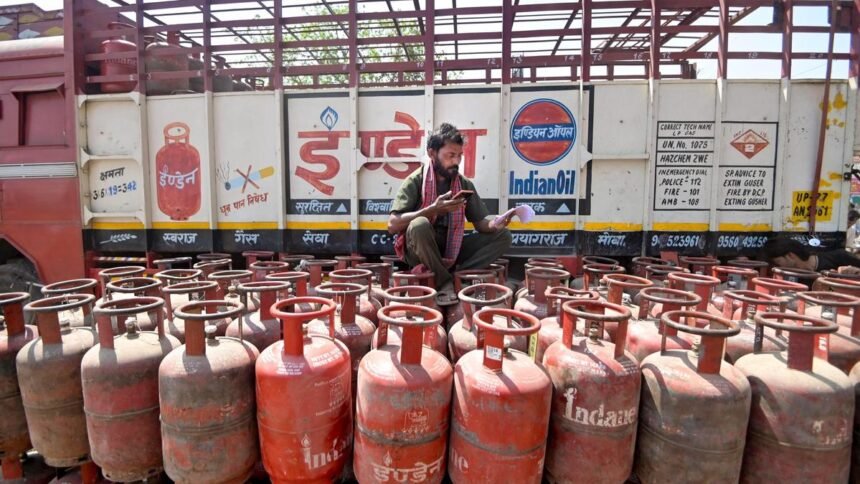
LPG Supply Cut-Off Rule, India’s energy landscape is going through a significant shift—and if you’re still relying on LPG cylinders, this new policy might directly affect you. The government has issued a strong directive: switch to Piped Natural Gas (PNG) where available, or risk losing your LPG supply altogether.
Sounds serious, right? Let’s break it down in a simple, conversational way so you understand what’s happening, why it matters, and how it could impact your daily life.
What Is the New LPG Rule All About?
The government has introduced a new order stating that households with access to PNG must switch within a fixed time frame. If they don’t? Their LPG supply will be discontinued after three months.
Yes, you read that correctly—no more gas cylinders if PNG is available in your area and you choose not to adopt it.
Why Is India Making This Move Now?
You might be wondering—why the sudden push?
The answer lies in global geopolitics and supply disruptions. The ongoing conflict in West Asia has affected LPG imports, which India heavily depends on.
Think of it like relying on a single supplier for your daily groceries. If that supplier faces issues, your entire routine gets disrupted. That’s exactly what’s happening with LPG.
PNG vs LPG: What’s the Real Difference?
Let’s simplify it.
- LPG (Liquefied Petroleum Gas): Comes in cylinders, needs refilling, requires booking.
- PNG (Piped Natural Gas): Delivered directly via pipelines, continuous supply, no refills.
In short, PNG is like having a tap for gas—always available, no interruptions.
How Does PNG Make Life Easier?
Imagine never having to:
- Book a gas cylinder
- Wait for delivery
- Worry about running out mid-cooking
That’s the convenience PNG offers. It’s always there, flowing directly into your kitchen.
The Government’s Bigger Strategy: Energy Security
LPG Supply Cut-Off Rule, This isn’t just about convenience—it’s about national strategy.
India wants to reduce its dependence on a single fuel source. By encouraging PNG adoption, the government is diversifying energy usage.
It’s like investing in multiple income sources instead of relying on just one job—safer and smarter.
Key Highlights of the 2026 Government Order
Here’s what the new rule includes:
- LPG supply will stop 3 months after notification if PNG is available and not adopted
- Exceptions apply if PNG connection is technically infeasible
- A No Objection Certificate (NOC) can allow continued LPG use
- Pipeline approvals will be fast-tracked
- Authorities must grant permissions within strict timelines
What Happens If You Ignore the Switch?
Let’s be clear—doing nothing isn’t an option anymore.
If you live in an area where PNG is available and you don’t apply for it:
- You will receive a notification
- You get 3 months to act
- After that, LPG supply will be cut off
It’s essentially a deadline you can’t afford to miss.
What If PNG Isn’t Feasible in Your Area?
Don’t worry—there’s a safety net.
If pipeline connectivity isn’t technically possible:
- The authorized agency will issue an NOC
- LPG supply will continue
- The case will be reviewed periodically
So, no one is being left stranded—but the push toward PNG remains strong.
Faster Pipeline Expansion: A Game-Changer
The government is not just mandating change—it’s making it easier.
New rules ensure:
- Permissions for pipelines within fixed timelines
- Automatic approvals if authorities delay
- No extra charges beyond defined limits
- PNG connections in homes within 48 hours
That’s incredibly fast for infrastructure rollout.
Role of Regulatory Authorities
The Petroleum and Natural Gas Regulatory Board (PNGRB) will oversee the entire process.
Their job includes:
- Monitoring pipeline expansion
- Tracking approvals and delays
- Ensuring compliance
- Resolving disputes
Think of them as the watchdog ensuring everything runs smoothly.
Impact on Housing Societies and Apartments
LPG Supply Cut-Off Rule, If you live in a gated society or apartment complex, this part is important.
- Societies must grant pipeline permissions within 3 working days
- They cannot deny PNG installation requests
- If they delay, approvals may be automatically granted
So, even housing authorities can’t block the transition.
Commercial Users Also Affected
This rule isn’t limited to households.
Restaurants, small businesses, and commercial kitchens will also need to switch to PNG where available.
Why? Because they consume large volumes of LPG, and shifting them frees up supply for areas without pipelines.
Challenges You Might Face
Of course, no transition is perfect.
Some possible hurdles include:
- Initial installation costs
- Temporary inconvenience during setup
- Awareness gaps among consumers
But over time, these challenges are expected to fade.
Is PNG the Future of Cooking Gas in India?
All signs point to yes.
With continuous supply, improved safety, and reduced dependency on imports, PNG is likely to become the default cooking fuel in urban India.
LPG may gradually become limited to rural or remote areas.
What Should You Do Next?
If PNG is available in your area:
- Apply as soon as possible
- Check with your local gas provider
- Ensure your housing society cooperates
Waiting could mean losing your LPG supply—so it’s better to act early.
Turning Crisis Into Opportunity
Oil Secretary Neeraj Mittal described this move as turning a crisis into an opportunity.
And honestly, it makes sense.
Instead of struggling with supply shortages, India is using this moment to:
- Upgrade infrastructure
- Promote cleaner fuel
- Improve efficiency
It’s a long-term play disguised as a short-term solution.
Read More: Petrol Price Today in India: Latest Fuel Rates in Delhi, Mumbai, Bengaluru & More
Conclusion
LPG Supply Cut-Off Rule, India’s move to phase out LPG in favor of PNG isn’t just a policy change—it’s a transformation in how households consume energy.
While the rule may feel strict, it’s driven by necessity and long-term planning. With global supply chains under pressure, switching to a more stable and efficient system is not just smart—it’s essential.
Let’s be honest—change is never comfortable.
But this shift to PNG is like moving from a basic phone to a smartphone. It may take some adjustment, but once you switch, there’s no going back.
So the real question is:
Will you switch early and stay ahead, or wait until the deadline forces your hand?