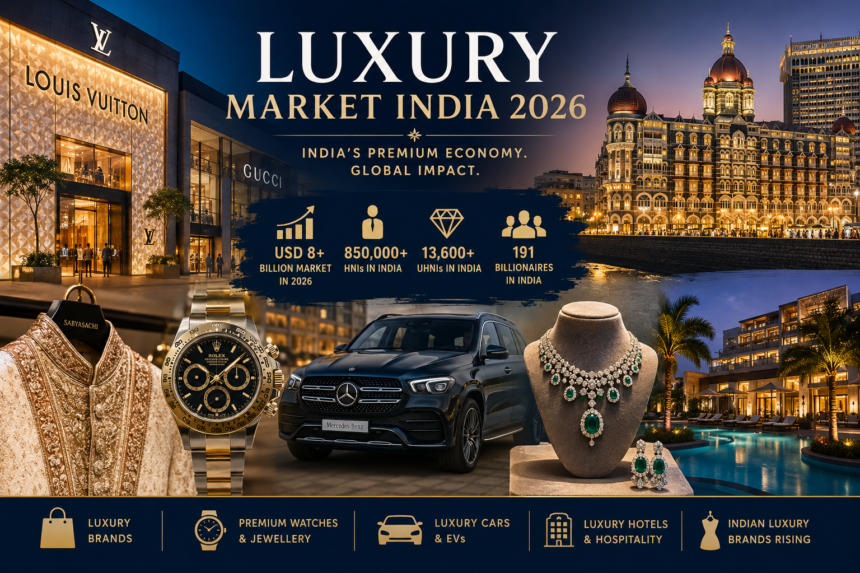
Luxury Market India 2026, India’s luxury market has arrived. Not in the tentative, emerging-market way of previous decades — but as a full-throated, confident, growing force in global luxury consumption. In 2026, India’s luxury goods and services market is valued at USD 8+ billion and growing at 25-30% annually — one of the fastest rates among major economies globally. The country’s rapidly expanding High-Net-Worth Individual (HNI) and Ultra-High-Net-Worth Individual (UHNWI) population is creating demand for premium products and experiences that global luxury brands are scrambling to meet.
What makes India’s luxury boom particularly interesting is its democratisation — luxury consumption is no longer confined to legacy rich families in metros. New money from technology, finance, real estate, and entrepreneurship is creating fresh luxury consumers across India’s top cities. And this new luxury consumer is younger, more digitally sophisticated, and more brand-knowledgeable than any previous Indian wealthy generation.
India’s HNI Population: The Numbers
- HNI population (assets USD 1M+): Approximately 850,000 individuals in India in 2026 — growing at 7-8% annually
- UHNI population (assets USD 10M+): Approximately 13,600 individuals — one of the fastest-growing globally
- Billionaires: India has 191 billionaires in 2026 — third highest after USA and China
- Millennial HNIs: The fastest-growing segment — tech entrepreneurs, investment bankers, and startup founders creating wealth at younger ages than previous generations
This expanding wealthy population — combined with aspirational luxury spending by upper-middle class Indians seeking status signalling through brands — is creating a market that global luxury houses simply cannot ignore.
International Luxury Brands Expanding in India 2026
Fashion and Accessories
The world’s leading luxury fashion houses are aggressively expanding their India presence:
- Louis Vuitton: Expanding from 3 to 8 stores across India — Delhi, Mumbai, Bangalore, Hyderabad, and Kolkata
- Gucci: New standalone stores in Jio World Plaza (Mumbai) and DLF Emporio (Delhi)
- Dior: Opened India’s first Dior Beauty standalone store in Mumbai — growing rapidly
- Valentino: Entered India market in 2025; expanding in 2026
- Bottega Veneta: Opening first standalone India store in 2026
- Ralph Lauren: Major expansion into Indian luxury malls
Watches and Jewellery
India’s traditional love for gold and jewellery is evolving into a sophisticated luxury watch and branded jewellery market:
- Rolex and Patek Philippe: Waiting lists of 2-3 years for popular models — demand dramatically exceeds supply
- Cartier: India’s best-performing market in Asia — jewellery and watches
- LVMH’s Bulgari: Expanding India presence with new stores and customisation services
- Tanishq (Titan): India’s own luxury jewellery brand competing successfully with international players
Luxury Cars
India’s luxury car market is one of the most exciting globally in 2026:
- Mercedes-Benz: India’s largest luxury car brand — strong across sedan, SUV, and EV segments
- BMW: Close second — strong performance vehicle enthusiast following
- Audi: Popular among tech and startup community
- Porsche India: The Cayenne and Macan are among India’s fastest-selling luxury SUVs
- Lamborghini, Ferrari, Bentley: Ultra-luxury segment growing — 200-400 units annually but at extraordinary price points
- 2026 Hyundai Ioniq 5: Launched April 30, 2026 — premium EV competing with established luxury brands
Luxury Hotels and Hospitality in India 2026
Luxury Market India 2026, India’s luxury hospitality sector is seeing extraordinary investment and quality improvement:
Iconic Indian Hotels
- The Taj Mahal Palace, Mumbai: India’s most iconic luxury hotel — consistently rated among Asia’s best
- The Oberoi, New Delhi: Benchmark of Indian luxury hospitality — Forbes 5-Star rated
- Leela Palace properties: Expanding luxury chain with hotels in major Indian cities
- Amanbagh, Rajasthan: India’s most exclusive luxury resort — global luxury travellers pay premium
New Luxury Hotel Openings 2026
Multiple international luxury hotel chains are making India entries or expansions in 2026:
- Six Senses: Entering India’s wellness hospitality market — multiple properties planned
- Aman Resorts: Expanding its India presence beyond existing properties
- Four Seasons: New property in Bengaluru opening 2026
- Raffles: First India property in Mumbai planned
Made in India Luxury: The Indigenous Premium Surge
Luxury Market India 2026, One of the most interesting stories in India’s 2026 luxury market is the rise of indigenous Indian luxury brands that are competing with and sometimes surpassing international brands in appeal:
Fashion
- Sabyasachi Mukherjee: India’s most internationally recognised luxury fashion designer — now a genuine global brand
- Manish Malhotra: Celebrity favourite, expanding into jewellery and cosmetics
- Anamika Khanna: Critically acclaimed, distinctive aesthetic blending Indian and international influences
Jewellery
- Anita Dongre’s Grassroot: Luxury with sustainability credentials — handcrafted heritage textiles
- Nirav Modi (pre-fraud) design DNA: Several new designers occupying the premium jewellery space he vacated
- PC Jeweller and Kalyan Jewellers: Moving up-market while maintaining mass premium positions
India’s Luxury Market Challenges
- High import duties: India’s customs duties on luxury goods (up to 100%) make imported luxury items significantly more expensive than in international markets — driving wealthy Indians to shop abroad
- Grey market: High prices drive significant grey market for luxury goods — authentic but imported through unofficial channels to avoid duties
- Limited store network: Most international luxury brands concentrated in Delhi and Mumbai — significant demand in Hyderabad, Bangalore, Chennai, Kolkata remains underserved
- Counterfeit goods: Sophisticated counterfeits of popular luxury brands are widely available — damaging brand equity and consumer trust
Hospitality and Experiences
Indian experiential luxury — heritage stays, curated forest camps, traditional Ayurveda retreats — is attracting both domestic HNI consumers and discerning international luxury tourists who seek authentic cultural immersion rather than generic five-star sameness.
Luxury Digital Economy: How India’s Wealthy Shop in 2026
India’s luxury consumers in 2026 are distinctive in their blend of digital savviness and preference for authentic brand experiences:
- Online luxury shopping: Platforms like Tata Cliq Luxury, Myntra Luxe, and brand.com websites are growing rapidly
- Social media influence: Instagram and YouTube are primary discovery channels for Indian luxury buyers — particularly under-35 HNIs
- International shopping: Wealthy Indians remain significant luxury shoppers during international travel — London, Dubai, Paris, Singapore are preferred luxury shopping destinations
- Personalisation: Monogramming, custom orders, and VIP brand events are important loyalty tools for Indian HNI consumers
Read More: Best Digital Bank Accounts India 2026: Top Zero Balance Savings Accounts Compared
Conclusion
Luxury Market India 2026 is not a niche phenomenon for a tiny elite — it is a growing, diversifying, increasingly sophisticated sector that is becoming central to global luxury brands’ Asia strategies. From the expansion of flagship stores to the rise of homegrown luxury brands, from luxury hotels to premium electric vehicles, India’s wealthy consumers are demonstrating appetite, knowledge, and spending power that will make the country a Top 5 global luxury market within this decade.
Taza Newsz covers India’s luxury market, premium consumer trends, high-net-worth lifestyle news, and brand launches. Follow us for the latest from India’s premium economy.