
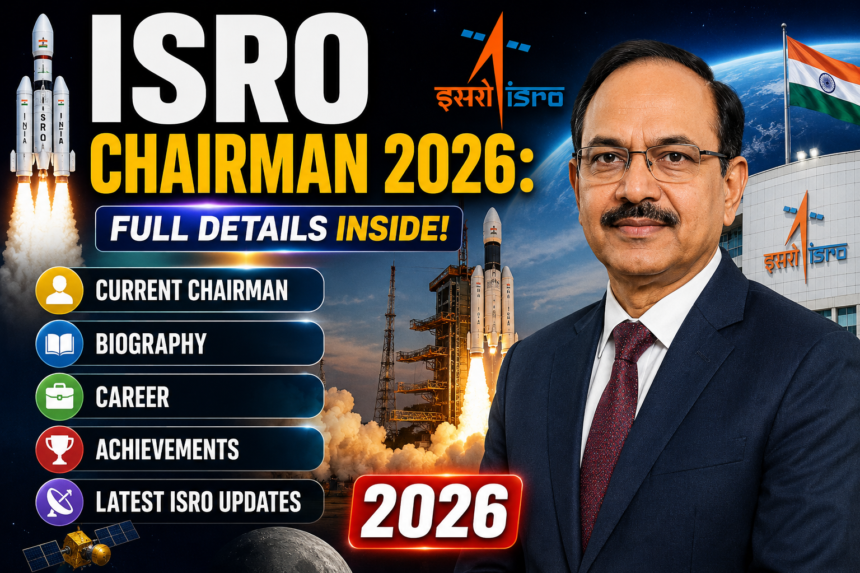
India has become one of the world’s fastest-growing space powers, and the Indian Space Research Organisation (ISRO) continues to achieve remarkable milestones. Whether it is launching satellites, exploring the Moon through Chandrayaan, or preparing astronauts for Gaganyaan, ISRO remains at the forefront of space innovation.
As a result, thousands of people search for ISRO Chairman 2026 every month. Students, competitive exam aspirants, researchers, and space enthusiasts all want to know who currently leads ISRO, their achievements, and what major projects are planned for the future.
This article provides a complete overview of the current ISRO Chairman, their responsibilities, career, achievements, and India’s upcoming space missions.
What is ISRO?
The Indian Space Research Organisation (ISRO) is India’s national space agency. Established in 1969, ISRO is responsible for developing space technology, satellite launches, planetary exploration, communication satellites, navigation systems, and scientific research.
Today, ISRO is recognized globally for delivering cost-effective and reliable space missions.
Some of its famous missions include:
- Chandrayaan
- Mangalyaan (Mars Orbiter Mission)
- Aditya-L1
- PSLV Launches
- GSLV Missions
- Navigation Satellite System (NavIC)
Who is the ISRO Chairman 2026?
The ISRO Chairman 2026 is the head of the Indian Space Research Organisation and is responsible for leading India’s space research, technological development, and future exploration missions.
The Chairman oversees:
- National space missions
- Satellite development
- Rocket launches
- Human spaceflight programs
- International collaborations
- Scientific research initiatives
The position is one of the most prestigious scientific leadership roles in India.
Responsibilities of the ISRO Chairman
The Chairman has several important responsibilities, including:
Strategic Planning
Planning India’s future space exploration programs.
Satellite Development
Supervising communication, weather, navigation, and scientific satellites.
Launch Vehicle Programs
Monitoring PSLV, GSLV, SSLV, and future reusable launch systems.
Human Space Mission
Leading the Gaganyaan mission and astronaut training.
International Cooperation
Working with agencies like NASA, ESA, JAXA, CNES, and other global partners.
Budget and Administration
Managing ISRO’s scientific projects and organizational growth.
Career Path to Becoming ISRO Chairman
Most ISRO Chairmen have decades of experience in:
- Aerospace Engineering
- Mechanical Engineering
- Electronics Engineering
- Rocket Propulsion
- Satellite Systems
- Space Science
They usually begin as engineers or scientists and gradually take leadership roles before becoming Chairman.
Major Achievements of ISRO
ISRO has achieved several milestones over the years:
Chandrayaan Missions
India successfully explored the Moon through multiple Chandrayaan missions.
Mars Orbiter Mission
India became the first country to reach Mars on its first attempt.
Aditya-L1
India launched its first solar observation mission.
Record Satellite Launches
ISRO once launched over 100 satellites in a single mission.
Navigation System
NavIC provides accurate navigation services across India.
Upcoming ISRO Missions
ISRO continues to work on several exciting projects.
Gaganyaan
India’s first human spaceflight mission.
Chandrayaan Future Missions
Advanced lunar exploration missions.
Venus Mission
ISRO plans to study Venus through a dedicated spacecraft.
Space Station
India aims to establish its own space station in the coming years.
Next Generation Launch Vehicles
Reusable rockets and advanced launch technologies are under development.
Why ISRO is Important for India
ISRO contributes significantly to India’s development.
Benefits include:
- Weather forecasting
- Disaster management
- GPS and Navigation
- Agriculture monitoring
- Defence applications
- Internet and Communication
- Education
- Scientific Research
Space technology also contributes to economic growth and innovation.
ISRO’s Global Reputation
ISRO is respected worldwide because of its:
- Affordable launch costs
- High mission success rate
- Innovative engineering
- Reliable satellite launches
- Scientific excellence
Many countries choose ISRO to launch their satellites due to its proven capabilities.
Career Opportunities in ISRO
Many students dream of joining ISRO.
Popular career options include:
- Scientist
- Aerospace Engineer
- Mechanical Engineer
- Electronics Engineer
- Computer Scientist
- Research Associate
- Data Scientist
- Space Scientist
Recruitment usually takes place through engineering qualifications and national-level examinations.
Skills Required to Work at ISRO
Candidates should develop:
- Strong Mathematics
- Physics
- Programming
- Engineering Design
- Problem Solving
- Analytical Thinking
- Research Skills
Latest Developments in India’s Space Program
India continues to expand its space ambitions through:
- Human Spaceflight
- Lunar Exploration
- Deep Space Missions
- Satellite Internet
- Earth Observation Satellites
- Climate Monitoring
- AI in Space Technology
These initiatives strengthen India’s position among leading space nations.
Interesting Facts About ISRO
- ISRO was established in 1969.
- Headquarters are in Bengaluru.
- India reached Mars in its first attempt.
- Chandrayaan-3 successfully demonstrated lunar landing capabilities.
- ISRO launches satellites for many international customers.
- NavIC is India’s own satellite navigation system.
FAQs
Who is the ISRO Chairman 2026?
The ISRO Chairman 2026 is the chief executive responsible for leading India’s national space agency and overseeing all major space missions.
What does the ISRO Chairman do?
The Chairman manages space research, satellite launches, human spaceflight programs, and strategic planning.
Which is India’s next major space mission?
Upcoming projects include Gaganyaan, future Chandrayaan missions, Venus exploration, and advanced launch vehicle development.
Where is ISRO headquarters?
ISRO headquarters is located in Bengaluru, Karnataka.
Can engineering students join ISRO?
Yes. Engineering graduates in relevant disciplines can apply through ISRO recruitment processes when vacancies are announced.
Conclusion
The ISRO Chairman 2026 plays a vital role in shaping India’s future in space exploration. From overseeing ambitious missions like Gaganyaan to expanding satellite technology and international collaborations, the Chairman’s leadership drives ISRO’s continued success.
For students, researchers, and space enthusiasts, following ISRO’s latest missions and innovations offers valuable insight into one of the world’s most respected space agencies. As India advances toward more ambitious goals, ISRO will continue to inspire scientific progress and global recognition.