
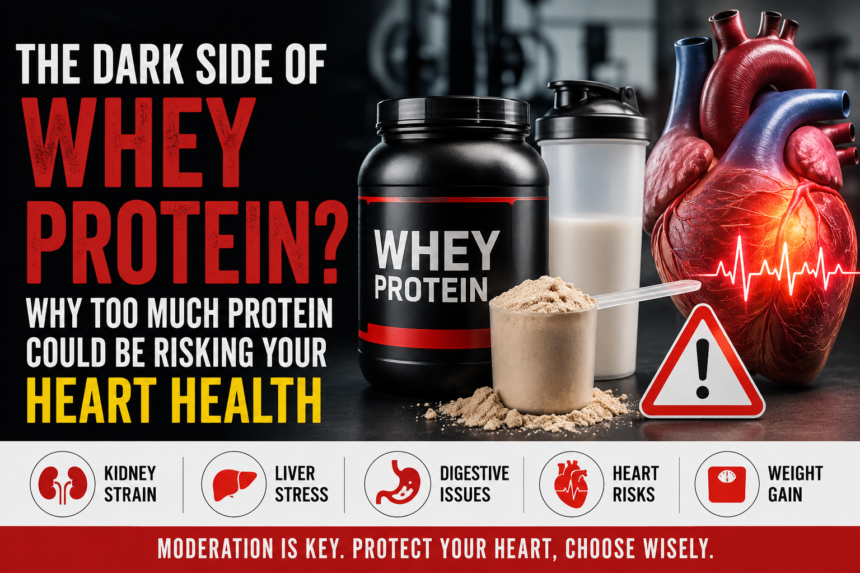
Whey Protein Side Effects, Protein shakes have become almost as common as morning coffee. Walk into any gym, scroll through fitness reels, or chat with health enthusiasts, and chances are someone will recommend whey protein as the magic formula for building muscle and boosting performance. But here’s the uncomfortable question nobody talks about enough — can too much protein actually harm your heart?
For many people, whey protein is no longer just a fitness supplement. It has become a daily habit. Unfortunately, consuming large amounts without understanding your body’s actual needs can place unnecessary stress on the heart, kidneys, and liver.
So, is whey protein a health hero or a hidden villain? Let’s break it down.
Why Protein Matters for the Human Body
Before blaming protein entirely, let’s be clear — protein is absolutely necessary for good health.
Your body uses protein to repair muscles, produce hormones, support immunity, and maintain healthy tissues. Think of protein as the construction crew constantly repairing and rebuilding your body from the inside.
Without enough protein, your muscles weaken, recovery slows down, and energy levels can dip. That’s why athletes, gym-goers, and physically active individuals often increase protein intake to support performance and muscle growth.
However, like almost everything in nutrition, balance is the real key. Even water can become harmful in excess, and protein is no exception.
The Growing Obsession With Whey Protein
Whey Protein Side Effects, whey protein has exploded in popularity. Fitness influencers market it as a shortcut to a muscular physique, while supplement brands promise faster recovery and better strength.
But here’s the catch — many people consume whey protein without understanding how much their body actually requires.
One scoop turns into two. Two shakes become three. Soon, protein intake shoots far beyond healthy levels.
What’s even more concerning is that many over-the-counter protein powders contain hidden sugars, artificial flavoring, preservatives, and additives that may negatively impact long-term health.
It’s like pouring extra fuel into a car engine that doesn’t need it. Instead of improving performance, you may end up damaging the system.
Can Too Much Protein Really Affect Heart Health?
Yes, excessive protein intake can potentially impact heart health, especially when the primary source is animal-based whey protein.
Research suggests that diets extremely high in processed animal proteins may contribute to:
- Increased cholesterol levels
- Inflammation in the body
- Cardiovascular stress
- Weight gain due to excess calories
- Higher risk of metabolic disorders
The heart is heavily influenced by what we eat and how the body processes nutrients. If excess protein isn’t effectively metabolized, it can create imbalances that gradually affect cardiovascular health.
According to senior cardiologist Dr. T.S. Kler, regular overconsumption of artificial protein supplements may disturb the body’s internal environment and increase the risk of serious heart complications, including heart attacks.
That’s a frightening thought, isn’t it? Something marketed as “healthy” could quietly be creating long-term risks.
What Happens Inside the Body When Protein Intake Is Too High?
Whey Protein Side Effects, Your body only needs a certain amount of protein each day. Once that requirement is crossed, the extra protein doesn’t magically turn into muscle.
Instead, excess calories from protein can get stored as fat.
Over time, consuming too much protein may:
1. Put Pressure on the Kidneys
The kidneys work harder to remove waste products created during protein metabolism. Excessive strain over time may negatively affect kidney function, particularly in people with pre-existing conditions.
2. Affect Liver Function
The liver plays a major role in processing nutrients. High-protein diets may overload the liver when combined with poor dietary habits.
3. Trigger Digestive Problems
Bloating, acidity, constipation, and stomach discomfort are common signs of excessive protein intake.
4. Cause Nutrient Imbalance
When people over-focus on protein, they often neglect fiber, healthy fats, vitamins, and minerals, creating nutritional imbalance.
Your body thrives on harmony, not extremes.
Why Whey Protein May Not Suit Everyone
Interestingly, health experts believe whey protein may not be ideal for every digestive system.
Many Indians, for example, experience digestive discomfort after consuming processed whey supplements. The body may struggle to break down certain highly concentrated protein products, especially when taken in large amounts.
This can lead to:
- Gas and bloating
- Poor digestion
- Acidity
- Water retention
- Fatigue
In simple words, your gut may reject what the marketing industry is aggressively selling.
That’s why blindly following fitness trends can backfire.
The Difference Between Plant Protein and Animal-Based Whey
Whey Protein Side Effects, Not all proteins behave the same way inside the body.
Plant-based proteins are increasingly being linked to better heart health outcomes compared to animal-derived protein supplements.
Studies indicate that replacing animal protein with plant protein may help:
- Reduce bad cholesterol
- Lower inflammation
- Improve metabolic health
- Reduce the risk of type 2 diabetes
Plant protein sources like lentils, beans, nuts, seeds, tofu, and peas also contain fiber and antioxidants that support overall wellness.
Animal-based whey, on the other hand, is often heavily processed and may contain additives that reduce its nutritional quality.
Whey Protein Benefits: The Good Side
To be fair, whey protein does offer benefits when consumed properly and in moderation.
Supports Muscle Growth
Whey protein helps repair muscle tissue after exercise and can support lean muscle gain.
Convenient Post-Workout Nutrition
For busy individuals, whey protein offers a quick and portable protein source after workouts.
Helps Active Individuals Meet Protein Goals
Athletes and fitness enthusiasts with high physical demands may benefit from carefully monitored supplementation.
The keyword here is “carefully.”
Supplements should support a healthy lifestyle — not replace real food entirely.
The Hidden Risks of Overusing Whey Protein
Whey Protein Side Effects, Problems begin when whey protein becomes excessive or replaces balanced nutrition.
Overloading the Body
Consuming multiple protein shakes daily without proper exercise can overwhelm the body’s metabolic system.
Hidden Sugars and Artificial Ingredients
Many protein powders contain sweeteners, additives, and artificial flavors that may contribute to inflammation and poor health outcomes.
Increased Calorie Intake
Extra protein often means extra calories, which may contribute to fat gain rather than muscle gain.
Higher Cardiovascular Risk
Combined with unhealthy eating habits, excess whey protein may increase long-term cardiovascular stress.
It’s a bit like using a powerful medicine without knowing the correct dosage.
Warning Signs You May Be Eating Too Much Protein
Your body usually sends signals when something isn’t right.
Here are some common signs of excessive protein intake:
Digestive Problems
Frequent bloating, gas, constipation, or acidity may indicate protein overload.
Dehydration
Protein metabolism requires more water, increasing the risk of dehydration.
Bad Breath
A high-protein diet can sometimes trigger unpleasant breath due to metabolic changes.
Unexplained Weight Gain
Too many protein calories can still lead to fat accumulation.
Constant Fatigue
Ironically, excessive protein may leave you feeling sluggish rather than energized.
If these symptoms sound familiar, your protein intake may need reevaluation.
How Much Protein Do You Actually Need?
Whey Protein Side Effects, One of the biggest mistakes people make is assuming “more protein equals more muscle.”
That’s not true.
According to dietary recommendations:
- Sedentary individuals: Around 0.8–1 gram per kilogram of body weight
- Active individuals: Around 1.2–2 grams per kilogram of body weight
Beyond these levels, extra protein may provide little additional benefit.
For example, if someone weighs 70 kg and exercises regularly, their protein requirement may fall between 84–140 grams daily depending on activity level.
More than that isn’t automatically better.
Who Should Be Extra Careful With Whey Protein?
Certain individuals should avoid excessive whey protein intake unless supervised by a healthcare professional.
People With Kidney Problems
The kidneys already work harder in these individuals.
Heart Patients
Excessive processed protein may increase cardiovascular risk.
People With Sedentary Lifestyles
Without sufficient physical activity, the body may struggle to utilize extra protein efficiently.
Those Depending Heavily on Supplements
Supplements should complement food, not dominate the diet.
If your daily nutrition depends more on powders than actual meals, it may be time to rethink your approach.
Healthier Ways to Meet Daily Protein Needs
The safest and healthiest approach is often the simplest one — real food.
Natural protein-rich foods include:
- Dal
- Paneer
- Eggs
- Fish
- Chicken
- Nuts and seeds
- Yogurt
- Beans and legumes
Whole foods provide not just protein, but also fiber, vitamins, minerals, and healthy fats that work together to support the body.
A balanced plate usually beats a synthetic shortcut.
Should You Stop Taking Whey Protein Completely?
Not necessarily.
Whey protein itself is not the enemy. The real issue is misuse, overconsumption, and blind dependence on supplements.
If used responsibly under guidance from a nutritionist or healthcare professional, whey protein can support fitness goals safely.
The problem begins when marketing replaces medical advice.
Your body isn’t a machine that needs endless protein loading. It needs balance, quality nutrition, movement, hydration, and recovery.
Read More: Fitness Revolution in India 2026: How Running and Cycling Are Transforming Indian Health
Conclusion
Whey Protein Side Effects, fitness, and muscle recovery, but excess consumption can quietly create serious health concerns over time. While whey protein may help active individuals meet nutritional goals, overusing processed supplements can place stress on the heart, kidneys, liver, and digestive system.
The smartest approach is moderation. Instead of chasing unrealistic fitness trends or consuming multiple protein shakes daily, focus on balanced nutrition and whole foods. Understanding your body’s actual protein needs is far more important than following internet hype.
At the end of the day, health is not built through extremes — it’s built through consistency, balance, and informed choices.