
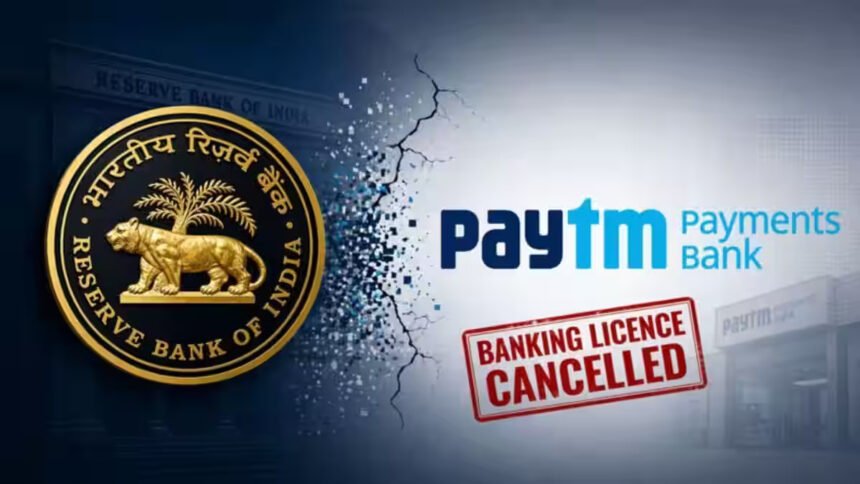
Paytm Payments Bank Licence Cancelled, India’s fintech ecosystem just witnessed one of its most dramatic regulatory interventions. The Reserve Bank of India (RBI) has officially cancelled the banking licence of Paytm Payments Bank Ltd (PPBL), effectively shutting down its core operations.
This Paytm bank shutdown marks a defining moment in India’s digital finance journey, sending strong signals about regulatory compliance and accountability in the fintech space.
If you’ve been following the story, this wasn’t a sudden move—it was more like a slow-burning fuse that finally reached its end. But what does this really mean for users, investors, and the broader digital payments ecosystem? Let’s unpack it step by step.
What Exactly Happened?
The RBI has directed Paytm Payments Bank to cease all banking operations with immediate effect. This includes stopping services like deposits, withdrawals, and other banking transactions.
The central bank clarified that the decision comes after a prolonged period of regulatory scrutiny. Importantly, the RBI also reassured customers that the bank has sufficient funds to settle all its liabilities during the winding-up process.
In simple terms: the bank is shutting down, but your money isn’t vanishing into thin air.
Why Did RBI Cancel the Licence?
Let’s get straight to the point—this wasn’t a one-off issue. The RBI cited multiple serious concerns:
- Persistent non-compliance with regulatory norms
- Weak governance practices
- Operational irregularities
- Concerns over management conduct
The regulator went as far as stating that the way the bank was being run was not in the interest of depositors or the public. That’s a strong statement—and in regulatory language, it signals deep-rooted issues.
A Timeline of Trouble: This Didn’t Happen Overnight
Paytm Payments Bank Licence Cancelled, If you’re wondering, “Why now?”, the answer lies in a series of escalating actions.
- 2022: RBI first imposed restrictions on PPBL
- 2023–2024: Increased scrutiny and tighter controls
- 2024: Ban on onboarding new customers and accepting deposits
- Final Step: Complete licence cancellation
Think of it like repeated warnings before a final shutdown. The regulator gave multiple chances—but compliance gaps remained unresolved.
What Does This Mean for Paytm Users?
Here’s where things get personal. If you’ve used Paytm, you’re probably asking: “Is my money safe?”
The short answer: Yes, according to RBI.
The regulator has confirmed that PPBL holds enough funds to repay depositors. However, customers will need to follow the withdrawal and settlement processes during the winding-down phase.
So while there’s inconvenience, there’s no indication of financial loss.
Impact on Paytm’s Core Business
Now here’s an interesting twist. One 97 Communications Ltd, the parent company of Paytm, has made it clear:
- It has no direct exposure to Paytm Payments Bank
- There are no significant business dependencies
- Its services will continue without interruption
That means:
- Paytm app? Still working
- Paytm UPI? No disruption
- Paytm QR, Soundbox, and card machines? Business as usual
In fact, the company had already written off its investment in PPBL as of March 31, 2024. So financially, this blow was already anticipated.
Is This the End of Paytm? Not Even Close
Let’s clear up a common misconception—this is not the end of Paytm.
Paytm is much more than its payments bank. It’s a diversified fintech platform offering:
- UPI payments
- Merchant services
- Investment platforms (Paytm Money)
- Payment gateway solutions
Think of PPBL as just one branch of a much larger tree. Losing it hurts, but it doesn’t bring the whole tree down.
What About the Fintech Industry?
Paytm Payments Bank Licence Cancelled, This move sends a loud and clear message to India’s fintech sector: compliance is non-negotiable.
For startups and digital banks, the takeaway is simple:
- Innovation alone isn’t enough
- Governance matters just as much
- Regulatory alignment is critical for survival
It’s like building a high-speed car—you still need brakes, seatbelts, and traffic rules.
Why RBI Took Such a Strong Stand
The RBI’s role isn’t just to regulate—it’s to protect.
In this case, the central bank concluded that:
- Continued operations would not serve any useful purpose
- The bank failed to meet licensing conditions
- Public interest was at risk
When trust in a financial institution weakens, regulators step in. And here, the RBI clearly decided that enough was enough.
Customer Confidence and Trust: The Bigger Picture
Let’s zoom out for a moment.
India’s digital payments ecosystem is built on trust. Millions of users rely on apps like Paytm daily. If one major player falters, it can shake confidence across the system.
By taking decisive action, the RBI is signaling that:
- Customer protection comes first
- No entity is “too big to regulate”
- The system’s integrity is non-negotiable
In a way, this strengthens the ecosystem in the long run—even if it causes short-term disruption.
What Should Customers Do Now?
If you’re a Paytm Payments Bank user, here’s what you should focus on:
- Withdraw or transfer your balance as advised
- Stay updated with official RBI and Paytm announcements
- Avoid panic—follow structured steps
This isn’t a crisis—it’s a controlled shutdown.
Lessons for Businesses and Startups
This episode offers a masterclass in regulatory risk management:
- Compliance isn’t optional—it’s foundational
- Governance failures can undo even the biggest brands
- Transparency with regulators is crucial
In the race to scale, cutting corners can be fatal. Paytm’s case is a stark reminder of that.
What Lies Ahead for Paytm?
Paytm will now likely focus on:
- Strengthening its non-banking services
- Expanding UPI and merchant ecosystem
- Rebuilding investor and customer confidence
The company has already emphasized that its core services remain unaffected. The next phase will be about stability and trust restoration.
A Wake-Up Call for the Digital Finance Era
The cancellation of Paytm Payments Bank’s licence isn’t just a regulatory action—it’s a defining moment for India’s fintech journey.
It highlights the delicate balance between innovation and regulation. You can build cutting-edge platforms, onboard millions of users, and dominate markets—but if compliance falters, everything is at risk.
For users, the takeaway is reassurance: the system works, and safeguards are in place. For businesses, it’s a cautionary tale: growth without governance is a fragile strategy.
Read More: Trent Share Price Under Pressure After ₹2,500 Crore Fund-Raise Plan
Conclusion
Paytm Payments Bank Licence Cancelled, Every ecosystem evolves—and sometimes, that evolution comes through tough decisions.
The RBI’s move may seem harsh, but it reinforces a crucial principle: trust is the backbone of finance. Without it, even the most advanced digital platforms can crumble.
So while Paytm recalibrates and the fintech sector takes notes, one thing is clear—India’s financial system isn’t just growing, it’s maturing.