
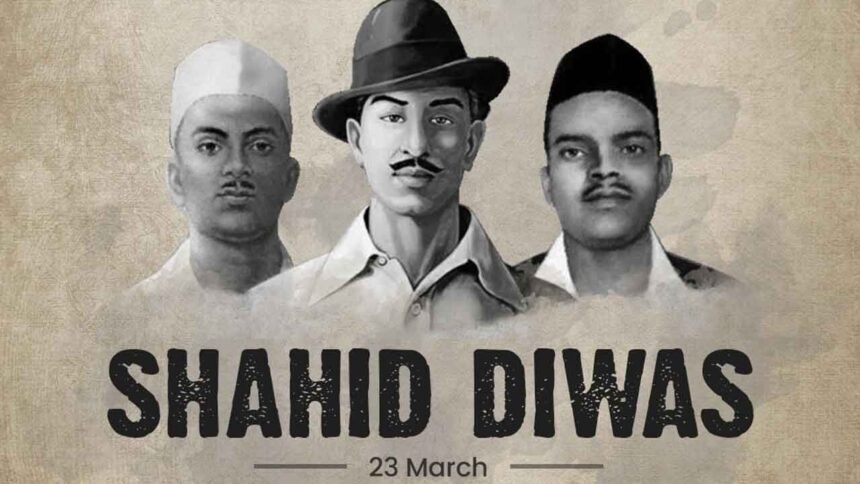
Shaheed Diwas 2026, India pauses—just for a moment—to remember something powerful. Something emotional. Something deeply rooted in sacrifice. Shaheed Diwas, also known as Martyrs’ Day, isn’t just another date on the calendar. It’s a reminder of courage that feels almost unreal.
But let’s be honest—how often do we actually sit down and think about what these young revolutionaries went through? What pushed them to sacrifice everything at such a young age?
This day marks the execution of three iconic freedom fighters—Bhagat Singh, Shivaram Rajguru, and Sukhdev Thapar—in 1931. And their story? It’s not just history—it’s a legacy that still speaks loudly today.
The Historical Backbone of Shaheed Diwas
To understand the significance of Shaheed Diwas, we need to rewind time—back to colonial India, when British rule was at its peak and resistance was growing stronger by the day.
The British Empire wasn’t just ruling—it was suppressing voices, crushing movements, and silencing dissent. And that’s exactly where revolutionaries like Bhagat Singh and his comrades stepped in.
Their actions weren’t random. They were calculated, symbolic, and aimed at shaking the foundations of colonial authority.
The Spark: Lala Lajpat Rai’s Death
Let’s talk about the turning point.
On October 30, 1928, a peaceful protest in Lahore, led by Lala Lajpat Rai, turned violent. The British police responded with a brutal lathi charge. Rai suffered severe injuries—and tragically passed away on November 17, 1928.
This wasn’t just an incident. It was a trigger.
Bhagat Singh and his fellow revolutionaries were enraged. And honestly, who wouldn’t be? Seeing a respected leader die due to police brutality lit a fire that couldn’t be extinguished.
The Saunders Assassination: A Case of Mistaken Identity
Shaheed Diwas 2026, Driven by anger and a sense of justice, Bhagat Singh, Rajguru, and Sukhdev planned to assassinate James A. Scott—the officer responsible for the lathi charge.
But fate had other plans.
Instead, they mistakenly killed John Saunders, an Assistant Superintendent of Police. It was a critical moment—one that would eventually lead to their arrest and execution.
Yet, even in this mistake, their intent remained clear: resistance against oppression.
The Assembly Bomb Incident: A Statement, Not Violence
Fast forward to April 8, 1929.
Bhagat Singh and Batukeshwar Dutt threw bombs in the Central Legislative Assembly in Delhi. But here’s the key point—they didn’t intend to kill anyone.
Sounds surprising, right?
The bombs were low-intensity. The goal was symbolic—to “make the deaf hear.” They wanted to protest against oppressive laws like the Public Safety Bill and Trade Disputes Act.
And instead of running away, they surrendered willingly.
That act alone speaks volumes about their courage and ideology.
The Final Chapter: Execution in Lahore Jail
Eventually, Bhagat Singh’s involvement in the Saunders case came to light.
After a controversial trial, Bhagat Singh, Rajguru, and Sukhdev were sentenced to death.
On March 23, 1931, they were hanged in Lahore Central Jail.
They were just in their early twenties.
Let that sink in.
At an age when most people are still figuring out life, these young men chose to give theirs up—for a nation they wouldn’t even see free.
Why Shaheed Diwas Holds Deep Significance
So, why does this day still resonate so strongly?
Because it’s more than remembrance—it’s reflection.
- It honors unmatched bravery
- It reminds us of the cost of freedom
- It inspires patriotism in younger generations
- It reinforces the value of standing up for justice
In a world where comfort often outweighs courage, Shaheed Diwas serves as a wake-up call.
Bhagat Singh: The Mind Behind the Revolution
Shaheed Diwas 2026, Bhagat Singh wasn’t just a revolutionary—he was a thinker, a writer, and a visionary.
He believed that real change comes from ideas, not just action.
Think of him like a spark in a dark room—not just burning, but lighting the way for others.
His writings continue to challenge, inspire, and provoke thought even today.
Powerful Quotes by Bhagat Singh That Still Inspire
Let’s take a moment to revisit some of his most impactful words:
- “They may kill me, but they cannot kill my ideas.”
- “Revolution is an inalienable right of mankind.”
- “Bombs and pistols do not make a revolution.”
- “Merciless criticism and independent thinking are necessary.”
- “The sword of revolution is sharpened on the whetting stone of ideas.”
- “Any man who stands for progress must challenge old beliefs.”
- “Revolution is not a cult of bomb and pistol.”
- “The aim of life is to develop the mind harmoniously.”
These aren’t just quotes—they’re philosophies. They challenge you to think, question, and evolve.
How India Observes Shaheed Diwas Today
Across India, March 23 is marked with deep respect and patriotism.
- Schools organize speeches and cultural programs
- Institutions hold tribute ceremonies
- People visit memorials and statues
- Social media fills with quotes and remembrance posts
But beyond all this, the real tribute lies in remembering their values—not just their names.
Lessons We Can Learn from These Martyrs
Let’s be real—what can we actually learn from them today?
A lot.
- Stand up for what’s right—even if it’s hard
- Question injustice instead of accepting it
- Value ideas as much as action
- Be fearless in the face of adversity
Their lives weren’t long—but they were meaningful. And maybe that’s what matters most.
Movies That Keep the Legacy Alive
Sometimes, history feels distant. But cinema brings it closer—makes it real, emotional, and unforgettable.
Here are some iconic films that capture Bhagat Singh’s journey:
- The Legend of Bhagat Singh (Ajay Devgn) – A powerful, critically acclaimed portrayal
- Shaheed (Manoj Kumar) – A classic that still resonates emotionally
- 23rd March 1931: Shaheed (Sunny Deol & Bobby Deol) – Focuses on the final days
- Rang De Basanti (Aamir Khan) – A modern take inspired by revolutionary spirit
Each of these films doesn’t just tell a story—they make you feel it.
Read More: Pulwama Attack: Why February 14 Is Observed as Black Day in India
Conclusion
Shaheed Diwas 2026, Shaheed Diwas isn’t about looking back—it’s about looking within.
It asks a simple question: What would you stand for?
Bhagat Singh, Rajguru, and Sukhdev didn’t just fight for freedom—they defined it. Their courage continues to echo through generations, reminding us that real change demands sacrifice.