
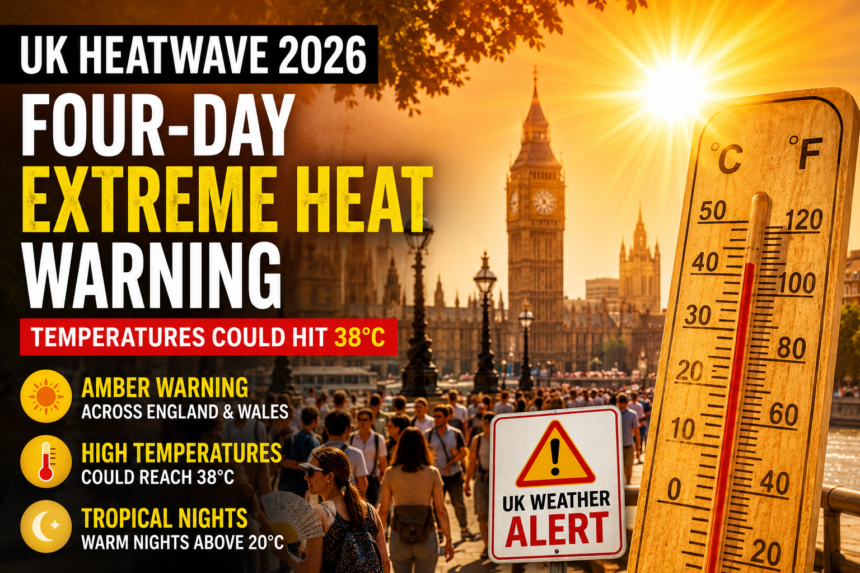
UK Heatwave 2026, The United Kingdom is bracing for a significant spell of extreme weather as a four-day amber heat warning officially comes into force. Forecasters predict temperatures could climb as high as 38°C (100°F) in parts of England, creating potentially dangerous conditions for millions of people.
The Met Office has issued a major UK Weather Alert, warning that exceptionally hot and humid conditions are set to grip much of England and Wales through the middle of the week. With temperatures expected to soar and overnight conditions remaining unusually warm, millions of residents could face challenging weather conditions in the days ahead.
As Europe experiences one of its most intense heatwaves in recent years, the UK is now feeling the effects of the hot air mass spreading northward from the continent.
Amber Heat Warning Covers Large Areas of England and Wales
The Met Office’s amber warning remains active until Thursday night, covering vast regions of England and Wales. While southern and central areas will experience the longest duration of extreme heat, northern regions will also feel the impact during the latter part of the week.
An amber warning is not issued lightly. It signals a high likelihood of widespread impacts affecting public health, transport systems, energy networks, and daily routines.
Experts warn that everyone—not just vulnerable groups—could be affected by the intense temperatures.
Temperatures Could Reach a Sweltering 38°C
UK Heatwave 2026, Meteorologists expect daytime temperatures to exceed 30°C across most areas covered by the warning. In the hottest locations, thermometers could reach an astonishing 38°C.
To put that into perspective, these temperatures are more commonly associated with Mediterranean countries than the UK. Streets, buildings, and public spaces could become heat traps, especially in densely populated urban areas.
The combination of high temperatures and humidity will make conditions feel even hotter, increasing the risk of heat-related illnesses.
Tropical Nights Add to the Discomfort
While many people look forward to cooler evenings after a hot day, relief may be hard to find this week.
Forecasters predict overnight temperatures could remain above 20°C in several towns and cities. In some urban locations, temperatures may not drop below 21°C.
These conditions are known as “tropical nights” and can significantly affect sleep quality. Without a chance for the body to cool down properly, heat stress can accumulate over consecutive days.
For many residents, it may feel as though the country is trapped inside a giant greenhouse, with heat lingering long after sunset.
Official Heatwave Declared in Parts of Essex
UK Heatwave 2026, The first official heatwave of the season has already been confirmed in parts of England.
Writtle, near Chelmsford in Essex, recorded temperatures above the local heatwave threshold of 27°C for three consecutive days. This officially qualifies as a heatwave under UK weather definitions.
Heatwave thresholds vary across the country, generally ranging between 25°C and 28°C depending on the region. When temperatures exceed these thresholds for three days in a row, a heatwave is declare.
As temperatures continue to rise, additional regions are expected to meet the criteria in the coming days.
Extreme European Heat Fuels UK Weather Conditions
The current heatwave is being drive by a powerful surge of hot air originating from continental Europe.
Several European countries are experiencing severe heat conditions. Western France, for example, could see temperatures reach between 43°C and 44°C during the coming days.
Authorities in France have already issued red heatwave alerts across large sections of the country. Paris is forecast to approach 40°C, a temperature rarely se in June.
This intense European heat dome is acting like a giant atmospheric engine, pushing warm air northward and amplifying temperatures across the UK.
Health Risks Expected Across the Population
UK Heatwave 2026, One of the biggest concerns surrounding this heatwave is its impact on public health.
The Met Office has warned that adverse health effects are likely to affect not only vulnerable individuals such as the elderly, children, and those with existing medical conditions but also healthy adults.
Common heat-related illnesses include:
Heat Exhaustion
Symptoms may include:
- Dizziness
- Excessive sweating
- Fatigue
- Headaches
- Nausea
Heatstroke
A more serious condition that can become life-threatening if not treated quickly.
Authorities are urging people to stay hydrated, avoid prolonged sun exposure, and check on family members, friends, and neighbors who may be at greater risk.
Daily Life and Work Routines May Be Disrupted
Extreme heat doesn’t just affect health—it can also disrupt normal daily activities.
Employers may need to adjust working conditions, especially for outdoor workers exposed to direct sunlight. Construction sites, agricultural operations, and delivery services could face challenges during peak afternoon temperatures.
Schools, offices, and public facilities may also implement measures to reduce heat exposure.
In some cases, productivity can decline as the body expends additional energy simply trying to stay cool.
Pressure Builds on Infrastructure and Transport Networks
Hot weather places significant stress on critical infrastructure.
Rail tracks can expand under extreme temperatures, increasing the risk of delays and service disruptions. Roads may soften, while energy networks often face surging demand as people rely more heavily on fans and cooling systems.
Water usage is also expect to increase dramatically.
Authorities are encouraging responsible water consumption while monitoring supplies carefully throughout the heatwave period.
The UK’s infrastructure was largely design for cooler conditions, making prolong periods of extreme heat particularly challenging.
Water Safety Concerns Rise During Heatwaves
UK Heatwave 2026, When temperatures soar, many people naturally head to beaches, lakes, rivers, and reservoirs to cool off.
However, emergency services warn that this can increase the risk of water-related accidents.
Cold water shock remains a serious danger even during hot weather. Rivers and lakes may appear inviting, but water temperatures can still be significantly lower than expected.
Officials are encouraging people to swim only in designated safe areas and to remain cautious around open water.
How Long Will the Hot Weather Last?
Current forecasts suggest the heatwave will continue through at least Thursday across much of England and Wales.
Several consecutive days above 30°C are expect, accompanied by unusually warm nights.
Meteorologists indicate that slightly cooler air may begin moving in from the west later in the week. However, confidence remains low regarding exactly when this change will occur and how quickly temperatures will fall.
For now, residents should prepare for several more days of intense summer heat.
Climate Change and Increasing Heatwaves
Climate scientists continue to point toward human-driven climate change as a major factor behind the increasing frequency and intensity of heatwaves.
Over recent decades, global average temperatures have risen steadily, making extreme heat events more likely.
What was once considered rare is gradually becoming more common.
Researchers suggest that heatwaves in the UK are now occurring more frequently and often reaching higher temperatures than historical averages.
As the climate continues to warm, experts expect extreme weather events to become an increasingly important challenge for governments, businesses, and communities alike.
Pollen Levels Set to Surge Alongside the Heat
UK Heatwave 2026, The hot and dry conditions are also expect to drive pollen counts higher across much of the UK.
Areas Facing Very High Pollen Levels
- Wales
- Midlands
- Southern England
Grass and weed pollen are forecast to reach very high levels in these regions.
Areas Facing High Pollen Levels
- North-East England
- Northern Ireland
Lower Pollen Levels Expected
- Scotland
For hay fever sufferers, the coming days could be particularly uncomfortable. Symptoms such as sneezing, itchy eyes, runny noses, and congestion may become more severe.
Experts recommend keeping windows closed during peak pollen periods and checking local pollen forecasts regularly.
Preparing for the Heatwave
With temperatures expected to remain exceptionally high, preparation is essential.
Some simple precautions include:
- Drinking plenty of water
- Staying indoors during the hottest part of the day
- Wearing lightweight clothing
- Applying sunscreen regularly
- Avoiding strenuous outdoor activities
- Keeping homes cool by closing curtains and blinds
Small actions can make a significant difference in staying safe during prolonged periods of extreme heat.
Read More: IMD Monsoon Alerts 2026: Weather Warnings Issued Across India Amid Unpredictable Monsoon
Conclusion
UK Heatwave 2026, The UK’s latest amber heat warning signals one of the most significant hot spells of the year so far. With temperatures potentially reaching 38°C, tropical nights, rising health risks, and pressure on infrastructure, authorities are urging the public to take precautions seriously.
As scorching air continues to spread from continental Europe, millions across England and Wales will face challenging conditions throughout the week. Whether it’s staying hydrated, avoiding excessive sun exposure, or checking on vulnerable individuals, preparation will be key to navigating this intense period of summer weather safely.