
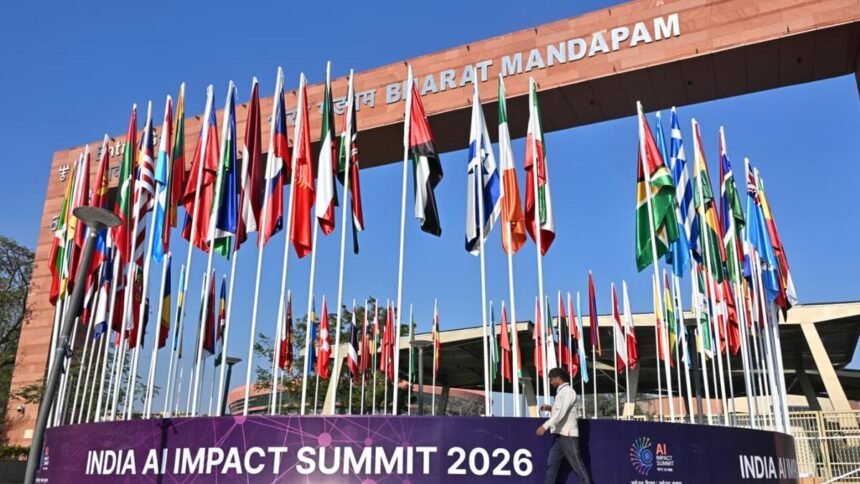
India AI Impact Summit, India’s AI Impact Summit 2026 in New Delhi was supposed to be a landmark moment – a stage to tell the world that India is ready to lead the next big wave in artificial intelligence. Instead, day one turned into a lesson in how poor planning can derail even the most ambitious vision.
Long queues, confused attendees, blocked gates, and last‑minute security sweeps took over the narrative, overshadowing the government’s message about innovation and digital leadership. So, what exactly went wrong, and why does it matter so much?
A Grand Vision For AI – And For India
The summit wasn’t just another tech event. It was carefully positioned as:
-
A global platform for discussions on AI policy, ethics, and innovation
-
A chance for India to highlight its role as a voice for the Global South in AI governance
-
The first time this global AI event was being held in a developing country
In other words, the stakes were high. For Prime Minister Narendra Modi’s government, the summit was meant to showcase India not just as an IT outsourcing hub, but as a serious AI power shaping the future of technology policy.
Think of it like hosting the World Cup of AI conversations – and then having the stadium gates jammed on opening day.
Opening Day Chaos: Long Queues And Frayed Tempers
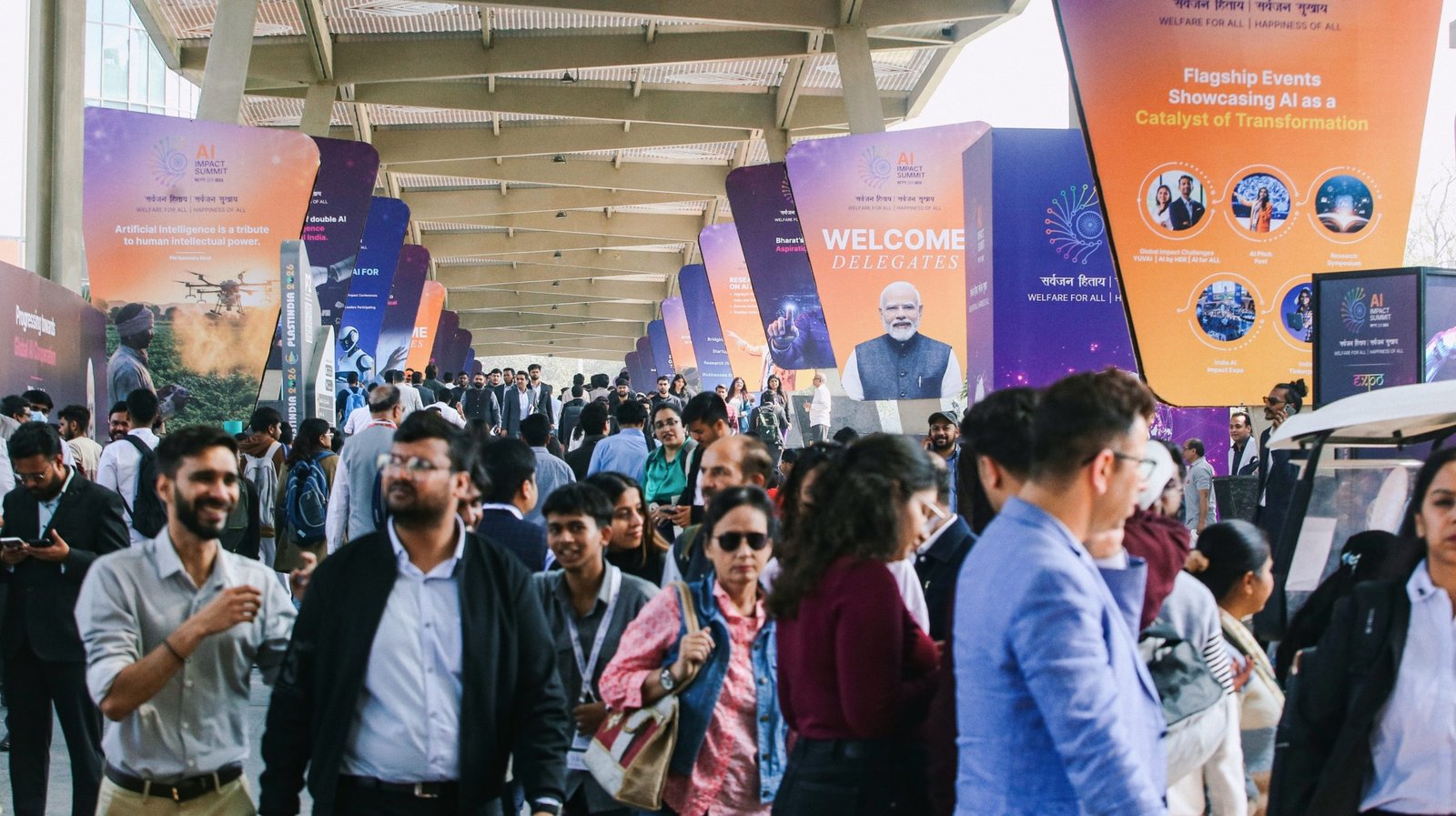
India AI Impact Summit, From early Monday, reports started pouring in from the venue in New Delhi. Instead of a smooth, futuristic experience, many participants ran into:
-
Long queues outside entry gates
-
Overcrowded waiting areas
-
Confusion over which line to join for which pass
-
Delays in getting inside exhibition zones and conference halls
For an event that expected around 250,000 attendees, the crowd management just did not seem ready for the volume. People who had travelled from across India and abroad found themselves stuck outside or wandering aimlessly, trying to figure out where to go.
You would expect an AI summit to feel seamless and smart. Instead, it felt like trying to board an overcrowded train without a platform announcement.
Security Sweeps And Sudden Evacuations: Attendees Left In The Dark
The situation became even more frustrating when parts of the exhibition building were suddenly cleared out for security checks ahead of high‑level arrivals.
Several delegates told Reuters that they received unclear or incomplete instructions:
-
Attendees were asked to leave the building abruptly
-
Many had to scramble to reclaim their belongings
-
There was no clear communication on when they could re‑enter
-
Some were left in limbo outside the venue, unsure what to do next
Security is obviously non‑negotiable for an event of this scale, especially with top officials expected. But the lack of coordinated communication turned a routine security measure into a chaotic experience.
It’s a bit like being told to get off a flight for “checks” without any idea if or when you’re boarding again.
Poor Signage And Limited Seating: A Ground‑Level View Of Mismanagement
Once people did make it inside, the confusion didn’t stop. Attendees reported:
-
Poor or inadequate signage across the venue
-
Difficulty locating specific halls, booths, or session rooms
-
Limited seating inside session areas
-
Overflow crowds that couldn’t get into popular panels
India AI Impact Summit, With so many participants converging on a limited number of high‑interest sessions, many simply couldn’t get in. Some had travelled specifically to hear certain speakers or attend particular panels, only to be turned away at the door because the room was full.
For an event centered on cutting‑edge AI, something as basic as clear directional signs and seating plans should not have been left to chance.
Speakers Left Waiting: Uncertainty Over Sessions And Agendas
It wasn’t just attendees who were frustrate. Some speakers scheduled for Tuesday’s panels were still waiting for confirmation of:
-
Final session timings
-
Panel compositions
-
Updated agendas
Last‑minute changes are common at large conferences, but speakers usually receive clear internal communication. Here, even they were reportedly in the dark.
When speakers don’t know if their sessions are confirm, it sends a bad signal to everyone involve: sponsors, audiences, and international observers. It raises an uncomfortable question – if the program isn’t stable, how seriously is the content being manage?
Media Struggles: Confusion Over Passes, QR Codes, And Workspaces
India AI Impact Summit, Journalists covering the summit faced their own set of hurdles. According to messages circulating in a WhatsApp group for the event, many reporters:
-
Struggled to understand whether they needed digital QR codes, physical passes, or both
-
Arrived to find that physical passes promised for collection weren’t ready
-
Had trouble finding proper seating or workspaces to file stories or conduct interviews
For media professionals working on tight deadlines, these obstacles are not minor. They directly affect how quickly and how well the summit’s key messages reach the public.
Ironically, an event meant to amplify India’s technological leadership ended up muffling its own story because the journalists on the ground couldn’t operate smoothly.
Social Media Backlash: The Internet Reacts In Real Time
In today’s world, any large‑scale event lives or dies by its online narrative. And on Monday, the AI Summit’s online narrative was brutal. Attendees flooded social media platforms with complaints about:
-
Closed gates and denied entry
-
Lack of access to their own booths or spaces
-
Long waits with no clear information
-
General disorganisation
One post that stood out came from Maitreya Wagh, co‑founder of AI voice startup Bolna. He wrote on X (formerly Twitter):
-
He said the gates were close, so he couldn’t access his own booth at the summit
-
He invite others who were strand outside and want to meet the Bolna team to send him a DM
-
He even joke about setting up a “mini‑booth” at a Connaught Place café, referring to the busy commercial area near the venue
That single anecdote captured the mood perfectly: startups who were supposed to showcase their innovations inside the venue were brainstorming backup plans in nearby coffee shops.
Government Silence: No Immediate Response From The IT Ministry
India AI Impact Summit, With criticism mounting online, many observers looked to the government for an explanation or assurance. However, as of the initial reports:
-
India’s IT Ministry did not immediately respond to requests for comment
-
There was no clear public statement acknowledging the problems
-
No visible corrective action plan was communicated on day one
In the age of instant information, silence can feel louder than anything else. When things go wrong at a high‑profile international summit, rapid damage control matters almost as much as the original planning.
Why This Matters: Optics, Credibility, And The Global AI Conversation
You might wonder: is this just another badly organise event, or does it actually matter in the bigger picture? It matters a lot, for several reasons.
-
Global optics
The summit is an international event, with participants, companies, and officials from around the world. Mismanagement doesn’t stay local; it shapes how India’s capabilities are perceive globally. -
Credibility in AI governance
Indian officials have frame the summit as a platform for developing countries to have a stronger voice in how AI is govern worldwide. If the summit itself appears disorganise, critics may question India’s readiness to drive complex global conversations on AI policy and ethics. -
Investor and industry confidence
Tech companies and investors watch these events closely. Smooth execution signals reliability and seriousness. Chaos signals the opposite. -
Domestic expectations
Within India, there’s pride in the country’s digital progress – from UPI to massive IT exports. When a flagship AI event falters, it feels like a mismatch between promise and delivery.
In short, the message India wanted to send was: “We can lead the future of AI.” The message many people received on day one was: “We’re still struggling with the basics of large‑scale event management.”
Lessons To Learn: What Needs To Change For Future Summits
If there’s a silver lining, it’s that this experience offers some clear lessons for future high‑profile events, especially in the tech and policy space. Some key areas that need serious attention:
-
Integrated planning for logistics and security
Security sweeps are unavoidable, but they must be tightly coordinate with crowd management and communication, so people don’t feel blindside. -
Clear, unified access systems
Mixing digital QR codes with physical passes without a simple, unified process leads to chaos. A single, well‑explained access system is essential. -
Real‑time communication channels
Apps, SMS alerts, or announcement systems can guide attendees instantly when plans change, venues shift, or gates close. -
Media support as a priority, not an afterthought
Dedicate workspaces, clear pass protocols, and direct liaison teams for journalists ensure that the event’s core message isn’t lost in operational noise. -
Venue design and signage improvements
Large venues must be map clearly, both online and on‑site, with obvious signage and staff who can guide lost visitors quickly.
Think of it like building an AI model: it’s not enough to have powerful algorithms if your data pipeline is broke. Similarly, a visionary summit needs strong “infrastructure” – logistics, communication, and execution – to support its lofty goals.
Can India Recover The Narrative?
Despite the messy start, the summit runs until February 20, which means there is still time to course‑correct:
-
Organisers can streamline entry procedures from day two onward
-
Clear public communication can acknowledge the opening‑day issues and outline fixes
-
Sessions that were disrupt or overcrowd might be reschedule, moved to bigger halls, or stream more widely
If handled well, the remaining days could still produce meaningful discussions on AI governance, innovation, and collaboration between developed and developing nations. But the opening‑day missteps will linger as a cautionary tale.
The real question is: will people remember the content of the summit or the chaos outside its gates?
Similar Articles: India New IT Rules: 3-Hour Takedown Deadline Changes Online Content Landscape
Conclusion
India AI Impact Summit, India’s AI Impact Summit was designed to send a bold message: that India is ready to shape how artificial intelligence evolves globally, especially for developing countries. Instead, the opening day highlighted a different reality – that ambition without flawless execution can backfire, especially on the world stage.
From long queues and confusing access rules to security‑driven evacuations and journalists struggling to even enter, the problems were not minor glitches. They cut to the heart of how seriously the world will take India’s pitch to lead in AI policy and innovation.
The summit still has days to go, and meaningful outcomes are still possible. But the first impression has already been made – and it serves as a reminder that in the age of AI, smart systems are useless if the human‑run systems around them break down.