

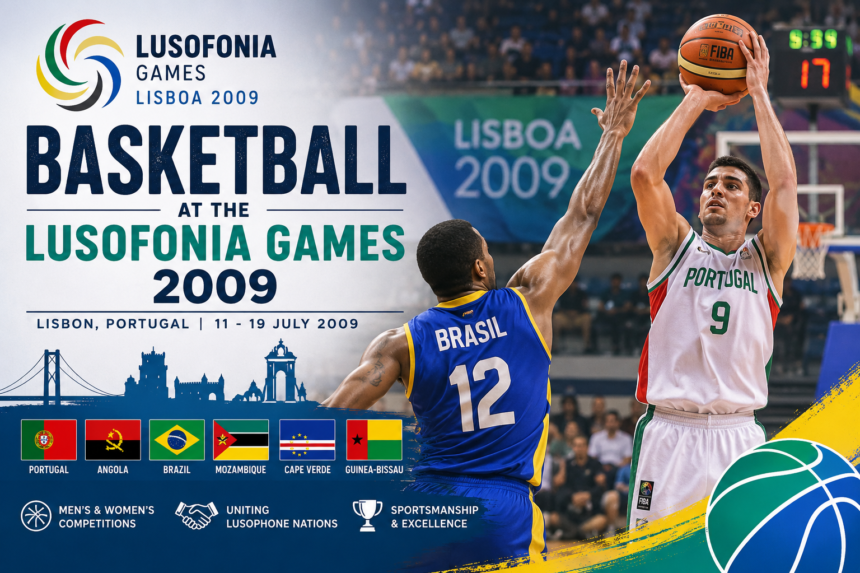
Basketball at Lusofonia Games 2009 was one of the standout events of the second edition of the Lusophone multi-sport competition, bringing together athletes from Portuguese-speaking nations in a week of competitive and cultural exchange. Held in Lisbon, Portugal, from 11 to 19 July 2009, the basketball tournament featured both men’s and women’s competitions and showcased the growing strength of basketball across the Lusophone world. The games were played at the Complexo Municipal dos Desportos da Cidade de Almada, one of Portugal’s premier indoor sporting venues.
While the Lusofonia Games may not attract the same global attention as the Olympic Games or the FIBA Basketball World Cup, the Lusofonia Games basketball tournament plays an important role in strengthening sporting ties among Portuguese-speaking countries. The 2009 edition highlighted emerging talent, promoted international cooperation, and gave several national teams valuable competitive experience, reinforcing the tournament’s importance in developing basketball across the Lusophone world.
What Are the Lusofonia Games?
The Lusofonia Games are a multi-sport event organized by the Association of Portuguese Speaking Olympic Committees (ACOLOP). The competition brings together athletes from countries and territories where Portuguese is an official language or where strong Portuguese cultural ties exist.
The inaugural Lusofonia Games were held in Macau in 2006, while Lisbon hosted the second edition in 2009. Basketball has been included since the very first Games and quickly became one of the tournament’s flagship sports because of its popularity in nations such as Angola, Brazil, Portugal, Mozambique, and Cape Verde.
Lisbon Becomes the Center of Lusophone Basketball
Basketball at Lusofonia Games 2009, Portugal welcomed teams from across the Portuguese-speaking world, creating an atmosphere that combined competitive sport with cultural celebration. The basketball tournament took place in Almada, just across the Tagus River from central Lisbon.
The modern indoor arena provided excellent facilities for players and spectators alike. Fans witnessed several closely contested matches alongside dominant performances from some of the tournament favorites.
Unlike larger international championships featuring dozens of countries, the Lusofonia Games offered a more intimate setting where players had opportunities to interact with athletes from different nations, strengthening friendships beyond the basketball court.
Participating Nations
The men’s and women’s competitions featured teams representing several Portuguese-speaking nations, including:
- Portugal
- Angola
- Brazil
- Mozambique
- Cape Verde
- Guinea-Bissau
- Macau
- Other Lusophone participants depending on competition eligibility
Each nation entered the tournament hoping to strengthen its basketball program while competing for Lusofonia Games medals.
Men’s Basketball Tournament Format
The men’s competition followed a group-stage format before advancing to knockout rounds.
Teams were divided into two groups, with the best-performing nations progressing to the semifinals and medal matches. This structure ensured that every team played multiple games while rewarding consistent performances throughout the tournament.
Several matches were highly competitive, particularly those involving Portugal, Angola, and Brazil—three nations with strong basketball traditions.
Portugal Claims Men’s Gold
Basketball at Lusofonia Games 2009, The host nation produced an outstanding tournament, using home-court support to fuel its performances.
Portugal advanced through the tournament with confidence before defeating Brazil 95-71 in the gold medal game to secure the men’s basketball championship. Their disciplined defense and balanced offense proved decisive throughout the competition.
Brazil finished with the silver medal after an impressive campaign, while Angola claimed bronze after defeating Cape Verde in the third-place playoff.
The victory represented one of Portugal’s biggest achievements during the 2009 Lusofonia Games and highlighted the continued development of Portuguese basketball.
Angola Continues Its Basketball Tradition
Although Angola did not capture the men’s gold medal, the country once again demonstrated why it has long been regarded as one of Africa’s basketball powerhouses.
For decades, Angola has dominated African basketball and regularly qualified for FIBA World Cups and Olympic Games. Their participation raised the overall quality of competition and provided valuable experience for every opposing team.
Several of Angola’s victories during the tournament came by comfortable margins, reflecting the country’s deep basketball culture and strong player development system.
Women’s Basketball Competition
The women’s tournament adopted a round-robin format, with every participating team facing each opponent once.
This format rewarded consistency rather than knockout success, ensuring that every game had significance in determining the final standings.
The competition featured exciting contests between experienced basketball nations and emerging programs seeking international exposure.
After completing the round-robin schedule, Mozambique finished at the top of the standings to win the women’s gold medal. Angola secured the silver medal, while Portugal earned the bronze medal after an impressive campaign on home soil.
Rising Level of Women’s Basketball
Basketball at Lusofonia Games 2009, The women’s competition demonstrated the continued growth of basketball among Lusophone nations.
Mozambique’s championship reflected years of investment in women’s basketball, while Angola and Portugal continued to establish themselves among the region’s strongest programs.
The tournament also offered valuable international experience to younger players, many of whom would later represent their countries in African and European competitions.
As women’s basketball continued expanding globally, events like the Lusofonia Games provided an important platform for player development.
Memorable Performances
Throughout the tournament, several teams delivered memorable displays.
Portugal’s men’s team impressed with disciplined teamwork and efficient shooting during the knockout stages.
Brazil showcased its athleticism and offensive ability despite falling short in the final.
Angola remained one of the tournament’s strongest defensive teams and consistently demonstrated the physical style that has made it successful internationally.
On the women’s side, Mozambique’s consistency across every round ultimately proved decisive in securing the championship.
Importance Beyond Medals
Although medals are always important, the Lusofonia Games have a broader purpose than simply determining champions.
The competition strengthens relationships among Portuguese-speaking nations through sport, culture, and education. Athletes exchange ideas, coaches share tactical approaches, and younger players gain international exposure without the enormous pressure associated with world championships.
For many smaller basketball programs, tournaments like the Lusofonia Games provide opportunities that might otherwise be difficult to obtain.
International competition accelerates player development while helping national federations improve coaching standards and organizational experience.
Development of Basketball in Lusophone Countries
Basketball at Lusofonia Games 2009, Many Portuguese-speaking countries possess rich basketball traditions.
Angola has dominated African basketball for decades.
Brazil remains one of the world’s historic basketball nations, producing legendary players and competing regularly in major FIBA events.
Portugal has steadily improved its domestic basketball structure while increasing investment in youth development.
Mozambique continues to produce talented women’s players who compete internationally.
Cape Verde has recently emerged as another rising basketball nation, benefiting from increasing investment and participation.
Events like the Lusofonia Games encourage these countries to continue investing in grassroots basketball while inspiring future generations.
Legacy of the 2009 Tournament
The basketball competition at the 2009 Lusofonia Games left a lasting legacy.
It strengthened cooperation among Lusophone basketball federations, provided meaningful international competition for developing teams, and demonstrated Portugal’s ability to host successful multi-sport events.
Several players who participated would later represent their countries in continental championships and other major international competitions.
The tournament also reinforced basketball’s position as one of the premier sports within the Lusofonia Games.
Looking Ahead
Following the success of Lisbon 2009, basketball remained a central attraction at future editions of the Lusofonia Games, including the 2014 Games in Goa, India.
Each edition continues to build upon the foundations established during the first two tournaments by expanding participation and improving the overall standard of competition.
As basketball continues to grow across Portuguese-speaking nations, the Lusofonia Games remain an important stepping stone for young athletes seeking international experience.
Conclusion
Basketball at Lusofonia Games 2009 successfully combined elite competition with cultural unity among Portuguese-speaking nations. Portugal celebrated the men’s championship on home soil, Mozambique captured women’s gold, and countries such as Angola and Brazil reaffirmed their status as basketball powerhouses within the Lusophone community.
Beyond the medal table, the tournament promoted friendship, sporting excellence, and international collaboration. More than a decade later, the 2009 competition remains an important chapter in the history of the Lusofonia Games and a reminder of basketball’s ability to connect nations through shared passion and competition.