
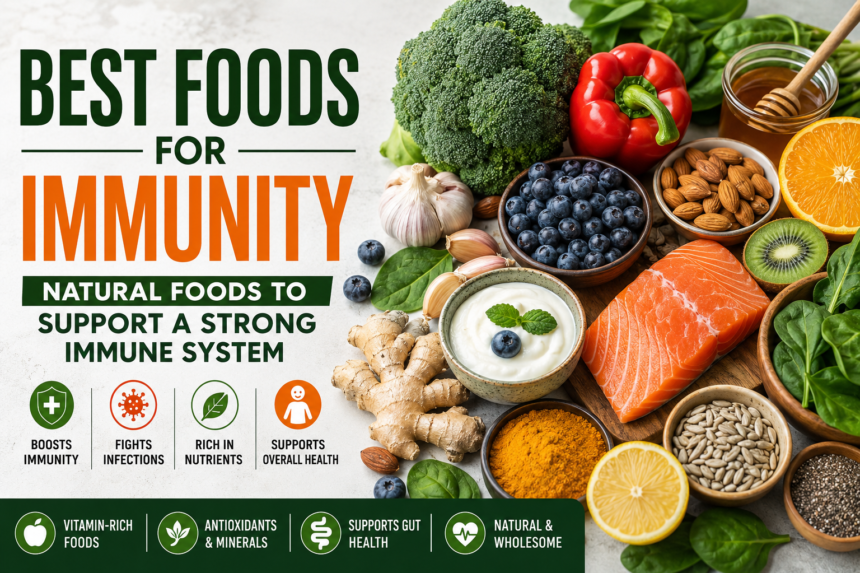
Best Foods for Immunity, A strong immune system is one of the body’s most valuable defenses against infections, viruses, and diseases. While no single food can prevent illness or instantly “boost” immunity, maintaining a balanced diet rich in essential vitamins, minerals, antioxidants, and healthy fats helps your immune system function at its best. Research consistently shows that nutrition plays a critical role in supporting immune cells, reducing inflammation, and maintaining overall health.
Whether you’re preparing for cold and flu season or simply want to improve your long-term health, adding natural foods for immunity to your daily meals is one of the smartest lifestyle choices you can make. These nutrient-rich foods provide essential vitamins, minerals, antioxidants, and healthy fats that help support your immune system and contribute to overall wellness.
In this guide, we’ll explore the best foods for immunity, the nutrients behind their benefits, and practical ways to include them in your everyday diet.
Why Nutrition Matters for Your Immune System
Your immune system consists of a complex network of cells, tissues, and organs that work together to protect your body from harmful bacteria, viruses, fungi, and parasites.
To function properly, immune cells require nutrients such as:
- Vitamin C
- Vitamin A
- Vitamin D
- Vitamin E
- Zinc
- Selenium
- Iron
- Protein
- Omega-3 fatty acids
- Probiotics
Best Foods for Immunity, Nutrient deficiencies can weaken immune responses, making the body more susceptible to infections. A varied diet rich in whole foods helps provide these essential nutrients naturally.
1. Citrus Fruits
Citrus fruits are among the most well-known foods associated with immune health because they’re rich in vitamin C.
Examples include:
- Oranges
- Lemons
- Limes
- Grapefruits
- Tangerines
Vitamin C supports the production and function of white blood cells and acts as a powerful antioxidant that helps protect cells from oxidative stress.
Easy ways to eat them:
- Fresh juice
- Fruit salads
- Smoothies
- Healthy snacks
2. Red Bell Peppers
Many people are surprised to learn that red bell peppers contain even more vitamin C than oranges.
They’re also packed with:
- Beta-carotene
- Vitamin A
- Fiber
- Antioxidants
Vitamin A supports healthy skin and mucous membranes, which serve as the body’s first line of defense against pathogens.
3. Garlic
Garlic has been used in traditional medicine for centuries.
Its active compound, allicin, possesses antimicrobial properties and may support immune function by helping regulate inflammation.
Garlic also adds flavor without extra calories or sodium.
Ways to use garlic:
- Soups
- Stir-fries
- Pasta sauces
- Roasted vegetables
4. Ginger
Ginger contains natural compounds called gingerols and shogaols that have antioxidant and anti-inflammatory properties.
Potential benefits include:
- Supporting normal immune responses
- Helping reduce inflammation
- Soothing sore throats
- Relieving nausea
Fresh ginger tea is an easy addition during colder months.
5. Yogurt
Much of the immune system is closely linked to gut health.
Yogurt containing live and active cultures provides beneficial probiotics that help maintain a balanced gut microbiome.
Choose:
- Plain yogurt
- Greek yogurt
- Low-sugar varieties
Top with berries and nuts for an even healthier meal.
6. Spinach
Spinach is packed with nutrients that support immune health, including:
- Vitamin C
- Vitamin A
- Vitamin E
- Folate
- Iron
Cooking spinach lightly improves the absorption of some nutrients while preserving many antioxidants.
7. Broccoli
Broccoli is considered one of the healthiest vegetables because it contains numerous immune-supporting nutrients:
- Vitamin C
- Vitamin K
- Vitamin A
- Fiber
- Sulforaphane
- Antioxidants
Steaming broccoli helps retain many of its beneficial nutrients.
8. Berries
Blueberries, strawberries, raspberries, and blackberries are rich in:
- Vitamin C
- Anthocyanins
- Polyphenols
- Fiber
These antioxidants help reduce oxidative stress that may otherwise damage immune cells.
Enjoy berries:
- Fresh
- Frozen
- In oatmeal
- In yogurt
- In smoothies
9. Fatty Fish
Fish such as:
- Salmon
- Sardines
- Mackerel
- Tuna
provide omega-3 fatty acids, high-quality protein, vitamin D, and selenium.
Omega-3 fats help regulate inflammation, an important part of maintaining a healthy immune response.
10. Nuts and Seeds
Almonds, walnuts, sunflower seeds, pumpkin seeds, and Brazil nuts provide important nutrients including:
- Vitamin E
- Selenium
- Zinc
- Healthy fats
- Protein
Brazil nuts are especially rich in selenium, a mineral essential for normal immune function.
11. Sweet Potatoes
Sweet potatoes are loaded with beta-carotene, which the body converts into vitamin A.
Vitamin A helps maintain:
- Healthy skin
- Respiratory tract lining
- Digestive tract barriers
These protective barriers help prevent harmful microorganisms from entering the body.
12. Mushrooms
Certain mushrooms contain nutrients that support immunity, including:
- Selenium
- Vitamin D (some varieties)
- Beta-glucans
Common options include:
- Shiitake
- Oyster
- Button mushrooms
- Maitake
They’re a nutritious addition to soups, stir-fries, and salads.
13. Green Tea
Green tea contains:
- Catechins
- EGCG (Epigallocatechin gallate)
- Antioxidants
These compounds may help protect immune cells from oxidative damage while supporting overall wellness.
Replace sugary beverages with green tea for a healthier daily habit.
14. Turmeric
Turmeric contains curcumin, a naturally occurring compound with antioxidant and anti-inflammatory properties.
While research continues, adding turmeric to a balanced diet may contribute to healthy inflammatory responses.
Pair turmeric with black pepper to improve curcumin absorption.
15. Beans and Lentils
Legumes provide:
- Plant protein
- Zinc
- Iron
- Folate
- Fiber
These nutrients contribute to immune cell production while supporting digestive health.
Great choices include:
- Chickpeas
- Kidney beans
- Lentils
- Black beans
Nutrients That Support Immunity
| Nutrient | Food Sources |
|---|---|
| Vitamin C | Citrus fruits, berries, peppers |
| Vitamin A | Sweet potatoes, carrots, spinach |
| Vitamin D | Fatty fish, fortified dairy |
| Vitamin E | Almonds, sunflower seeds |
| Zinc | Pumpkin seeds, beans, meat |
| Selenium | Brazil nuts, seafood |
| Protein | Fish, eggs, beans, yogurt |
| Probiotics | Yogurt, kefir, fermented foods |
Lifestyle Habits That Complement Healthy Eating
Best Foods for Immunity, Food alone cannot guarantee a strong immune system. Healthy daily habits work together with good nutrition.
Aim to:
- Sleep 7–9 hours every night.
- Stay physically active.
- Drink plenty of water.
- Manage stress through relaxation techniques.
- Avoid smoking.
- Limit excessive alcohol intake.
- Maintain a healthy body weight.
- Practice good hygiene, including regular handwashing.
Foods That May Weaken Immune Health
Frequently consuming highly processed foods may reduce overall diet quality.
Limit:
- Sugary beverages
- Excessive sweets
- Ultra-processed snacks
- Processed meats
- Excess alcohol
- Foods high in trans fats
Instead, focus on whole foods prepared with minimal processing.
Sample One-Day Immune-Friendly Meal Plan
Breakfast
- Greek yogurt with blueberries, almonds, and oats
Morning Snack
- Orange and pumpkin seeds
Lunch
- Grilled salmon with broccoli and brown rice
Afternoon Snack
- Green tea with fresh fruit
Dinner
- Lentil soup with spinach and roasted sweet potatoes
Evening
- Herbal ginger tea
Common Myths About Immunity
Myth 1: One superfood can prevent illness.
No single food can prevent infections. A balanced dietary pattern is what matters most.
Myth 2: More vitamin C is always better.
Excessive supplementation isn’t necessary for most people and may cause side effects. Meeting daily needs through food is generally sufficient unless advised otherwise by a healthcare professional.
Myth 3: Supplements are better than food.
Whole foods provide vitamins, minerals, fiber, and beneficial plant compounds that work together to support health.
Read More: Weight Loss Injections Are Not Enough for Healthy Weight Loss, Expert Warns
Final Thoughts
Best Foods for Immunity, Building a healthy immune system starts with consistent lifestyle habits rather than quick fixes. Eating a colorful variety of fruits, vegetables, whole grains, lean proteins, healthy fats, nuts, seeds, and fermented foods provides the vitamins and minerals your body needs to support normal immune function.
Remember, there is no magic food that instantly boosts immunity. Instead, focus on long-term healthy eating patterns, regular exercise, quality sleep, stress management, and proper hydration. Together, these habits help your immune system perform at its best throughout the year.