
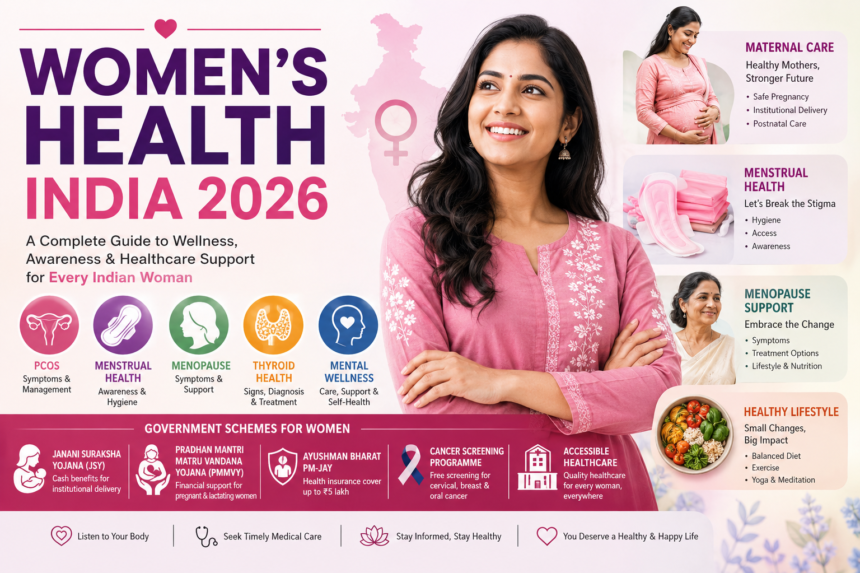
Women’s Health India 2026 is at a fascinating and important inflection point. On one hand, India has made extraordinary progress in maternal health — maternal mortality has fallen dramatically over the past two decades, institutional deliveries are at an all-time high, and government schemes like Janani Suraksha Yojana have brought millions of women into the formal healthcare system. On the other hand, conditions like PCOS (Polycystic Ovary Syndrome), endometriosis, thyroid disorders, and mental health issues that disproportionately affect women remain significantly underdiagnosed, undertreated, and under-discussed.
This comprehensive guide covers the most important women’s health topics in India in 2026 — from PCOS symptoms and management to menstrual health awareness, menopause support, and the government health schemes that every Indian woman should know about.
PCOS in India 2026: The Silent Epidemic
How Common Is PCOS in India?
Polycystic Ovary Syndrome affects an estimated 10-20% of Indian women of reproductive age — making India one of the highest-burden PCOS populations in the world. Despite this enormous prevalence, a large proportion of PCOS cases in India remain undiagnosed because women attribute symptoms like irregular periods, weight gain, and acne to stress or poor diet rather than seeking medical evaluation.
PCOS Symptoms: What to Watch For
- Irregular or missed periods — cycles shorter than 21 days or longer than 35 days
- Excess facial or body hair (hirsutism) — particularly on chin, upper lip, chest, and abdomen
- Hair thinning or hair loss from the scalp (androgenic alopecia)
- Acne that does not respond to normal acne treatment — particularly jawline and chin acne
- Unexplained weight gain — particularly around the abdomen
- Darkening of skin in neck, armpits, or groin (Acanthosis Nigricans — signal of insulin resistance)
- Difficulty conceiving — PCOS is a leading cause of female infertility in India
- Mood changes, anxiety, and depression — PCOS has significant mental health co-morbidities
Diagnosis
PCOS is diagnosed using the Rotterdam criteria — a woman needs to have at least two of the following three features: irregular ovulation (confirmed by period history), elevated male hormones (testosterone, DHEA-S — confirmed by blood test), and polycystic ovaries on ultrasound. A gynaecologist or endocrinologist makes the diagnosis after ruling out other conditions.
PCOS Management: What Actually Works
PCOS is a lifelong condition with no cure — but it is highly manageable with the right lifestyle and medical support. The cornerstone of PCOS management is lifestyle modification:
- Diet: Low glycaemic index foods — millets, vegetables, legumes, lean protein. Avoid refined carbohydrates, sugary drinks, and processed foods
- Exercise: 150 minutes per week of moderate exercise, including both cardio and strength training — proven to reduce insulin resistance
- Weight management: Even 5-10% weight loss in overweight PCOS patients significantly improves symptoms
- Metformin: Often prescribed to address insulin resistance — talk to your doctor
- Hormonal treatment: OCP (oral contraceptive pills) or progesterone therapy may be prescribed to regulate periods
- Yoga and stress management: Proven to reduce cortisol and improve hormonal balance in PCOS
Menstrual Health in India 2026: Progress and Persistent Gaps
Women’s Health India 2026, Menstrual health awareness in India has grown remarkably in the past decade — from the extraordinary impact of the Padman story to HealthFab’s period care startup raising Rs 20 crore in Series A in May 2026, indicating strong investor confidence in the menstrual health category. Yet significant gaps remain:
- 53% of Indian women still use cloth or other unclean absorbents — NFHS data
- Only 57% of school girls in India have access to proper menstrual hygiene products
- Menstrual leave policies are discussed but not legally mandated nationally in India
- Period shame and stigma continue to affect girls’ school attendance in rural India
Government Initiatives for Menstrual Health
The Pradhan Mantri Bhartiya Janaushadhi Pariyojana scheme makes subsidised sanitary napkins available at Rs 1 per pad at Jan Aushadhi Kendras across India. The government has also removed GST on sanitary napkins (they are zero-rated), making them more accessible. Many states have their own free sanitary napkin distribution schemes for school girls.
Menopause: India’s Most Under-Discussed Women’s Health Topic
Menopause — the natural cessation of menstruation that typically occurs between ages 45 and 55 — affects every woman, yet is discussed openly by almost none. In India, cultural norms around ageing and sexuality mean that menopause is typically suffered in silence, with women rarely seeking medical help for symptoms that can significantly impact quality of life.
Menopause Symptoms
- Hot flashes and night sweats — sudden feelings of intense heat, often with sweating and flushing
- Irregular periods before cessation — cycles become unpredictable for 2-5 years before menopause
- Sleep disturbances — insomnia or frequent waking, often related to hot flashes
- Mood changes — irritability, anxiety, and low mood are common
- Vaginal dryness — reduced oestrogen causes vaginal tissue changes
- Joint pain and muscle aches — oestrogen has anti-inflammatory effects
- Memory and concentration changes — ‘brain fog’ is a commonly reported symptom
Menopause Management Options
Indian women approaching or experiencing menopause should consult a gynaecologist who will discuss options including Hormone Replacement Therapy (HRT — increasingly recommended by guidelines for symptomatic women without contraindications), non-hormonal medications, lifestyle modifications, and Ayurvedic or herbal supplements. Do not self-medicate — always seek professional guidance.
Government Health Schemes for Women in India 2026
Janani Suraksha Yojana (JSY)
JSY provides cash incentives to pregnant women who deliver in government health institutions. The scheme has been instrumental in dramatically increasing institutional delivery rates in India — protecting both mothers and newborns from the risks of home delivery without skilled attendance. Cash benefits range from Rs 700 (urban) to Rs 1,400 (rural) per delivery.
Pradhan Mantri Matru Vandana Yojana (PMMVY)
PMMVY provides Rs 5,000 in direct cash benefit to pregnant and lactating women for their first child. The benefit is paid in three instalments linked to specific pregnancy and post-delivery milestones. Apply at your nearest Anganwadi centre or through the PMMVY online portal.
Ayushman Bharat for Women
The Ayushman Bharat PM-JAY scheme covers all female members of eligible households for health insurance of Rs 5 lakh per year for secondary and tertiary hospitalisation. The scheme covers women’s specific health needs including maternity care, gynaecological surgeries, and cancer treatment.
National Cancer Screening Programme
India’s National Programme for Non-Communicable Diseases (NP-NCD) mandates free screening for cervical cancer, breast cancer, and oral cancer at all government health facilities. Women aged 30-65 should access regular cervical cancer screening (Pap smear or VIA test) — cervical cancer is largely preventable with early detection.
Reproductive Health: Family Planning in India 2026
India’s family planning programme has evolved significantly. Modern contraception options available free or at subsidised cost at government health facilities include:
- Copper T IUD: Free at government hospitals — effective for up to 10 years
- Hormonal IUD: Available at select government facilities
- Injectable contraceptives (Antara programme): Available at ASHA and Anganwadi centres
- Emergency contraception: Available at pharmacies without prescription
- Surgical options: Male and female sterilisation available at government hospitals with compensation payments
Thyroid Disorders in Indian Women: The Most Underdiagnosed Condition
Thyroid disorders — both hypothyroidism (underactive thyroid) and hyperthyroidism (overactive thyroid) — are extraordinarily common in Indian women. Studies suggest that 1 in 10 Indian women have thyroid dysfunction, with the actual number likely higher due to underdiagnosis.
- Hypothyroidism symptoms: Fatigue, weight gain, cold intolerance, depression, constipation, dry skin, hair loss
- Hyperthyroidism symptoms: Weight loss, rapid heartbeat, anxiety, heat intolerance, tremors
- Diagnosis: Simple blood test (TSH, T3, T4) available at all government health centres — get tested if you have symptoms
- Treatment: Both conditions are highly manageable with appropriate medication under medical supervision
Read More: Indian Skincare Brands 2026: Top Affordable and Premium Skincare Reviews
Conclusion
Women’s Health India 2026, Indian women’s health challenges are real, widespread, and significantly underaddressed. From PCOS to menopause to thyroid disorders to maternal health — awareness is the first step, and accessing available government schemes and medical care is the next. You do not have to suffer in silence with any health condition.
Taza Newsz covers women’s health, government schemes, and wellness news for Indian women. Follow us for practical, accurate health information relevant to Indian women’s lives.