

National Science Day Theme 2026, Ever had someone ask you, “So… what do scientists actually do all day?” Maybe you’ve wondered the same thing yourself. We imagine lab coats, fancy machines, and maybe a rocket or two — but what’s really going on behind that word scientist?
Let’s break it down in a simple, conversational way, and use National Science Day as a perfect excuse to peek into the world of science, scientists, and the way they quietly shape our lives
What Do Scientists Actually Do?
At the most basic level, scientists create knowledge.
We’re all users of knowledge. A farmer needs to know when to sow and harvest, a shopkeeper uses arithmetic to calculate prices, and an engineer must know which design will keep a bridge standing. Most of this knowledge comes from books, schools, and now, of course, the internet.
But what about questions where we still don’t have clear answers, like:
Why are human–animal conflicts increasing?
Why are floods, heat waves, and landslides becoming more frequent?
Why do rare viral diseases suddenly break out more often?
These are not questions you can just Google and be done with. Someone has to dig, test, verify, and build new understanding from scratch. That “someone” is a scientist.
Scientists don’t just use knowledge — they manufacture it.
Why Do We Need Science At All?
National Science Day Theme 2026, You might wonder: can’t experience and common sense handle most things? To an extent, yes. But when you want reliable, testable, and universal answers, you need science.
Science is basically a method — a way of asking questions and checking if the answers actually hold up.
It relies on:
Careful observation
Controlled experiments
Logical reasoning
Evidence-based conclusions
Think about your daily life:
A farmer watches the seasons over years, then decides the right time to sow.
A home cook tweaks ingredients and quantities until that fish curry tastes perfect.
You wake up, see wet roads and puddles, and logically conclude, “It rained last night.”
That’s the scientific method in miniature form.
Now, imagine doing that same sort of reasoning, but with powerful instruments, large datasets, and global collaboration. That’s modern science.
Science And The Natural World
Science focuses only on natural phenomena. That’s one of its ground rules.
National Science Day Theme 2026, The famous biologist J.B.S. Haldane put it sharply: when he sets up an experiment, he assumes no god, angel, or devil is going to interfere with it. That might sound harsh to some, but it simply means: science looks for explanations within nature, not outside it.
Long ago, people explained lightning and thunderstorms as expressions of divine anger. The problem? That explanation didn’t help you predict when or where lightning would strike, or how to protect yourself from it.
Science, instead, tries to uncover:
The laws of nature
The patterns behind events
The causes and effects you can test
Isaac Newton, for instance, realised that the force pulling an apple down is the same one that keeps planets in orbit around the sun. That insight led to the theory of gravity. Suddenly, the fall of an apple and the motion of planets became part of the same story.
Evidence: The Heartbeat Of Science
Here’s a key rule scientists live by: if the evidence goes against your theory, the theory must change — not the other way around.
If observations contradict a hypothesis, you revise it.
If new data repeatedly disproves a theory, you discard it.
If a claim (say, a “magic cure” for diabetes) has no convincing evidence, you reject it.
No matter how elegant or emotionally satisfying an idea is, science asks one tough question: Does the evidence support this? If not, it’s out.
That’s what makes science powerful — and sometimes uncomfortable.
How Science Changed Our Lives
It’s easy to treat science as something abstract, but it sits in almost everything you see around you.
A few examples:
Understanding that diseases can be caused by bacteria and viruses led to antibiotics, hygiene practices, and vaccines.
Because of vaccines, diseases such as polio are almost wiped off the map in most parts of the world.
Discoveries in electricity, electromagnetism, and materials science led to telephones, computers, electricity grids, and motor vehicles.
Try imagining a day without electricity, phones, or the internet. Hard, isn’t it? That’s the footprint of science on daily life.
Who Can Become A Scientist?
Here’s the surprising part: you don’t need to be some sort of genius born in a lab to become a scientist. But you do need a few key qualities.
The first one? Curiosity.
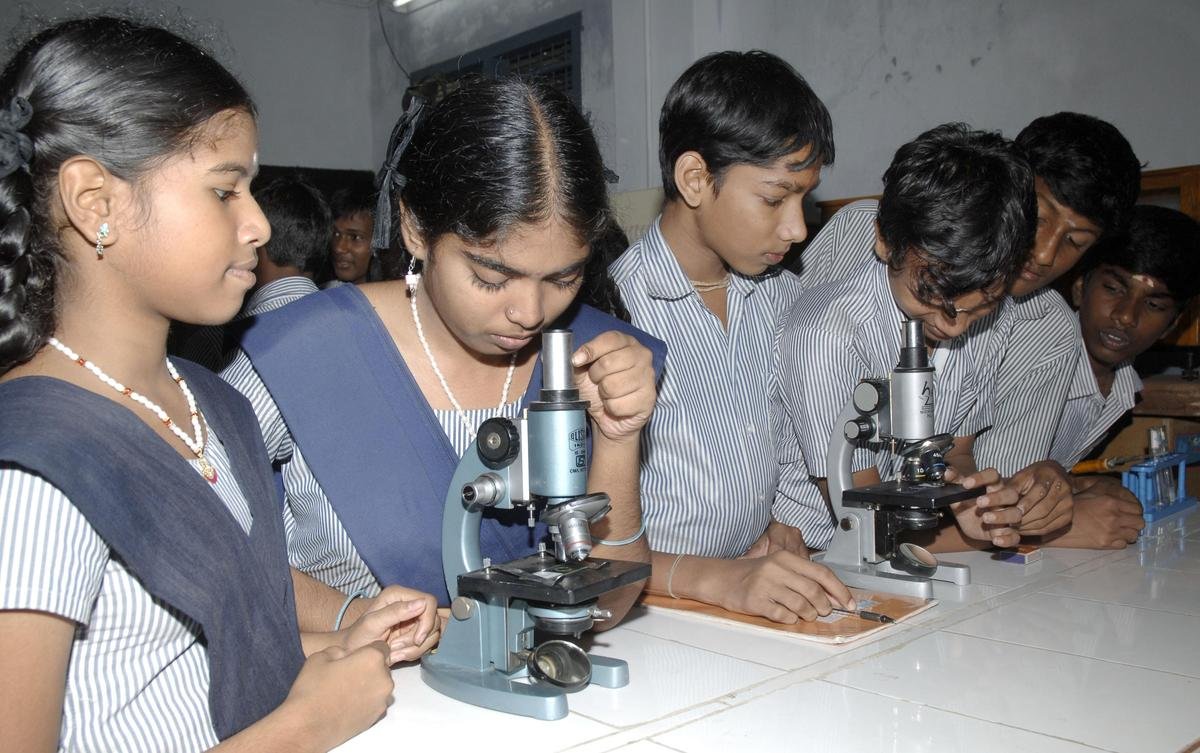
National Science Day Theme 2026, Children are born curious. They ask “why” endlessly. Somewhere along the way, many adults stop asking questions. Scientists don’t. They hold on to that childlike wonder and keep poking at the unknown.
Another essential trait: the ability to say, “I don’t know.”
That sounds simple, but it isn’t. Many adults are uncomfortable admitting ignorance. For scientists, though, “I don’t know” is the starting point — and it bothers them just enough to push them to find answers.
Standing On The Shoulders Of Giants
Creating new knowledge doesn’t happen in a vacuum. To discover something new, you must first know what’s already known.
Newton captured this beautifully when he said, “If I have seen further, it is by standing on the shoulders of giants.”
Think of education like a pyramid:
At the base, we all learn a little of everything — science, history, literature, math.
As we move up, we start focusing more.
At the top, a scientist specialises deeply in one area and tries to push the boundary of human knowledge in that narrow field.
You might know “a bit about many things,” but a scientist needs to know “a lot about one thing” — and then push it further.
Imagination: Science Meets Creativity
Science is not just about numbers and formulas. It also demands imagination.
Connecting the motion of planets with a falling apple took imagination. So did the idea that invisible microbes could cause disease, or that small ripples in spacetime — gravitational waves — could be detected from billions of light-years away.
Good scientists are often as creative as good artists. The difference? Their creativity must survive tests, data, and experiments.
At the same time, scientists must be skeptical, even of their own ideas. They constantly ask:
Is this really true?
Does this explanation fit all observations?
Could there be another, simpler explanation?
Only the ideas that survive this constant questioning become part of accepted science.
Learning The Craft Of Research
So how does someone train to be a scientist?
It’s not just about topping exams. It’s about learning how to:
Ask the right questions
Design careful experiments or observations
Collect data without bias
Analyse that data logically
Evaluate evidence critically
Most of this training happens by working with experienced scientists, often during a doctoral (PhD) programme at universities or research institutes.
During a PhD, students don’t just attend classes. They work on real research problems, try, fail, try again, and slowly learn how to navigate uncertainty. And the journey doesn’t stop with the degree. Contrary to what many people think, getting a doctorate is not the end of research; it’s just the entry ticket into the world of professional science.
The Myth Of The Constant “Eureka” Moment
National Science Day Theme 2026, Popular stories make it seem like scientists are always shouting “Eureka!” and making groundbreaking discoveries every other day. Reality is quieter — and slower.
Those dramatic “lightbulb moments” do happen, but they are rare in most scientific careers. Much of research is about small, steady steps:
Refining measurements
Improving methods
Correcting older ideas
Filling gaps in existing knowledge
Astrophysicist Subrahmanyan Chandrasekhar once reflected on this with a beautiful metaphor. Not everyone can climb Everest, he said, but there’s nothing “lowly” about standing in the valley and waiting for the sun to rise over Kanchenjunga.
In other words, you may not always be the person making the headline discovery, but your contribution still matters to the bigger picture.
Big Science Needs Big Teams
Modern science has grown so complex that many big questions are simply too large for one person or even one lab.
Take the Human Genome Project. Its goal was to map all the genetic information in humans. That effort:
Took about 15 years
Involved scientists from multiple countries
Required massive coordination, funding, and technology
Or consider gravitational-wave observatories in the US, Europe, Japan, and soon India. These projects involve thousands of scientists spread across the globe, all working together to capture faint ripples in spacetime produced by cosmic events like merging black holes.
These scientists come from different countries, cultures, and belief systems — but inside the collaboration, one thing unites them: they follow the scientific method. That shared framework lets them trust each other’s work, build on each other’s data, and slowly assemble “small bricks” into the huge building of human knowledge.
Science today is less a solo adventure and more a relay race, with each researcher passing the baton forward.
Can Anyone Become A Scientist?
This question takes us to an unlikely place: the animated film Ratatouille.
In the movie, a famous chef declares, “Anyone can cook.” It doesn’t mean everyone will become a great chef. It means greatness can come from unexpected places — even from a rat with a passion for food.
Science works the same way.
Not everyone will become a great scientist.
But a great scientist can come from anywhere — a big city or a tiny village, a wealthy family or a modest background.
What matters is curiosity, persistence, honesty with evidence, and a willingness to keep learning.
If you’re willing to ask questions, admit what you don’t know, learn what others have discovered, and patiently test your ideas against reality, then yes — you can walk the path of science.
Read More: Top Exploding Topics: The Future Trends You Can’t Ignore
Conclusion
So, what do scientists do?
National Science Day Theme 2026, They create knowledge. They ask tough questions, watch the world with sharp eyes, run careful experiments, and then test their own ideas without mercy. And build on what earlier generations discovered, and they leave behind a stronger foundation for those who come next.
Science doesn’t promise certainty or perfection. It offers something more honest: a method to get steadily closer to the truth, even if it takes years, teams, and countless quiet steps.
On National Science Day, it’s worth remembering that science isn’t just happening in fancy labs; it’s an ongoing human effort to understand our universe — one question, one experiment, and one curious mind at a time.