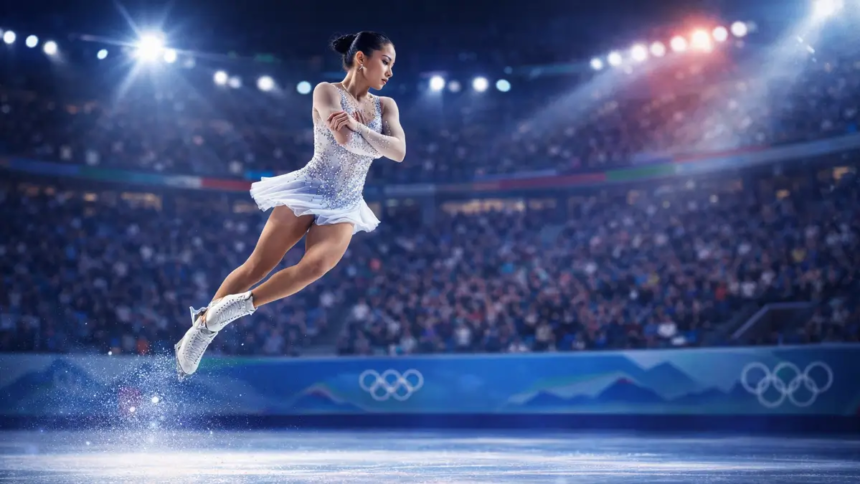
Winter Olympics Women’s Figure Skating 2026, What happens when raw teenage talent meets the biggest stage in winter sports? You get a performance like the one Japan’s Nakai Ami delivered in the women’s figure skating short program at the Winter Olympics 2026 in Milano Cortina.
At just 17, Nakai didn’t just show up – she took command, outscoring three-time world champion Sakamoto Kaori and reigning world champion Alysa Liu to grab the early lead heading into the free skate on Thursday (19 February).
Let’s break down how she did it, what it means for the competition, and why this women’s event is shaping up to be one for the ages.
Nakai Ami Takes the Lead in Milano Cortina
On Tuesday evening (17 February), the women’s short program unfolded at the Olympic Winter Games Milano Cortina 2026 – and Nakai Ami stole the show.
She posted a season’s best score of 78.71 points, putting her narrowly ahead of her far more decorated teammate Sakamoto Kaori, who scored 77.23. Alysa Liu of the United States, the 2025 world champion, wasn’t far behind either, scoring 76.59 to sit in third.
In a field packed with Olympic and world medallists, a teenager leading after the short program tells you one thing: pressure means nothing if your skating does the talking.
A Near-Perfect Short Program: Inside Nakai’s Performance
Winter Olympics Women’s Figure Skating 2026, what made Nakai’s short program stand out so much? It wasn’t just the score; it was the way she earned it.
She skated with a mix of poise and aggression you usually see in veterans. As the first of the major contenders to take the ice, she knew she had to set the bar high – and she did exactly that.
Her layout included:
-
A clean triple Axel to open the program
-
A triple Lutz–triple toe loop combination
-
A strong triple Loop
Landing a triple Axel in the short program is always a statement. Doing it cleanly at your first Olympics? That’s like walking into an exam and solving the hardest question in the first minute.
The Triple Axel: Nakai’s Game-Changing Moment
For many skaters, the triple Axel is the make-or-break element – the kind of jump that can define an entire competition. Nakai nailed it.
After her performance, she admitted to Olympics.com that being out on Olympic ice felt “like a dream” and said she was especially thrilled to land the triple Axel on “this amazing stage.”
She even joked she would almost give herself a 10 out of 10 for the jump. Interestingly, she revealed she wasn’t completely sure beforehand that she would land it, but still managed to pull it off when it mattered most.
That’s the difference between a promising junior and a genuine contender: when uncertainty meets courage, and courage wins.
Skating to ‘La Strada’: Emotion Meets Precision
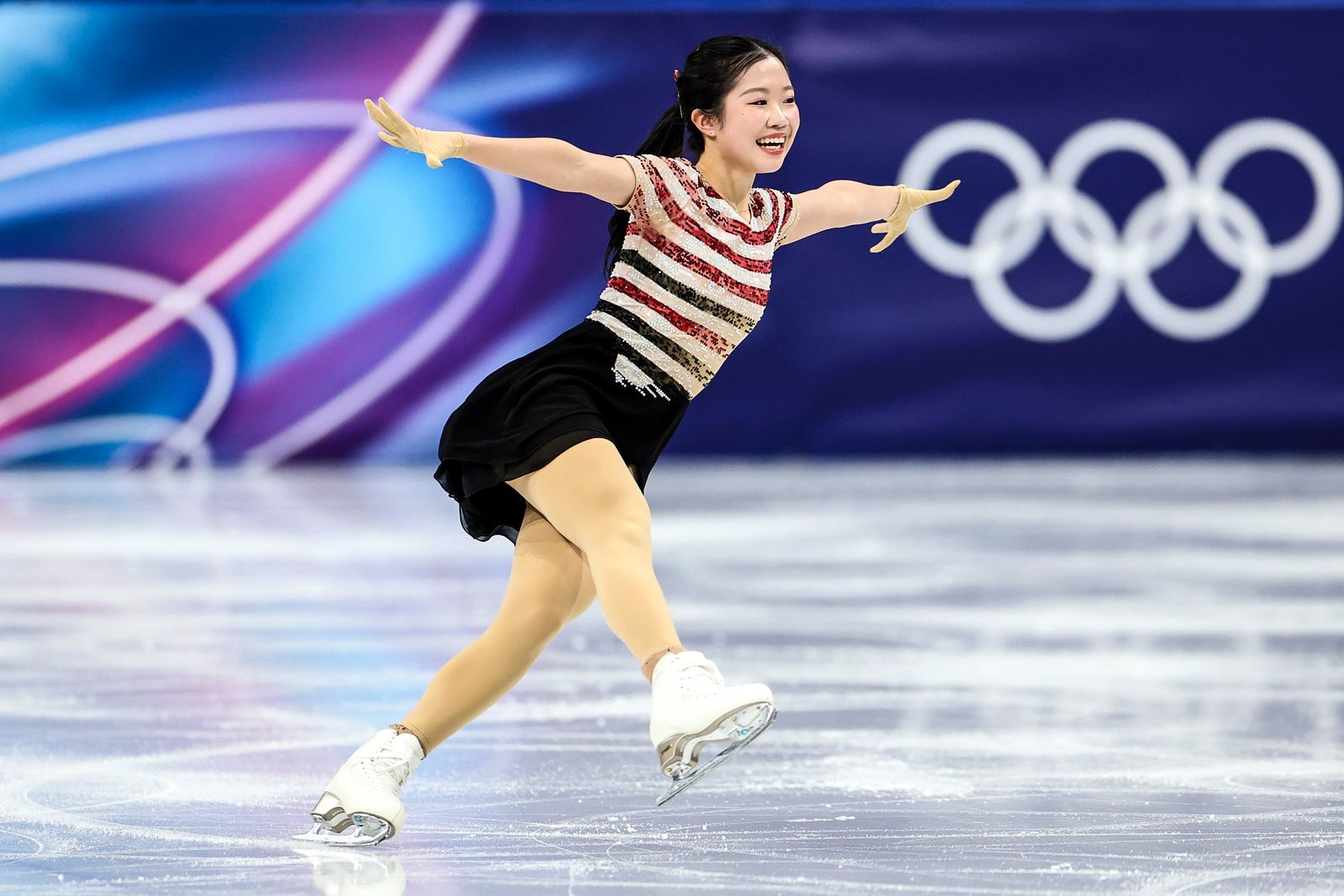
Winter Olympics Women’s Figure Skating 2026, Nakai isn’t just a jumper; she’s a performer. Skating to La Strada by Nino Rota, she wrapped her technical content in artistry and emotion.
Her edges were clean, her timing sharp, and her connection to the music clear from start to finish. When she struck her final pose, she erupted with pure joy, pumping her fists three times before gliding to center ice to bow.
It wasn’t just a technical success; it felt like a breakthrough moment. You could almost see the realization on her face: she had just announced herself on the Olympic stage.
From 15th at Nationals to Olympic Leader: Nakai’s Meteoric Rise
Nakai’s story becomes even more impressive when you look at where she was just a year ago.
-
Last season, she finished 15th at the Japanese national championships.
-
This season, she surged ahead, securing a Grand Prix victory at the Grand Prix of France.
-
That win earned her a spot at the Grand Prix Final, where she proved she could compete with the world’s best.
Now, she’s leading the Olympic women’s event after the short program. That’s not just improvement; that’s a transformation.
She’s kept her perspective, too. Nakai says she wants to enjoy these Olympics, and before her music started, she felt calm and “like [her] usual self.” It’s a reminder that composure can be just as powerful as talent.
Sakamoto Kaori: The Veteran Chasing a Storybook Finish
Right behind Nakai is a skater who needs no introduction: Sakamoto Kaori, three-time world champion and Olympic bronze medallist.
At 25, Sakamoto has already said these will be her final Olympic Games, having previously competed at PyeongChang 2018 and Beijing 2022. In Milano, she’s skating to a soundtrack that feels symbolic: Time to Say Goodbye.
Her short program was classic Sakamoto – confident, refined, and emotionally charged. She delivered:
-
A strong triple Lutz
-
A clean double Axel
-
A triple Flip–triple toe loop combination
From there, her trademark smooth gliding and deep edges took over, drawing the crowd into her performance. You could almost feel the arena leaning in as she moved.
Emotional, Fearless, and Still Having Fun: Sakamoto’s Approach
Winter Olympics Women’s Figure Skating 2026, Sakamoto admitted she was “a little bit nervous,” but emphasized that she truly enjoyed her time on the ice.
She said she was “really, really happy” with her performance and even confessed she was having so much fun she couldn’t stop herself from laughing during the program.
That’s the energy of a skater who knows this might be her last Olympic chapter and wants to leave nothing behind. She may be chasing a gold medal, but she’s also skating for something more personal: the perfect farewell.
Alysa Liu: The Comeback Queen in Contention
In third place sits Alysa Liu, the 2025 world champion from the United States – and perhaps one of the most fascinating stories in the field.
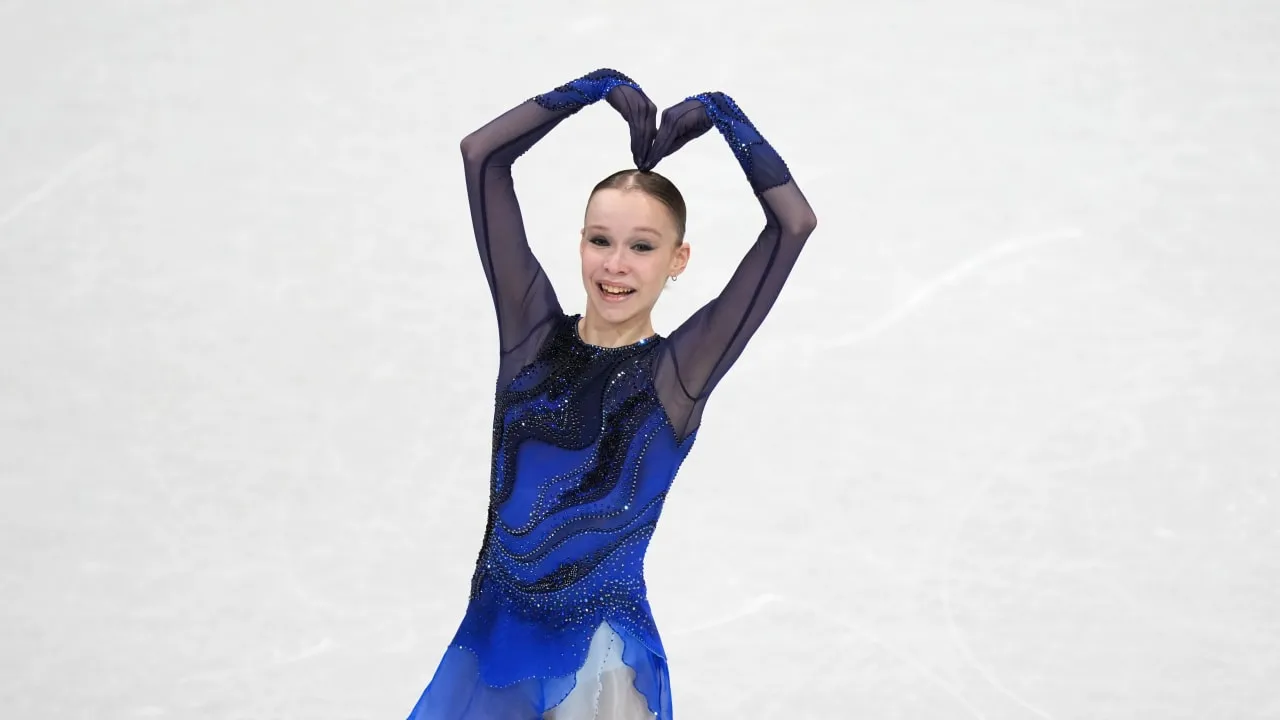
Liu’s short program wasn’t flawless on paper, but it was powerful in impact. She skated to Promise by Laufey, bringing a soft, lyrical mood that contrasted with her competitive intensity.
Her technical content included:
-
A triple Lutz–triple Loop combination (with a quarter call on the second jump)
-
Strong overall execution and musicality
Despite the minor technical call, Liu still earned a personal best score, proving that she’s not just back – she’s better than ever.
Retirement, Return, and a New Mindset: Liu’s Second Act
Winter Olympics Women’s Figure Skating 2026, Liu’s journey to Milano Cortina hasn’t been straightforward. Four years ago, after competing at Beijing 2022, she shocked many fans by announcing her retirement from figure skating.
But the story didn’t end there. She returned to competition last season with a new philosophy: she would do things on her own terms this time. That mindset shift helped her capture a surprise world title in 2025.
Asked to describe how different this phase feels compared to four years ago, Liu said it was “indescribable,” joking that it would take “an entire movie” to explain.
This is “round two” for her, a chapter where she has taken creative control over her programs, music, and identity as a skater. She’s not just chasing medals; she’s shaping her own narrative.
A Women’s Event for the Ages: Pressure, History, and High Stakes
With Nakai leading, Sakamoto close behind, and Liu in striking distance, the women’s singles event at Milano Cortina 2026 is perfectly set up for a dramatic free skate.
Let’s look at what’s at stake:
-
Nakai Ami could complete a dream Olympic debut by turning a short program lead into a historic gold.
-
Sakamoto Kaori is aiming for the ultimate farewell – ending a decorated career with Olympic gold in what she has hinted will be her final Games.
-
Alysa Liu could add Olympic glory to her comeback story, proving that her second act is even stronger than her first.
Add to that the pressure of expectations, the emotional narratives, and the high technical demands of the modern women’s field, and you have all the ingredients for a truly unforgettable free skate.
Milano Ice Skating Arena: The Stage That Amplifies the Moment
The Milano Ice Skating Arena has already played a role in how this short program will be remembered. When the opening notes of Time to Say Goodbye filled the venue for Sakamoto’s performance, spectators audibly gasped – a sign of just how connected they are to the skaters’ stories.
Nakai’s youthful joy, Sakamoto’s mature elegance, and Liu’s expressive comeback each brought a different energy to the same ice. It’s like watching three different chapters of a book unfold side by side – past, present, and future of women’s figure skating all in one night.
What to Expect in the Free Skate
Heading into Thursday’s free skate, the big question hangs in the air: can Nakai Ami maintain her lead, or will the experience of Sakamoto and Liu turn the tables?
A few key factors will likely decide the outcome:
-
Consistency under pressure: Nakai’s triple Axel is a weapon, but it also comes with risk.
-
Program difficulty: Who will load their free skate with the most challenging content – and land it cleanly?
-
Performance quality: In tight scoring battles, interpretation, transitions, and skating skills can tip the balance.
For fans, it’s the ideal scenario: a rising star, a beloved veteran, and a comeback champion, all within reach of Olympic gold.
Similar Articles: India vs Netherlands Match Report: India Win by 17 Runs in T20 World Cup 2026
Conclusion
The Winter Olympics Women’s Figure Skating 2026 didn’t just set the standings; it rewrote expectations.
Nakai Ami proved that age doesn’t define readiness when talent, preparation, and courage align. Sakamoto Kaori reminded everyone why she’s been at the peak of the sport for so long, combining difficulty with effortless artistry. Alysa Liu showed that comebacks aren’t just about returning – they’re about returning transformed.
As the countdown to the free skate continues, one thing is clear: whatever happens next, Milano Cortina 2026 has already given us a women’s event full of heart, history, and high drama. The final chapter is still unwritten – and that’s exactly what makes it so thrilling.