Raazi Controversy, Sometimes, success doesn’t just bring applause—it reopens old wounds. That’s exactly what’s happening right now. As Dhurandhar 2 storms the global box office, author Harinder Singh Sikka has reignited a long-standing debate around Raazi.
Why now? Why revisit a film that was both critically acclaimed and commercially successful? Well, according to Sikka, the story behind Raazi still hasn’t been told the way it was meant to be.
Who Is Harinder Singh Sikka? The Mind Behind Calling Sehmat
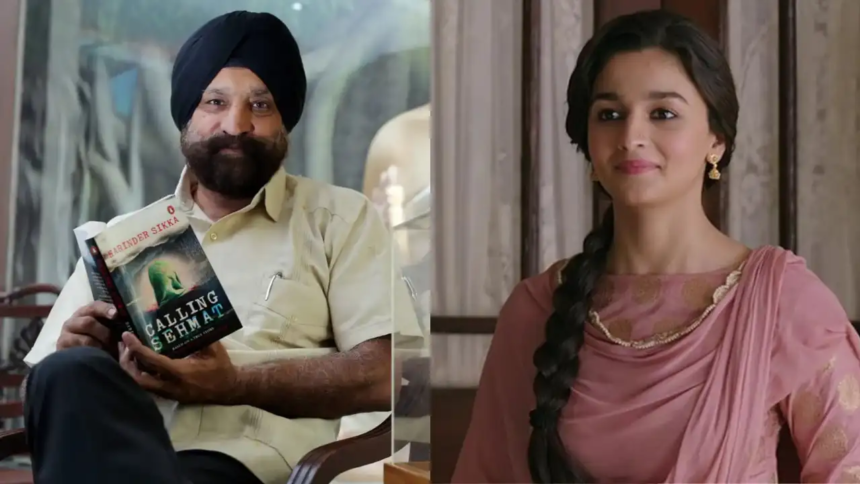
Before diving into the controversy, let’s take a step back. Harinder Singh Sikka isn’t just any writer—he’s the author of Calling Sehmat, a widely regarded espionage novel that inspired Raazi.
His book wasn’t just a story; it was a layered narrative blending patriotism, sacrifice, and the psychological toll of espionage. Naturally, when Bollywood came calling, expectations were sky-high.
But did the film live up to that vision? Sikka clearly thinks otherwise.
The Core Controversy: What Went Wrong with Raazi?
Raazi Controversy, At the heart of this debate lies a simple but powerful question: Did Raazi stay true to its source material?
Sikka believes it didn’t. In fact, he has gone as far as calling his decision to appoint Meghna Gulzar as director his “gravest misjudgment.” That’s a strong statement—and not one made lightly.
According to him, the film altered the essence of the protagonist and diluted the narrative’s original intent.
“Gravest Misjudgment”: A Statement That Sparked Debate
Taking to social media, Sikka didn’t hold back. He described Calling Sehmat as one of the finest espionage works globally and claimed that its cinematic adaptation failed to preserve its spirit.
Think about it—when a creator feels their work has been reshaped beyond recognition, it’s like watching someone repaint your masterpiece with a completely different palette.
That’s exactly how Sikka seems to feel.
Ideological Differences: The Hidden Layer of the Conflict
But this isn’t just about storytelling—it’s about perspective.
Sikka hinted at what he called an “ideological bias” in the film’s direction. According to him, this bias softened certain elements of the story, ultimately reducing its intended impact.
This raises an interesting question:
Should filmmakers prioritize creative interpretation, or remain strictly loyal to the source material?
There’s no easy answer—but in this case, the divide is crystal clear.
Did the Film Change the Protagonist’s Essence?
Raazi Controversy, One of Sikka’s biggest concerns revolves around the portrayal of Sehmat, the central character.
In the book, she’s depicted with a certain intensity and ideological clarity. However, in the film, her character was more nuanced, emotionally conflicted, and humanized.
For audiences, this added depth. But for the author, it felt like dilution.
It’s like turning a sharp-edged blade into a polished sculpture—beautiful, but not quite as lethal.
A Wider Criticism: Beyond Just Raazi
Interestingly, Sikka didn’t stop at Raazi. He extended his criticism to Meghna Gulzar’s broader body of work, including her film based on Sam Manekshaw.
He suggested that key historical elements were softened or omitted, potentially compromising authenticity.
This indicates that his concerns aren’t isolated—they’re part of a larger critique of storytelling choices in Bollywood.
The Other Side: Why Raazi Was Celebrated
Here’s where things get complicate. Despite Sikka’s criticism, Raazi was a massive success.
Starring Alia Bhatt and Vicky Kaushal, the film was praised for its restrained storytelling and balanced portrayal of sensitive Indo-Pak relations.
Critics loved its subtlety. Audiences connected with its emotional depth.
In fact, many argued that its nuanced approach was precisely what made it stand out.
So, was it really a flawed adaptation—or simply a different interpretation?
Silence from Meghna Gulzar: A Strategic Choice?
Raazi Controversy, Meghna Gulzar has largely remained silent on Sikka’s repeated criticisms.
Is this restraint intentional? Possibly.
In an industry where public spats can escalate quickly, silence can often be the most powerful response. It allows the work to speak for itself—and in Raazi’s case, the success arguably does just that.
Enter Dhurandhar 2: The Catalyst Behind the Renewed Debate
Now let’s talk about the elephant in the room—Dhurandhar 2.
Directed by Aditya Dhar and starring Ranveer Singh, the film is on track to cross a staggering ₹1,400 crore globally. That’s not just success—that’s dominance.
And with this triumph, attention has naturally shifted back to Sikka’s work.
Success has a funny way of amplifying voices. And right now, Sikka’s voice is louder than ever.
Creative Freedom vs. Authorial Integrity: The Bigger Debate
At its core, this controversy taps into a timeless debate:
Who owns a story once it’s adapt—the writer or the filmmaker?
Filmmakers often argue for creative liberty. Writers, on the other hand, seek fidelity to their vision.
In reality, the truth lies somewhere in between. But cases like this highlight just how fragile that balance can be.
Audience Perspective: Does Authenticity Even Matter?
Here’s a thought-provoking angle—do audiences care about these differences?
Most viewers judge a film on its own merit, not its faithfulness to a book. If the story resonates, that’s often enough.
But for purists and creators, authenticity isn’t optional—it’s essential.
So, whose opinion carries more weight?
Box Office Battle: Beating the Giants
To put things into perspective, Dhurandhar 2 has reportedly surpassed major blockbusters like KGF 2, RRR, Baahubali 2, Jawan, and Stree 2.
That’s no small feat. It places the film in an elite league of cinematic juggernauts.
And with such massive visibility, it’s no surprise that Sikka is revisiting past grievances.
Read More: Dhurandhar The Revenge Review: Ranveer Singh Powers This High-Stakes Sequel
Conclusion
Raazi Controversy, The clash between Harinder Singh Sikka and Meghna Gulzar isn’t just a disagreement—it’s a collision of creative philosophies.
On one side, there’s a writer fiercely protective of his narrative. On the other, a filmmaker interpreting that narrative through her own lens.
And somewhere in the middle? The audience, enjoying the final product.
Once a story leaves the page and enters the world of cinema, it evolves. It changes shape, tone, and sometimes even meaning.
Is that a betrayal—or simply transformation?
That depends on who you ask.
But one thing is certain: controversies like this ensure that stories like Raazi and Calling Sehmat remain alive in public discourse—long after the credits roll.