
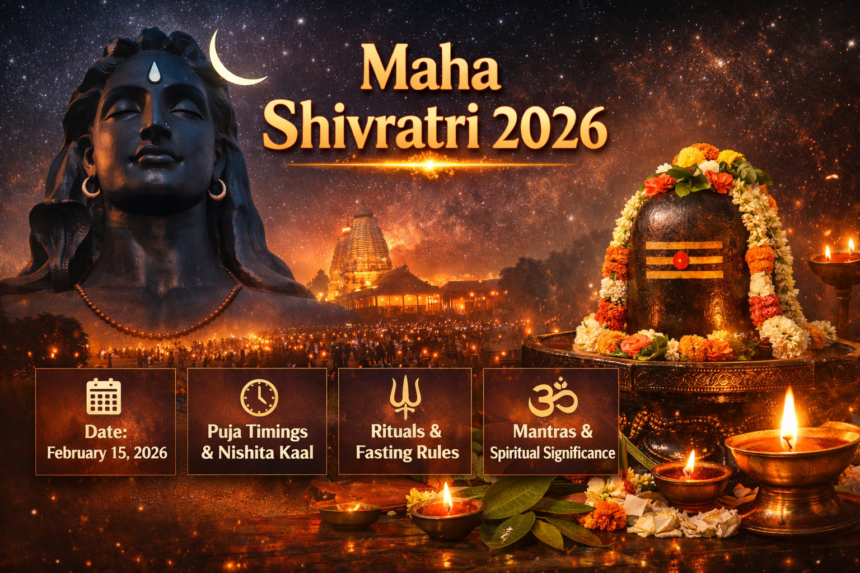
Maha Shivratri 2026, Maha Shivratri isn’t just another festival on the calendar; it’s a powerful spiritual night that millions of devotees wait for all year. In 2026, this sacred occasion brings together devotion, discipline, and deep inner reflection in a way very few festivals do.
Let’s walk through everything you need to know about Maha Shivratri 2026 – from the exact date and puja timings to rituals, mantras, and its profound spiritual meaning, with complete clarity on Maha Shivratri 2026 puja timings to help you observe the festival at the most auspicious moments.
What Is Maha Shivratri?
Maha Shivratri, literally “The Great Night of Shiva,” is one of the most important Hindu festivals dedicated to Lord Shiva. On this night, temples across India and around the world come alive with bells, chants, lamps, and endless streams of devotees.
This festival marks:
-
The divine union of Lord Shiva and Goddess Parvati
-
The coming together of masculine and feminine energies
-
A time for spiritual awakening, self-realization, and inner stillness
Think of it as a cosmic reset button – a night when you consciously turn inward while the whole atmosphere vibrates with spiritual energy.
Maha Shivratri 2026: Date and Tithi
In 2026, Maha Shivratri will be observed on February 15, 2026.
The festival falls every year on the Chaturdashi Tithi of Krishna Paksha in the Hindu month of Phalguna. This specific lunar phase is considered extremely auspicious for worshipping Lord Shiva.
Maha Shivratri 2026: Detailed Puja Timings
Maha Shivratri 2026, Timing plays a key role in Maha Shivratri observances. Many devotees plan their fasts, temple visits, and night-long vigils according to these specific time slots.
Here are the important timings for Maha Shivratri 2026:
-
Chaturdashi Tithi Begins: February 15, 2026 – 05:04 PM
-
Chaturdashi Tithi Ends: February 16, 2026 – 05:34 PM
Night puja is usually divided into four prahars (quarters of the night):
-
Ratri First Prahar Puja Time: February 15, 2026 – 06:11 PM to 09:23 PM
-
Ratri Second Prahar Puja Time: February 15, 2026 – 09:23 PM to 12:35 AM
-
Ratri Third Prahar Puja Time: February 16, 2026 – 12:35 AM to 03:47 AM
-
Ratri Fourth Prahar Puja Time: February 16, 2026 – 03:47 AM to 06:59 AM
Special midnight worship (Nishita Kaal) is considered highly auspicious:
-
Nishita Kaal Puja Time: February 16, 2026 – 12:09 AM to 01:01 AM
Parana is the ritual of breaking the fast:
-
Shivaratri Parana Time: February 16, 2026 – 06:59 AM to 03:24 PM
If you’re planning to fast or perform elaborate rituals, these timings help you stay aligned with the traditional observances.
Why Maha Shivratri 2026 Is Spiritually Important
So, what makes this night so special? Maha Shivratri isn’t only about external rituals; it’s deeply connected to inner transformation.
The festival symbolizes:
-
Victory of light over ignorance – letting wisdom replace confusion
-
Awakening of consciousness – becoming more aware of your thoughts and actions
-
Inner stillness – quietening the mind in a restless world
Many scriptures and traditions believe that Lord Shiva performed his cosmic dance, the Tandav, on this very night. This dance represents the cycle of creation, preservation, and dissolution – basically, the entire rhythm of the universe.
On a personal level, devotees believe that sincere worship on Maha Shivratri can:
-
Burn past negative karma
-
Bring clarity of mind
-
Help in seeking inner peace and spiritual growth
You can think of Maha Shivratri as a spiritual marathon: the longer you stay awake in awareness, the more you tune into the higher frequency of the night.
Union of Shiva and Parvati: Deeper Meaning
Maha Shivratri 2026, At the heart of Maha Shivratri is the divine marriage of Lord Shiva and Goddess Parvati.
This isn’t just a mythological wedding; symbolically, it represents:
-
Union of masculine (Shiva) and feminine (Shakti) energies
-
Balance between consciousness and creative power
-
Harmony between stillness and movement
On a more personal level, it’s like the mind (Shiva) and energy (Shakti) coming into balance within you. When this union happens inside, life feels more centered, purposeful, and peaceful.
For married couples, Maha Shivratri is often observed as a day to seek marital harmony. For unmarried devotees, especially women, it’s seen as an auspicious day to pray for a loving, supportive life partner.
How Maha Shivratri Is Celebrated Across India
If you’ve ever visited a Shiva temple on Maha Shivratri, you know it’s an unforgettable experience. The air is filled with “Har Har Mahadev” chants, ringing bells, incense, and devotion.
Here’s how the festival is commonly observed:
-
Temples stay open all night with continuous puja
-
Long queues of devotees wait patiently for darshan of the Shivalinga
-
Special abhishekams (ritual baths) are performed with milk, water, ghee, honey, curd, and bel leaves
-
Bhajans, kirtans, and spiritual discourses continue till dawn
Some of the most famous Shiva temples where Maha Shivratri is celebrated on a grand scale include:
-
Mahakaleshwar Temple, Ujjain
-
Kedarnath Temple, Uttarakhand
-
Kashi Vishwanath Temple, Varanasi
-
Major Jyotirlinga shrines and ancient Shiva temples across India
Even if you’re not able to visit a big temple, many families create a sacred space at home, decorate the altar, light diyas, and perform simple puja with deep devotion.
Key Rituals of Maha Shivratri 2026
Want to observe Maha Shivratri in a meaningful way in 2026? Here are the main rituals you can follow.
Fasting (Vrat)
Many devotees observe a fast throughout the day and night.
Common ways of fasting include:
-
Complete fast with only water
-
Fruit and milk fast (phalahar)
-
Simple satvik meals without grains or heavy spices
The idea isn’t to torture your body but to discipline it, so your mind can stay more focused on prayer and meditation rather than food.
Night-Long Vigil (Jaagran)
Staying awake all night is one of the core aspects of Maha Shivratri.
Devotees spend the night:
-
Singing bhajans and kirtans
-
Meditating or chanting Shiva mantras
-
Listening to stories and teachings related to Lord Shiva
It’s believed that those who remain awake in devotion and awareness on this sacred night receive special blessings from Lord Shiva.
Abhishekam: Offering to the Shivalinga
The abhishekam of the Shivalinga is a central ritual of Maha Shivratri.
Devotees offer:
-
Water and milk – for purity and peace
-
Honey – for sweetness in life
-
Curd – for prosperity and health
-
Ghee – for strength and divine energy
-
Sugar, fruits, and flowers – as symbols of devotion and gratitude
-
Bel (bilva) leaves – considered extremely dear to Lord Shiva
Each substance offered during abhishekam holds a symbolic meaning. For example, pouring water or milk over the linga is like washing away negativity and cooling down anger, ego, and restlessness in your own mind.
Mantra Chanting on Maha Shivratri
Maha Shivratri 2026, Mantras are like spiritual sound codes. On Maha Shivratri, chanting Shiva mantras is believed to purify the mind and invoke divine grace.
Some popular mantras for this night include:
-
“Om Namah Shivaya”
This is one of the most powerful and widely chanted Shiva mantras. It means “I bow to Lord Shiva” or “I honor the divine within.” -
Mahamrityunjaya Mantra:
“Om Tryambakam Yajamahe
Sugandhim Pushti Vardhanam
Urvarukamiva Bandhanan
Mrityor Mukshiya Maamritat.”
This mantra is traditionally chanted for protection, healing, and liberation from fear, especially fear of death and suffering.
You can pick one mantra and repeat it gently, either aloud or mentally, throughout the night. Think of it as tuning your inner radio to a divine frequency.
Meditation and Inner Reflection
Maha Shivratri is the perfect night to look within.
Many spiritual teachers say that on this night, the natural energies of the Earth support higher states of awareness. Meditation becomes deeper, and the mind settles more easily.
You can:
-
Sit quietly in front of a lit diya or candle
-
Focus on your breath
-
Gently repeat a Shiva mantra
-
Reflect on your actions, choices, and future direction
Imagine it like cleaning out the mental clutter and making space for clarity, peace, and purpose.
Maha Shivratri at Home: Simple Puja Guide
Can’t go to a temple? You can still celebrate Maha Shivratri 2026 beautifully at home.
Here’s a simple way:
-
Clean your puja space and take a bath early in the morning
-
Place a picture or idol of Lord Shiva, or a Shivalinga, on a clean altar
-
Light a diya and incense sticks
-
Offer water, milk, bel leaves, flowers, and fruits
-
Chant “Om Namah Shivaya” 108 times or more
-
Sit quietly for a few minutes in meditation
You don’t need elaborate arrangements. What matters most is sincerity and devotion.
Breaking the Fast: Shivratri Parana
On the next day, after the completion of Maha Shivratri rituals, devotees break their fast during the Shivratri Parana Time.
For 2026, Parana time is between:
-
February 16, 2026 – 06:59 AM to 03:24 PM
The fast is broken with simple, light food, often after offering the first portion to Lord Shiva as gratitude.
Similar Articles: Arjun Tendulkar Wedding: PM Modi, Rahul Gandhi Among High-Profile Guests
Conclusion
Maha Shivratri 2026 isn’t just about one night of rituals; it’s an invitation to pause and reconnect with your inner self. In a world full of distractions and noise, this festival gently reminds you to turn inward, seek silence, and realign with what truly matters.
Whether you choose to observe a strict fast, stay awake all night, or simply light a diya and chant a mantra at home, what counts is your intention. With sincere devotion, even the simplest act of worship can become a bridge between you and the divine.
As the “Great Night of Shiva” arrives on February 15, 2026, you have a powerful opportunity: to let go of old patterns, invite clarity, and step into the coming year with a calmer mind and a lighter heart. After all, Maha Shivratri is not only about worshipping Lord Shiva outside, but also about awakening the Shiva within.