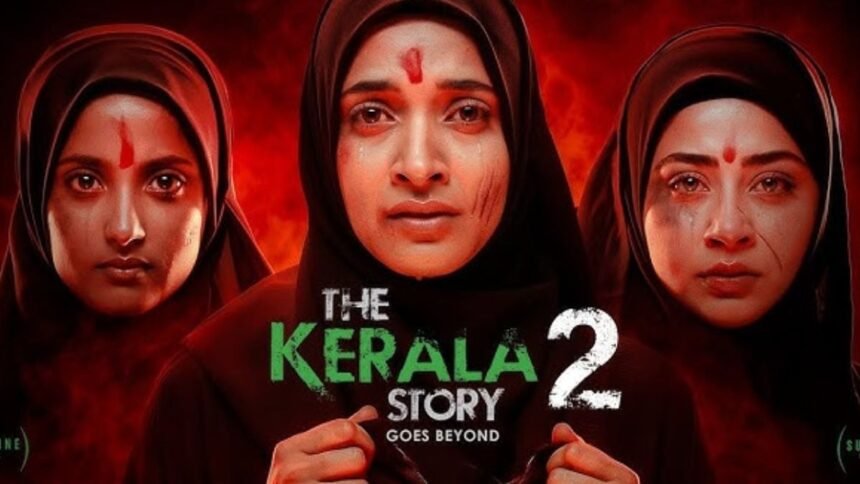
The trailer of ‘Kerala Story 2 Goes Beyond’ has landed online, and social media is already a battlefield. Within hours, timelines were full of heated debates, emotional reactions, and sharp political takes. Some viewers are hailing it as the “brutal truth” finally being told on screen, while others are slamming it as yet another piece of cinematic propaganda. The Kerala Story controversy is once again dominating online conversations and intensifying public debate.
So, what’s behind all this noise? Why has a three-minute video triggered such a massive reaction? Let’s break it down.
A Quick Recap: The Legacy Of ‘The Kerala Story’
Before we dive into the sequel, it’s impossible to ignore where this all began. The first film, ‘The Kerala Story’, released in 2022, was already one of the most controversial movies of its time. It claimed to portray the radicalisation and religious conversion of young women, and it sparked court cases, political statements, bans, and boycotts.
For supporters, the movie was a wake-up call. For critics, it was a dangerous, polarising narrative. Now, with ‘Kerala Story 2’, the makers seem determined to push that conversation even further, and the trailer makes that intention loud and clear.
The Premise: Three Girls, Three Love Stories, One Dark Turn
At the heart of ‘Kerala Story 2’ are three Hindu girls, played by Ulka Gupta, Aditi Bhatia, and Aishwarya Ojha. On the surface, their lives look like any other young women’s in modern India—college, friends, romance, dreams. But the trailer quickly hints that their love stories are not going to end in fairy-tale weddings.
Each of them falls in love with a Muslim boy. What begins as affection and trust soon spirals into betrayal, coercion, and manipulation, according to the film’s narrative. The trailer suggests that the girls are allegedly pushed into religious conversion, isolated from their families, and drawn into a web that is bigger than just personal relationships.
Is it just a personal tragedy for three women, or is the film hinting at a larger conspiracy? The trailer strongly leans towards the latter.
The Tagline That Says It All: “This Time, We Do Not Stay Silent”
When the makers dropped the trailer on social media, they paired it with a powerful caption:
“They targeted our daughters. They broke our trust. They stole their futures. This time, we do not stay silent. The story goes beyond. Is bar sahenge nahi… ladenge. #TheKeralaStory2GoesBeyond trailer out now. In cinemas on 27th February, 2026.”
That line — “Is bar sahenge nahi… ladenge” — sets an aggressive tone. It signals that this is not just a story, but a call to action, at least in the way the makers want it to be perceived. The message is emotional, loaded, and designed to spark a reaction. Clearly, it’s working.
Netizens React: Goosebumps, Support, And Accusations
As soon as the trailer dropped, reactions poured in from all corners of the internet. The responses were anything but mild.
Many users praised the film for taking on what they believe to be a harsh reality:
-
“This trailer gave me goosebumps! Can’t wait to watch the full movie.”
-
“Hard-hitting.”
-
“Absolutely real thing.”
-
“Thank you for bringing a real story.”
For this section of the audience, the film is seen as a mirror to society, showing what they claim mainstream media often ignores. Words like “truth,” “reality,” and “courage” dominate this side of the conversation.
The Other Side: “Propaganda Movie” And Political Timing
But scroll down a little more, and you’ll hit a completely different sentiment. A substantial section of netizens is furious, calling ‘Kerala Story 2’ a “propaganda movie” that stokes fear and deepens religious divisions.
Several users linked the film’s release directly to the 2026 elections, suggesting that it is part of a larger political strategy rather than just storytelling. For them, the narrative feels exaggerated, selective, and designed to create suspicion against a particular community.
Comments like these stand out:
-
“Another propaganda movie.”
-
“Biggest manipulation in the history of Indian cinema.”
-
“This is not cinema, this is an agenda.”
So, while one camp is applauding the film for its “brutal truth,” the other is warning about the dangers of such content just before a major election year. Two completely different readings of the same trailer — that’s how polarised the response has become.
Beyond Kerala: “This Happens All Over India”
One interesting pattern in the comments is how some viewers are widening the scope far beyond the state of Kerala. For them, what the film shows is not just a regional issue:
-
“It’s not the reality of Kerala state, it’s the reality of all Indian states. This type of incident happened all over India.”
-
“Kerala story north Indian story.”
These reactions suggest that, for a section of the audience, the story taps into a broader fear: that young women across India are vulnerable to manipulation and forced religious change. Whether or not data supports that claim, the perception itself is powerful, and the film is clearly leaning into that narrative.

Story Themes: Radical Conversion, Fear, And Control
The trailer hints at the core theme of ‘Kerala Story 2’: the alleged forceful conversion of Hindu girls and the breakdown of families and communities as a result. It paints a picture where love is used as a tool, trust as a weapon, and faith as a battleground.
The film opens with a chilling voiceover:
“In the next 25 years, Bharat will be an Islamic state and will be ruled by Sharia law.”
That single line is like striking a match in a room full of dry paper. It immediately sets a tone of urgency, fear, and impending doom. From there, the story reportedly jumps to Rajasthan, suggesting that the film is not confined to Kerala alone, but wants to show a pan-India pattern.
It’s not subtle. It’s not neutral. It wants you to feel alarmed — and that is exactly why it is so controversial.
“Where Is Kerala In Kerala Story?” – A Sharp Critique
Another striking comment doing the rounds is:
-
“Where is Kerala in Kerala Story?”
This is more than just a sarcastic line. Critics argue that the title uses the name of Kerala, but the content expands to other states and generalised scenarios, turning a specific regional reference into a broader political tool.
For them, the layout of the narrative feels less like a grounded, detailed examination of one state’s issues and more like a sweeping, symbolic story meant to reinforce a particular worldview across India.
Supporters argue that the title simply marks where the roots lie, even if the branches spread elsewhere. But the criticism remains: if the story has moved to Rajasthan and beyond, does the name still fit, or has it become a brand in itself?
“It’s Our Responsibility To Support These Movies” – A Call From Supporters
On the flip side, many users are treating ‘Kerala Story 2’ almost like a social movement rather than just a film. Comments like:
-
“It’s our responsibility to support these movies.”
show how cinema can cross into the realm of activism for certain audiences. For them, buying a ticket is not just about entertainment, it’s about taking a stand. In their view, the film is speaking up where institutions and media have allegedly stayed silent.
That’s also why the trailer’s line “This time, we do not stay silent” resonates so strongly with this group. They see the movie as giving voice to hidden victims and exposing what they call “uncomfortable truths.”
Propaganda Or Painful Reality: Why The Debate Matters
So, is ‘Kerala Story 2’ propaganda or brutal truth? Honestly, that depends on who you ask — and what they already believe.
-
If you already fear that religious conversion and grooming are widespread and underreported, this film will feel like confirmation.
-
If you worry about communal polarisation and stereotyping, this movie will look like a cinematic weapon used to deepen mistrust.
This is exactly why films like these become lightning rods. They don’t just tell a story; they plug directly into existing anxieties, beliefs, and political positions. The trailer may be only a few minutes long, but it has already become yet another flashpoint in India’s larger culture wars.
The Bigger Picture: Cinema, Identity, And Election Season
There’s also no ignoring the timing. With 2026 elections on the horizon, any film dealing with religion, identity, and national security will be viewed through a political lens. Whether the makers like it or not, their work is being read as a commentary on the nation’s future — and possibly as an influence on it.
Supporters say such films are needed precisely because politics and society are at a crossroads. Critics say such timing is suspicious and too convenient. But one thing is clear: ‘Kerala Story 2’ is not arriving in a vacuum. It’s stepping straight into a charged atmosphere where every image, line, and frame will be dissected for hidden meaning.
Where Is Adah Sharma? Fans Miss The Original Lead
Amid the serious political and social debates, there’s also a lighter, but still telling, thread of discussion: “Where is Adah Sharma?”
Adah Sharma, who played the central character in the first film, became the face of ‘The Kerala Story’. Her absence in the sequel’s trailer did not go unnoticed. One user commented:
-
“Where is Adah Sharma? It seems incomplete without her.”
This shows that for many fans, continuity in casting matters. The new trio — Ulka Gupta, Aditi Bhatia, and Aishwarya Ojha — now have the task of winning over an audience that has already emotionally connected with the earlier lead. Whether viewers accept the new cast or keep comparing them to Adah Sharma will be something to watch once the film releases.
Similar Articles: O’Romeo Review & Analysis: A Gritty Bollywood Love Story Where Passion Meets Violence
Conclusion
Kerala Story 2 trailer, The ‘Kerala Story 2 Goes Beyond’ trailer has done exactly what it set out to do: grab attention and refuse to let go. It has revived old debates about religious conversion, sparked new questions about cinematic responsibility, and reminded everyone how powerful stories can be when they touch raw nerves.
For some, it’s a necessary, uncomfortable mirror. For others, it’s a distorted lens that risks damaging social harmony. Most people will walk into theatres already carrying their opinions. The film’s box office numbers and public discussions after release will show whether it reinforced existing beliefs or managed to shift any minds.
Until then, the argument will rage on across comment sections and living rooms: Is ‘Kerala Story 2’ exposing reality — or rewriting it?