
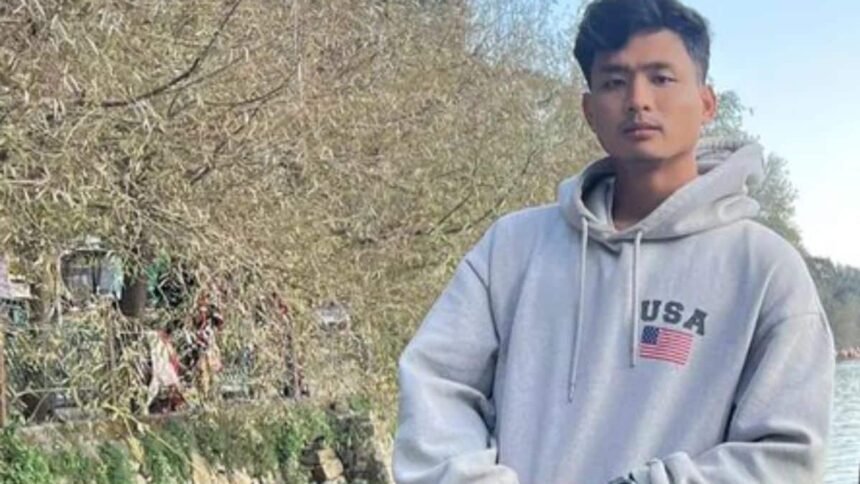
Killing of Tripura Student, A tragic case in Dehradun has sparked outrage across the country after a Tripura student was killed in Dehradun in an incident that has drawn national attention. The National Human Rights Commission (NHRC) has stepped in, demanding answers and accountability in the alleged racially motivated killing of the young student from Tripura. The incident not only exposes the dark underbelly of prejudice but also reignites serious concerns about the safety of students from Indias northeastern states.
The Heartbreaking Incident
The victim, Angel Chakma, a 24-year-old final-year MBA student at a private university in Dehradun, became the center of a national outcry when he was brutally attack on December 9. After fighting for his life for over two weeks, Angel succumbed to his injuries on December 26, leaving behind a grieving family and countless shocked friends.
What Led to the Attack?
According to reports and a complaint filed with the NHRC, the assault wasnt just a random act of violenceit carried racial undertones. Angel allegedly faced derogatory slurs and racial abuse before he was attacked. Witnesses say the altercation began when he stood up against those insults, proudly asserting his identity as an Indian citizen. That brave stand seemingly cost him his life.
NHRC Takes Strong Notice
The National Human Rights Commission, known for addressing violations of fundamental rights, took suo motu cognizance of the case under Section 12 of the Protection of Human Rights Act, 1993. Head by member Priyank Kanoongo, the NHRC observe that if the allegations were prov true, they point toward a grave violation of the victims basic rights.
In a stern directive, the Commission issued notices to both the District Magistrate (DM) and the Senior Superintendent of Police (SSP) of Dehradun. They were aske to submit a detail action-take report with seven days and ensure a transparent and thorough inquiry into the matter.
Ensuring Safety for Northeastern Students
The NHRC didnt stop at demanding reports. It also called on the Chief Secretary of Uttarakhand and the Director General of Police (DGP) to oversee the case and uphold accountability at every administrative level. Importantly, the Commission order that students from the Northeastern region must be protect across Uttarakhanda move aimed at preventing more such tragedies.
A Fathers Pain and the Call for Justice
Angels father, a Border Security Force (BSF) personnel currently posted in Manipur, recounted the nightmare no parent should ever endure. He reveal that his son was attack while defending his younger brother, who had be taunt with racial slurs by a group of youths. The confrontation escalate, and Angel was allegedly beat with sharp and blunt objects.
The shattered family has demanded a fair and impartial investigation, fearing that local bias might obstruct the truth.
Nationwide Outrage and Student Protests
Killing of Tripura Student, The news of Angels death sent shockwaves through Tripura, Dehradun, and other Northeastern states. Student unions, tribal groups, and civil society organizations took to the streets. Candlelight marches, protests, and social media campaigns flooded platforms, all unified by one demand: Justice for Angel.
Protesters also highlighted a deeper issue systemic discrimination that Northeastern people often face in other parts of India. They’ve urged authorities to shift the trial outside Uttarakhand to guarantee transparency and ensure that the case doesnt get burie under political or local pressure.
Political Reactions: Uniting Against Hate
Leaders from across the political spectrum expressed outrage. The tone was clear India cannot tolerate racism within its borders. Uttarakhand Chief Minister Pushkar Singh Dhami personally spoke to Angels father on December 29, assuring him that strict action would be take against those responsible. He emphasize that his government was commit to eradicating discrimination and ensuring equal safety for all citizens.
Deeper Reflections: Racial Bias in India
The NHRCs observation cut deeper than just the immediate case. It highlighted a broader social issuethe subtle and sometimes overt racial bias against people from the Northeast. Despite Indias diversity being a source of pride, incidents like this show how prejudice still festers in some corners of society.
The Commission has urged for systemic changes, advocating for:
-
Awareness campaigns to reduce racial prejudice.
-
Stronger law enforcement against hate crimes.
-
Better integration policies for students from remote regions.
These measures, if implemented effectively, could go a long way in ensuring that what happened to Angel never happens again.
The Legal and Administrative Push
In legal terms, the case is be monitor at the highest administrative level. The NHRCs involvement means that officials from the Dehradun district must regularly update the Commission on progress. This oversight could ensure that justice isnt delay due to bureaucratic inertia.
Human rights activists have also proposed that educational institutions across the country adopt mandatory sensitivity training for staff and students. The idea is to make campuses safe spaces for allirrespective of ethnicity, language, or region.
Public Sentiment: A Country Reflects
Beyond the legalities, the story has struck an emotional chord nationwide. Social media platforms are fill with artwork, videos, and posts remembering Angel as a symbol of resilience and courage. His tragic death has turned into a rallying point, urging India to introspect on its long struggle with racial bias.
Its heartbreaking to think that in a country known for unity in diversity, someone could lose their life simply for standing up against discrimination.
The Road Ahead
The immediate focus is on ensuring that Angels family gets justice, but the larger goal is clear to build a more inclusive society. Policymakers, universities, and law enforcement must work together to make sure that no student feels unsafe because of where they come from or how they look.
The NHRCs firm stance could be the start of such reform. But lasting change will only come if citizens too challenge racial stereotypes at every level in schools, workplaces, and even casual conversations.
Similar Articles: Killing of Hindu Man in Bangladesh Triggers Violent Protests Outside High Commission in New Delhi
Conclusion
Killing of Tripura Student, Angel Chakmas story is not just another headlineits a wake-up call. Its a reminder that tolerance, empathy, and unity need constant effort. As the investigation continues, India watches, hoping that justice will not only be done but be seen to be done. Because in the end, protecting human rights isnt just the job of commissions and courts its the responsibility of us all.