FIFA World Cup Ticket Prices, The countdown to the World Cup is officially underway, but instead of excitement surrounding the tournament alone, growing controversy over ticket prices and availability is dominating conversations among football fans worldwide.
With just days remaining before the biggest World Cup in history begins, supporters are asking a simple question: Are World Cup matches really sold out, or is there more to the story?
A World Cup Overshadowed by Ticketing Questions
The FIFA World Cup has always been one of the most sought-after sporting events on the planet. Traditionally, tickets sell out rapidly, and fans compete fiercely for a chance to witness football history.
This time, however, things feel different.
Instead of clarity, fans have encountered shifting prices, inconsistent availability, and a purchasing process that many describe as confusing and unpredictable.
For many supporters, buying a World Cup ticket has felt less like securing a seat at a football match and more like navigating a maze without a map.
Why Fans Are Frustrated with FIFA’s Ticketing System
One of the biggest complaints revolves around transparency.
FIFA World Cup Ticket Prices, Unlike previous tournaments, many fans claim they were never given a clear understanding of ticket prices before entering the purchasing process. Supporters entered ballots without knowing exactly how much tickets would cost.
Only after being select were many inform about the actual prices they would need to pay.
This lack of upfront pricing information has become a major source of criticism and has raised concerns among consumer advocates and football fans alike.
Official Investigation Adds Pressure on FIFA
The controversy has now attract legal attention.
Authorities in New York and New Jersey have launch investigations into FIFA’s ticket sales practices following allegations that fans may have been misle during the purchasing process.
Questions have been raise regarding whether ticket prices were artificially inflate and whether buyers receive seats that did not match the value category they originally paid for.
The investigation has intensified scrutiny on FIFA at a time when the organization is already facing growing criticism from supporters.
Variable Pricing Creates More Confusion
FIFA World Cup Ticket Prices, Unlike traditional fixed pricing models, FIFA utilized a variable pricing strategy for many ticket sales.
Under this system, prices changed during different sales phases based on previous demand and availability.
While not technically the same as dynamic pricing used by airlines and concert promoters, the result was similar: fans often found themselves facing dramatically different prices depending on when they attempted to purchase tickets.
The lack of consistency left many supporters wondering whether they were paying fair market value or simply whatever FIFA believed people would tolerate.
Changes to Stadium Seating Plans Raised Eyebrows
Further frustration emerged when FIFA adjusted seating maps and introduced new premium seating categories.
Some of the newly created sections included seats located in the front rows closest to the pitch. These tickets were price significantly higher than surrounding seats—often around 50% more expensive.
Critics argue these premium categories were introduce after earlier sales phases, meaning many fans never had the opportunity to purchase them during the original ballot process.
For supporters already struggling to understand pricing structures, the changes only added to the uncertainty.
Are World Cup Matches Really Sold Out?
FIFA World Cup Ticket Prices, FIFA President Gianni Infantino confidently declared that every World Cup match had effectively sold out, apart from a limited number of tickets reserved for late sales.
Yet the current marketplace paints a more complicated picture.
While matches involving football giants such as Argentina, Brazil, England, Germany, and Spain appear to be attracting strong demand, many other fixtures still have substantial ticket availability.
The discrepancy between FIFA’s statements and the visible inventory has fueled skepticism among fans and industry observers.
Host Nation Matches Surprisingly Struggle to Sell Out
One of the most surprising developments involves games featuring the tournament’s host nations: the United States, Canada, and Mexico.
Ordinarily, host nation matches generate enormous excitement and sell out quickly.
However, ticket prices for several of these matches have been exceptionally high.
Even the opening match featuring Mexico reportedly still has hundreds of seats available despite being one of the tournament’s marquee events.
For many fans, the issue isn’t interest—it’s affordability.
When ticket prices climb into the thousands of dollars, even passionate supporters begin to think twice.
Smaller Nations Face the Biggest Ticket Challenges
FIFA World Cup Ticket Prices, The real challenge appears to be matches involving nations with smaller international fan bases.
Games featuring emerging football countries have struggled to generate the same level of demand as clashes involving global powerhouses.
Fixtures such as Bosnia-Herzegovina versus Qatar, Cape Verde versus Saudi Arabia, and DR Congo versus Uzbekistan have seen tickets remain available much closer to kickoff.
This suggests that while the World Cup brand remains powerful, not every match commands premium pricing.
Ticket Inventories Continue to Change Dramatically
Independent ticket-tracking services have observed dramatic shifts in available inventory across the tournament.
At certain points, tens of thousands of tickets appeared available across dozens of matches. Then, within hours, those numbers suddenly dropped before rising again days later.
Such fluctuations have sparked widespread speculation.
Were fans suddenly purchasing massive numbers of tickets?
Or were inventories simply be redistribute across different sales channels?
Without official explanations, the football community is left guessing.
Growing Attention on Secondary Ticket Marketplaces
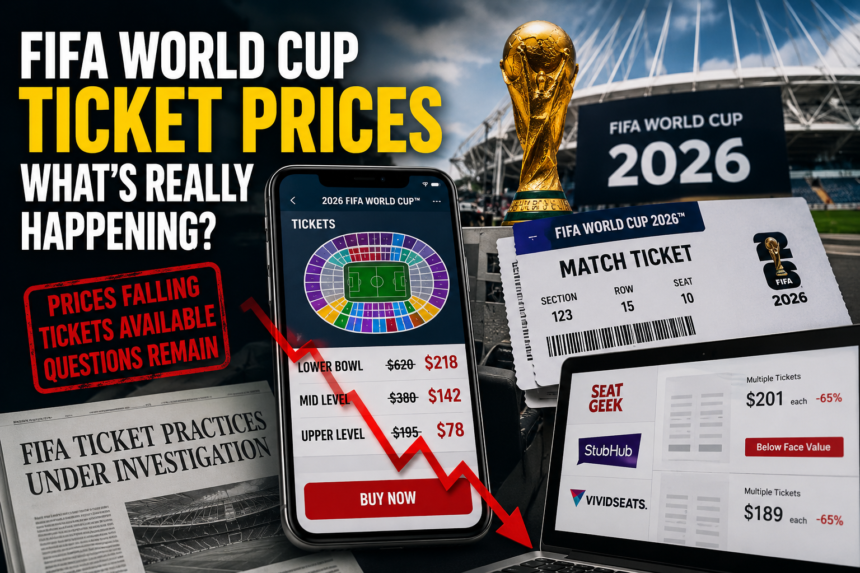
FIFA World Cup Ticket Prices, Another major talking point involves secondary marketplaces such as SeatGeek, StubHub, and Vivid Seats.
Observers noticed that as ticket numbers appeared to decline on FIFA’s official platform, availability on some secondary platforms seemed to increase.
Large blocks of seats became available, often arranged in consecutive rows and sections.
While there is no definitive evidence explaining why this occurred, the timing has generated significant debate among fans and ticket industry experts.
The situation has raise questions about how ticket inventory is being manage across different marketplaces.
Why Some Tickets Are Selling Below Face Value
Perhaps the most striking development is the sharp decline in resale prices for certain matches.
In several cases, tickets are now being offer far below their original face value.
For example, seats originally price at hundreds of pounds can now be found at discounts exceeding 50%.
This trend suggests that many sellers are struggling to find buyers willing to pay FIFA’s initial asking prices.
It also highlights a broader reality: market demand ultimately determines value.
A ticket priced too high becomes difficult to sell, regardless of the prestige of the event.
FIFA Faces a Difficult Balancing Act
For FIFA, empty seats represent more than just lost revenue.
A stadium filled with visible gaps can damage the image of the tournament and create negative headlines worldwide.
The organization therefore faces a delicate balancing act.
Lower prices too aggressively, and early buyers may feel cheated. Keep prices high, and stadium attendance could suffer.
It’s a challenge that every major event organizer understands, but few face on a stage as large as the World Cup.
Could Empty Seats Become a Major Story During the Tournament?
FIFA World Cup Ticket Prices, The possibility of partially filled stadiums remains one of the biggest concerns heading into the competition.
Recent football events have demonstrated that ticket prices can collapse dramatically when demand fails to meet expectations.
If current trends continue, FIFA may find itself under increasing pressure to ensure strong attendance levels throughout the tournament.
While blockbuster matches are unlikely to struggle, lesser-profile games could become an important test of whether FIFA’s pricing strategy has succeeded or backfired.
The Bigger Issue: Trust and Transparency
Beyond ticket prices and seat availability, the controversy highlights a deeper issue—trust.
Football fans expect transparency when purchasing tickets for the world’s most prestigious sporting event.
When pricing structures are unclear, inventories fluctuate unexpectedly, and information appears limited, confidence naturally declines.
For FIFA, rebuilding that trust may prove just as important as filling stadiums.
Read More: FIFA World Cup 2026: 48 Teams, 104 Matches and the Biggest Tournament Ever
Conclusion
FIFA World Cup Ticket Prices, As the FIFA approaches, excitement for the tournament remains enormous. However, ongoing concerns surrounding ticket pricing, availability, and sales practices have created a cloud of uncertainty over the event. While matches featuring football’s biggest nations are expected to attract full crowds, questions remain about demand for lower-profile fixtures and whether FIFA’s pricing strategy accurately reflects fan expectations.
The coming weeks will reveal whether ticket sales stabilize or whether further price reductions become necessary. Regardless of the outcome, the controversy has already exposed significant concerns about transparency and accessibility in modern sports ticketing.