
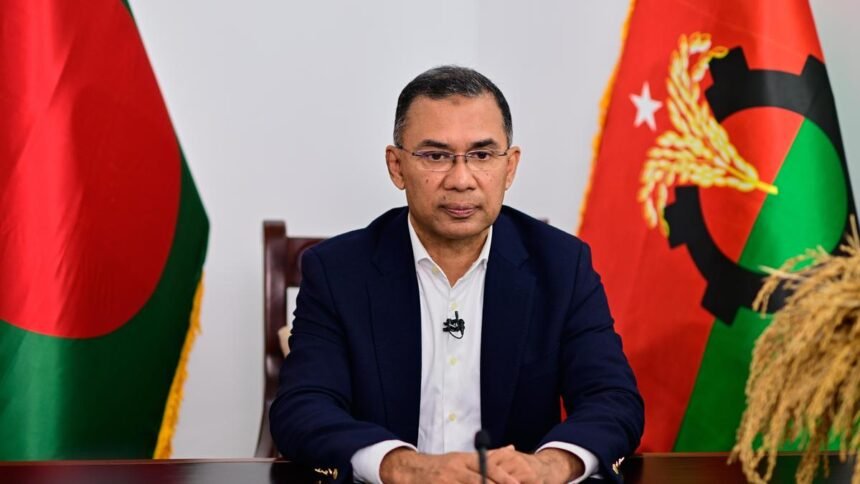
Tarique Rahman Bangladesh, Bangladesh is on the verge of a major political shift, and at the center of it all is Tarique Rahman. After years in exile, legal battles, and intense political drama, he is now set to become the country’s next prime minister following his party’s victory in the general election.
But who is he really? How did a man who spent nearly two decades abroad become the most powerful political figure in Bangladesh?
Let’s break it down.
A Powerful Political Legacy
To understand Tarique Rahman, you first have to understand the family he comes from. He is the eldest son of former president Ziaur Rahman and former prime minister Khaleda Zia – two towering figures in Bangladesh’s modern history.
-
His father, Ziaur Rahman, was a military officer who became a key figure in the country’s independence struggle and later its president.
-
His mother, Khaleda Zia, became the country’s first female prime minister and led Bangladesh through two separate terms in office.
In other words, Tarique grew up at the very heart of power. Politics wasn’t just a career choice for him – it was the family business.
The Zia Family And The BNP
Tarique Rahman Bangladesh, The Zia family is inseparable from the Bangladesh Nationalist Party (BNP), one of the two major forces in the country’s politics.
-
Ziaur Rahman founded the BNP in 1978.
-
Khaleda Zia later became its most prominent leader.
-
Tarique Rahman has now emerged as the party’s central figure.
For decades, the BNP and its rival, the Awami League, have alternated between power and opposition, shaping almost every major political development in Bangladesh. Tarique’s rise is the latest chapter in that long-running rivalry.
Early Political Career: Stepping Into The Arena
Tarique Rahman didn’t jump into frontline politics immediately. He entered active politics in 2001, when he was in his mid-30s. That timing was no accident.
-
In 2001, Khaleda Zia began her second term as prime minister, after previously serving from 1991 to 1996.
-
Around this time, Tarique began taking on more responsibility within the BNP and started building his image as a key party operator.
By 2002, he had been promoted to a senior position in the party. For his supporters, this was a natural progression for the son of two national leaders. For his critics, it was something else entirely.
Nepotism Allegations And “Hatchet Man” Image
Tarique Rahman Bangladesh, Tarique’s rise attracted controversy. Opposition parties and critics quickly accused the BNP of blatant nepotism, claiming he was promoted not because of merit, but because of his last name.
He also developed a reputation inside political circles as a “hatchet man” – someone tasked with enforcing party discipline and helping keep the BNP’s grip on power. That image, fair or not, stuck with him for years.
Did that make him a strong organiser, or a symbol of dynastic politics? Depending on who you ask in Bangladesh, you’ll get very different answers.
Corruption Charges And Exile
Things took a darker turn in 2007.
During a period of military-backed caretaker rule, Tarique Rahman was arrested on corruption charges. He later claimed he was tortured while awaiting trial. After spending about 18 months in prison, he was released and allowed to travel abroad for medical treatment.
Soon after, he left for London.
-
Reports at the time suggested he had agreed to stay away from politics as a condition for leaving the country.
-
He has always denied the corruption allegations and insisted he was the victim of politically motivated cases.
Whether you see him as corrupt or persecuted often depends on your political lens.
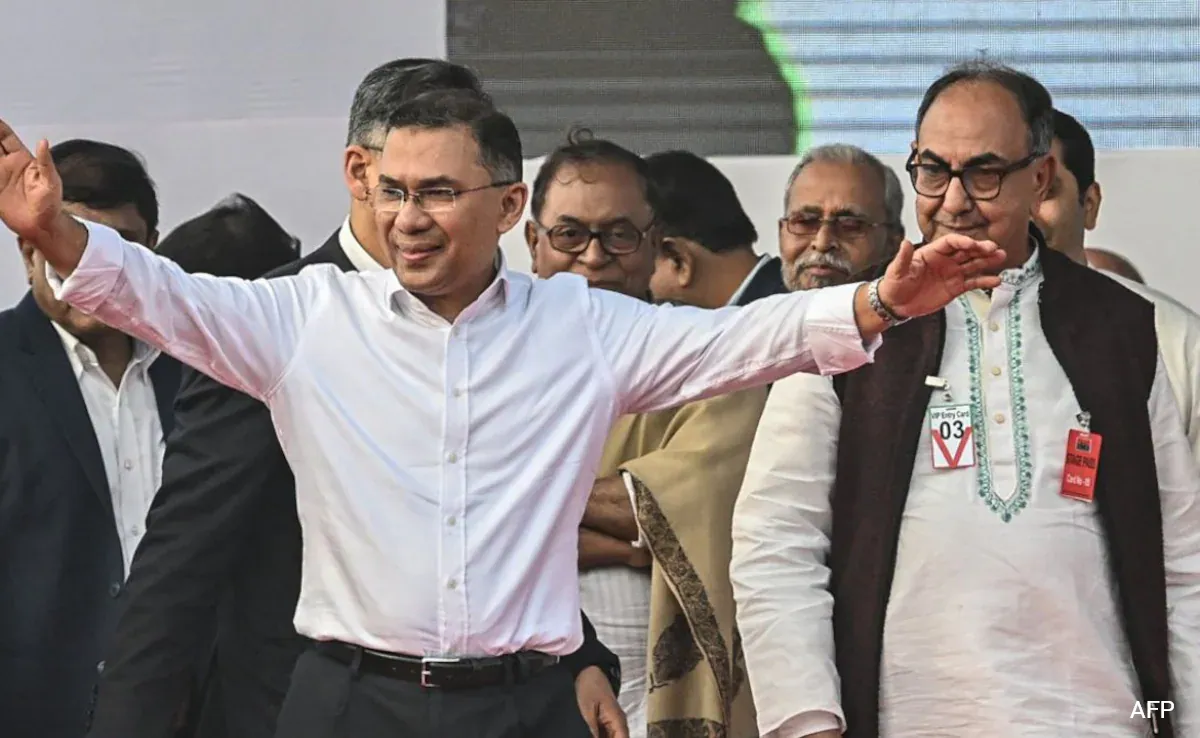
Seventeen Years Away – But Still In The Game
You might think that being out of Bangladesh for 17 years would end someone’s political career. Not in Tarique Rahman’s case.
Even while living in London, he continued to play a major role in BNP politics:
-
He gradually became the party’s key strategist, especially as the BNP faced intense pressure from the Awami League government led by Sheikh Hasina.
-
After his mother Khaleda Zia was jailed in 2018, Tarique effectively became the party’s acting chairman, guiding decisions from abroad.
His opponents argued he was running the party from a safe distance. His supporters said he was keeping the BNP alive under extremely difficult conditions.
Legal Cases And Political Battles
Tarique Rahman Bangladesh, During Sheikh Hasina’s long rule, Tarique Rahman’s legal troubles multiplied.
He was tried and sentenced in absentia in several cases, including over a deadly grenade attack on a political rally in 2004 – one of the most shocking incidents in Bangladesh’s political history.
However:
-
He consistently denied involvement in the attack.
-
He was later cleared of the charges, which his supporters cite as proof that earlier cases were politically driven.
Still, for many Bangladeshis, those years left a complicated legacy. Was he a ruthless power broker or a political scapegoat? The debate never really stopped.
Return To Bangladesh: A Dramatic Homecoming
After nearly two decades abroad, Tarique Rahman finally returned to Bangladesh on 25 December 2025. The timing was extraordinary.
-
Five days after his return, his mother Khaleda Zia pass away.
-
On 9 January, he was formally elect as the BNP’s leader.
Analysts say his rise to the top was almost inevitable. With the BNP heavily center on the Zia family and much of the leadership weaken or divide, Tarique was se as the only figure capable of unifying the party.
But, once again, accusations of dynastic politics resurfaced.
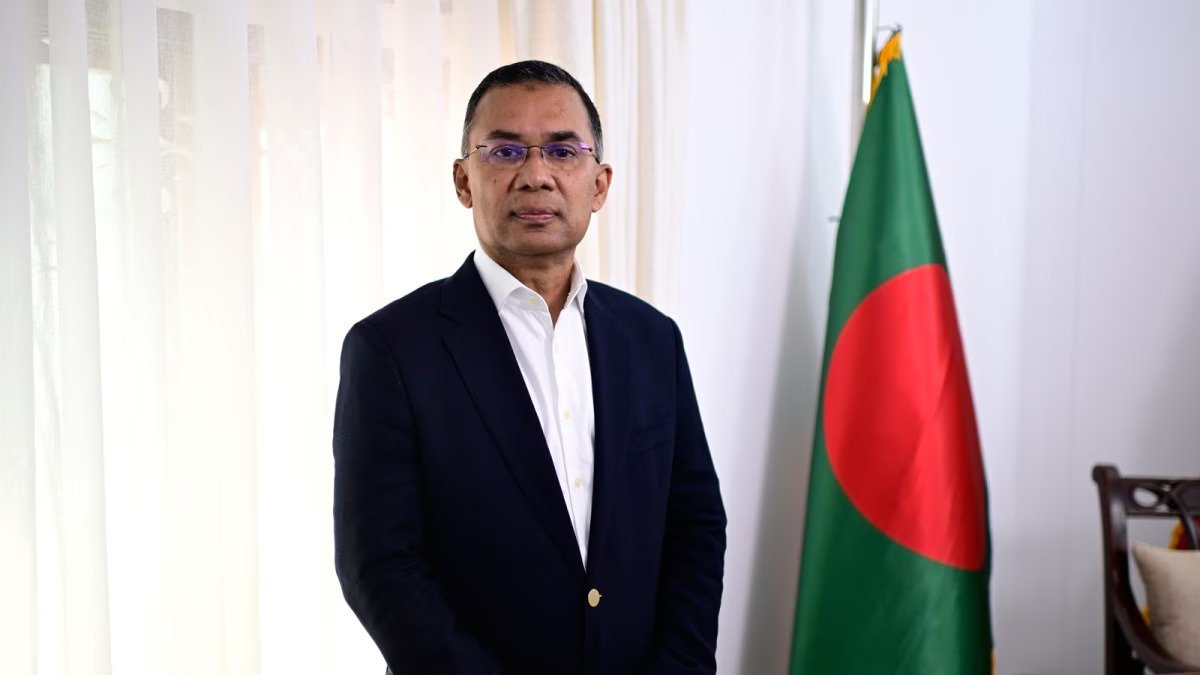
Dynasty Or Necessity? The Nepotism Debate
Critics argue that Tarique’s leadership is just another example of South Asian political dynasties, where power passes from parent to child like an inheritance.
However, some within the BNP see it differently.
Former BNP commerce minister Amir Khasru, for example, downplayed the nepotism accusations. He argue that under Sheikh Hasina’s rule, political space was so restrict that the BNP had little room to develop new leaders outside the Zia family.
In his view, whether Tarique comes from a dynasty is less important than what he does with power now.
So is he simply the heir to a political throne, or the only person capable of reviving a battered party? That question lies at the core of Bangladesh’s current political moment.
From Party Boss To National Leader?
Tarique Rahman Bangladesh, Winning an election and becoming prime minister is one thing. Governing a deeply polarized country is another.
Political analyst Mohiuddin Ahmed put it bluntly: Tarique has “seen the dark corners of politics” – the coups, the violence, the revenge-driven rivalries that have defined much of Bangladesh’s history.
The real test, he suggests, is what Tarique does with that experience:
-
Can he move from being a tough party enforcer to a unifying national leader?
-
Will he use his political survival instincts to build reconciliation, or to settle scores?
In other words, can he evolve from the Zia family’s political heir into a statesman?
What His Victory Means For Bangladesh
With the BNP securing enough seats to form a majority, Tarique Rahman is now set to become Bangladesh’s next prime minister. That raises some big questions for the country’s future:
-
How will he handle relations with India, China, and other regional powers?
-
Will he push for political reforms and greater freedoms after years of strongman-style governance?
-
Can he stabilize a country that has seen repeated cycles of protests, crackdowns, and accusations of rigged elections?
Bangladesh stands at a crossroads, and his decisions in the coming months could define an entire era.
Similar Articles: Killing of Hindu Man in Bangladesh Triggers Violent Protests Outside High Commission in New Delhi
Conclusion
Tarique Rahman Bangladesh, Tarique Rahman’s story reads almost like a political thriller: the son of a president and a prime minister, accused of corruption, pushed into exile, tried in absentia, and then, after 17 years away, returning to claim the highest office in the land.
He carries the weight of the Zia legacy, the expectations of his supporters, and the deep suspicion of his critics. He has seen power up close, lost it, fought from the sidelines, and finally regained it.
Now comes the hardest part.
Will he be remembered as just another dynastic politician in a long line of them, or as the leader who managed to steer Bangladesh towards a more stable, inclusive, and forward-looking future?
Only his next moves – not his last name – will answer that.