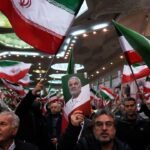

Iran Protest Wave, Iranians have once again poured into the streets in what has become one of the loudest and most defiant protest waves in years. From Tehran to other major cities, chants of “Death to the dictator” and “Death to the Islamic Republic” are ringing out with unprecedented force. This surge of unrest is being driven by a crashing economy, a free-falling currency, sweeping internet blackouts, and a striking call to action from exiled Crown Prince Reza Pahlavi.
What distinguishes this moment is not just the scale of the anger, but its intensity. Years of frustration appear to have boiled over, transforming economic despair into an open challenge to Iran’s political system.
A Night When Tehran Exploded
At exactly 8 pm in Tehran, something fundamental changed. Windows swung open, residents stepped onto balconies, and voices rose in unison, cascading through entire neighborhoods like a shockwave.
Crowds shouted “Death to the dictator!” and “Death to the Islamic Republic!”, unmistakably targeting Supreme Leader Ayatollah Ali Khamenei and the ruling theocratic structure.
Others chanted “This is the final battle! Pahlavi will return!”, a slogan that reflected either genuine monarchist sentiment or a profound desperation for any alternative to the current order.
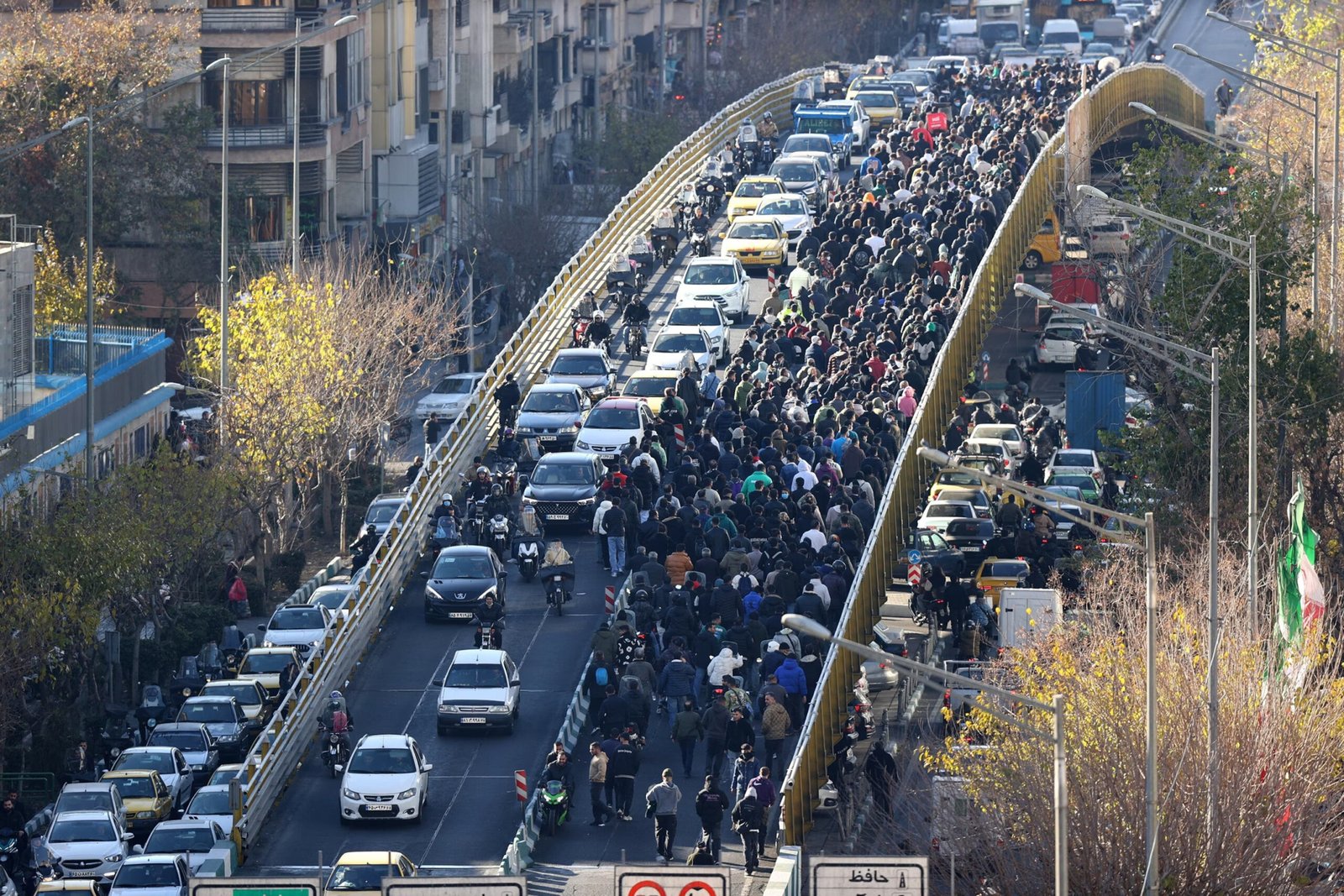
What began as coordinated rooftop chants rapidly escalated into mass street demonstrations, with thousands taking to the roads—until the state responded by cutting off nearly all channels of communication.
Reza Pahlavi’s Message: “Take To The Streets”
For decades, Reza Pahlavi, the exiled son of Iran’s last shah, remained largely symbolic and distant from events inside the country. Suddenly, his voice is resonating within Iran once again.
He called on citizens to gather at 8 pm on consecutive nights, framing the demonstrations as a collective national uprising rather than isolated protests.
His message emphasized unity, urging the “great nation of Iran” to make its demands visible to the world and to refuse silence.
Pahlavi also appealed directly to Western governments, particularly in Europe and the United States, asking them to help restore internet access and prevent the regime from erasing the people’s voice. He described the shutdowns not merely as censorship, but as an attack on human dignity and fundamental freedom.
The Internet Blackout: Cutting Off A Nation’s Voice
The regime’s initial countermeasure was not tanks or troops, but technology. As demonstrations gathered momentum, authorities swiftly pulled the digital plug.
Internet watchdogs such as NetBlocks, along with firms like Cloudflare, confirmed a nationwide or near-nationwide blackout, disrupting mobile data, home broadband, and major online platforms.
International phone connections were also affected, leaving families abroad unable to reach loved ones and preventing activists from sharing footage or eyewitness accounts.
For countless Iranians, the blackout felt like being sealed inside a locked room, cut off from the outside world. Past experience has taught many that such shutdowns often precede severe crackdowns, intensifying fears of what may come next.
Why Iranians Are Willing To Risk Everything
Iran Protest Wave, Why are people openly shouting “Death to the Islamic Republic” in a system where such words can be fatal? The answer lies in a toxic combination of economic collapse and political suffocation.
The main pressures include:
-
Currency collapse: The Iranian rial has plunged to nearly 1.4 million per US dollar on the unofficial market, obliterating savings and destroying purchasing power.
-
Explosive inflation: Inflation has surged beyond 52 percent, sending prices for essentials soaring.
-
Daily survival crisis: Food, fuel, rent, and utilities have all become more expensive, while wages remain stagnant. Many households have slipped from hardship into outright desperation.
The protests were initially ignited by bazaar merchants and shopkeepers in Tehran, enraged by the currency crash and price spikes. Almost immediately, economic complaints evolved into direct political condemnation.
Pezeshkian’s Balancing Act: A President Without Real Authority
Iran’s civilian president, Masoud Pezeshkian, officially identified as a reformist, has adopted a notably softer tone than hard-line figures.
He has:
-
Acknowledged that protesters have “legitimate demands”.
-
Urged officials to take people’s livelihoods more seriously.
-
Warned that, from an Islamic standpoint, leaders who ignore suffering could “end up in Hell.”
Yet Pezeshkian’s influence is sharply limited. True power remains with the Supreme Leader and security institutions, leaving the president with few tools to enact real change. Analysts argue that his statements sound more like moral appeals than actionable policies.
Leaderless Anger: A Movement Without A Single Face
Unlike traditional revolutions guid by a central figure, these protests are fragment, spontaneous, and largely leaderless.
Demonstrations have appeared across major cities and small towns, in bazaars, residential districts, and among both youth and older merchants.
The absence of centralized leadership makes it harder for the regime to dismantle the movement—but also complicates efforts to convert rage into a coherent political strategy.
Observers liken the situation to a pressure cooker without a release valve. Years of repression and economic failure have built up immense tension, and each new shock pushes it closer to rupture. Many potential leaders have been imprison, exile, or silence long ago.
The Human Cost: Deaths, Detentions, And Fear
Behind the chants and viral clips lies a grim reality.
Human rights organizations report at least 42 deaths so far, with more than 2,270 people detained nationwide.
State media have admit that members of the police and Revolutionary Guard have also be kill or injure during clashes and attacks on security facilities.
In some regions, shootings and stabbings have been reported near police stations. Elsewhere, security forces have deployed tear gas, live ammunition, and mass arrests. The real toll is likely higher, but the blackout makes independent verification extremely difficult.
How Far Is The Regime Willing To Go?
Iran Protest Wave, Iran’s leadership has projected mixed signals, combining warnings with measured restraint.
Hard-line outlets have highlighted surveillance drones and heavy policing, hinting at harsher steps if unrest continues.
So far, authorities have avoided the most extreme levels of visible bloodshed seen in previous crackdowns, possibly gauging public reaction and international scrutiny. However, the Revolutionary Guard remains the regime’s backbone, and history suggests that if leaders feel existentially threat, force will not be withheld.
Trump’s Warning And Global Attention
The unrest has quickly drawn attention from Washington. US President Donald Trump has publicly expressed support for the protesters and issued a sharp warning to Tehran.
He stated that if Iran “violently kills peaceful protesters,” the regime would “pay hell,” hinting at potential consequences.
While praising the “brave people” of Iran, Trump has stopped short of openly endorsing Reza Pahlavi, suggesting it may not be appropriate to meet him yet. This cautious distance reflects a strategy of supporting the movement without committing to a single opposition figure.
Echoes Of 1979: History Returns To The Streets
Pro-shah slogans and calls for Pahlavi’s return carry a powerful historical resonance. For decades, expressing admiration for the monarchy was dangerous and taboo.
Today, the fact that such chants are heard openly signals deep disillusionment with the Islamic Republic.
Whether protesters genuinely seek a monarchy or are invoking the past as a symbol of lost stability remains unclear. What is certain is that Iran’s streets have become a battleground where unresolved history is being debate—monarchy versus theocracy, ideology versus daily survival.
An Economy At The Breaking Point
The economic context explains why this moment feels different.
-
The rial’s plunge to 1.4–1.47 million per dollar marks a historic low.
-
Inflation above 50 percent ensures wages never catch up with prices.
-
Fuel, food, and taxes continue rising, while many see no sacrifices from the state itself.
Critics argue that government budgets still prioritize ideological institutions and elite networks, deepening the sense that the system serves insiders first. When people believe the state has abandoned them, anger does not fade—it erupts.
What Comes Next?
Iran now stands at a critical juncture.
The outcome will depend on:
-
The scale and persistence of protests
-
The level of force chosen by security forces
-
The ability—or failure—of the opposition to coordinate
At present, Iran faces a stark reality: a regime that still controls weapons and institutions confronting a population that increasingly feels it has nothing left to lose.
Read More: Venezuela Blasts Rock Caracas Amid Rising U.S.–Latin America Tensions
Conclusion
Iran Protest Wave, This latest protest wave in Iran is not a fleeting eruption. It is the result of years of economic pain, political repression, and shattered expectations—sparked by a currency collapse, magnified by digital shutdowns, and symbolically energized by an exiled prince’s call.
When Iranians chant “Death to the dictator” and “Death to the Islamic Republic,” they are no longer whispering dissent—they are openly challenging the foundations of the state.
Whether this moment becomes a historic turning point or another tragic episode will be decided in the days ahead—by protesters risking everything, by security forces weighing loyalty against restraint, and by leaders in Tehran and beyond choosing whether to listen, reform, or crush.