
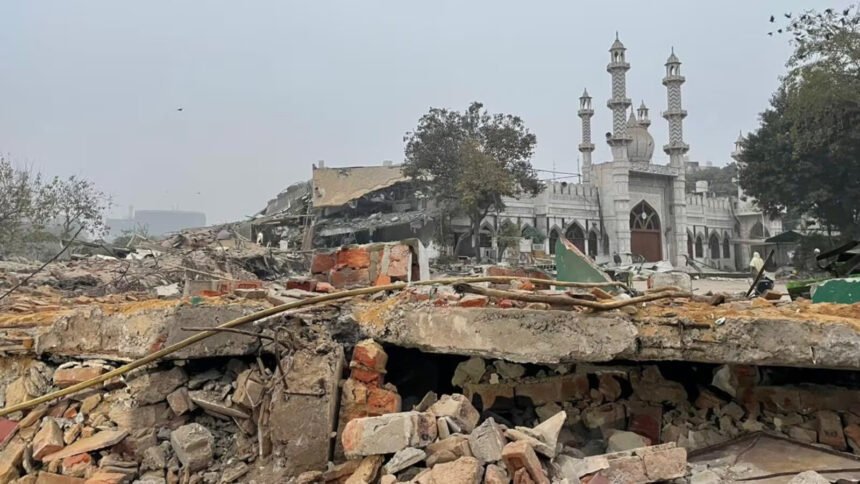
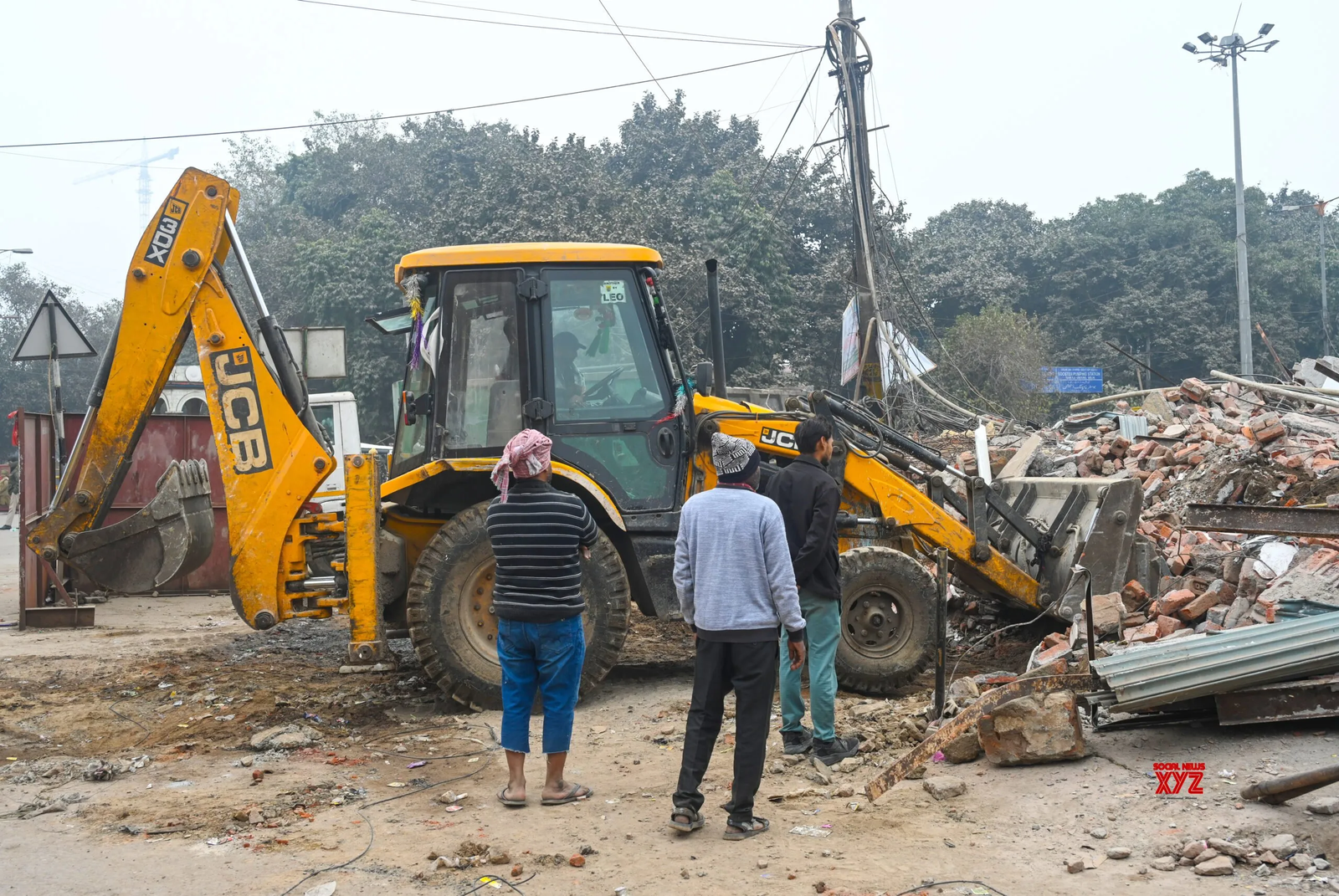
Turkman Gate Demolition: The narrow lanes of Old Delhi woke up to chaos early Wednesday morning, long before sunrise. What was intended as a routine Old Delhi demolition drive quickly escalated into a tense standoff near the iconic Faiz-e-Elahi Masjid, close to Turkman Gate and Ramlila Maidan. Bulldozers rolled in around 1:30 a.m., hours before the scheduled 8 a.m. demolition, startling residents from their sleep and triggering confusion across the neighborhood.
Why the Demolition Took Place
The action was part of an anti-encroachment drive by the Municipal Corporation of Delhi (MCD). It followed a Delhi High Court order directing authorities to clear nearly 38,940 square feet of alleged illegal structures around the Ramlila Ground area. The target included extended portions of the masjid premises, footpaths, a parking lot, and a few private establishments.
Court Orders Set the Stage
The court’s November 2025 bench order had allowed just three months for MCD and the Public Works Department (PWD) to clear encroachments. In December, MCD also issued a detailed notice claiming that constructions beyond 0.195 acres were unauthorized. The management of the mosque and the Delhi Waqf Board (DWB) failed to produce convincing ownership documents, paving the way for demolition.
The Scene Before Sunrise
Turkman Gate Demolition, Residents shared footage on social media showing earth-movers tearing through the mosque’s boundary walls, as heavy police deployment surrounded the site. According to videos circulating online, some locals tried to block the machinery, leading to clashes.
One clip showed stone-pelting by crowds and tear-gas shells fired into the air. While the authenticity of the videos remains under verification, the atmosphere of distress and confusion was undeniable.
Delhi Police’s Statement
Joint Commissioner of Police (Central Range) Madhur Verma confirm that the demolition was carrie out under High Court directions. To ensure order, the entire area was split into nine operational zones, each supervise by a senior officer of Additional DCP rank. Over ten companies of Delhi Police and the Rapid Action Force (RAF) were deploy at key points.
Verma emphasize that this pre-plan setup was crucial to prevent any escalation. He stat that coordination meetings had been conduct earlier with Aman Committee members and local stakeholders to maintain peace.
How Violence Broke Out
Despite the preparation, things turn volatile for a while. A few individuals reportedly hurl stones at police and municipal staff. Officers respon with what they described as “measured and minimal use of force.” By early morning, the situation was reported under control, though five police personnel sustained injuries in the process.
When asked about the alleged use of tear gas, a senior police official maintained, “Minimal force was used to restore calm.”
Residents Speak Out
Locals recounted a tense night of fear and confusion. A shopkeeper living close to the mosque said, “We didn’t sleep after midnight. Around 1 a.m., police came in large numbers. Some people protested and threw stones, and then there was chaos. We could see smoke—maybe tear gas. Things have calmed down now, but nobody knows what’s next.”
Many residents claimed they had no prior notice of the midnight operation, adding to the resentment.
Security Links and Past Events
Turkman Gate Demolition, Interestingly, officials noted that Umar Un-Nabi, the suspect in the Red Fort blast case who died in the November 10 explosion, had reportedly visited the same mosque days before the incident. Though authorities haven’t directly linked the demolition to this case, the mention has only deepened public curiosity and controversy.
The Legal Tug-of-War
The managing committee of Masjid Syed Elahi had already petitioned the Delhi High Court, challenging the MCD notice and seeking to halt the demolition. However, while the case was still under review, the operation went ahead—sparking debates on procedural fairness and administrative transparency.
Legal experts argue that such pre-dawn demolitions, especially around sensitive religious sites, should ideally follow transparent communication and timing protocols to avoid unrest in densely populated zones.
A City on Edge Yet Again
This isn’t the first time Delhi has faced tension surrounding heritage religious structures. The capital’s old neighborhoods are a maze of centuries-old monuments, now crammed with commercial spaces and residences. The blurred lines between “public property” and “private encroachment” often trigger both legal and emotional battles.
What unfolded at Turkman Gate feels like déjà vu—a reminder of how swift administrative actions can ignite community tension in a heartbeat.
Maintaining Peace Moving Forward
Authorities have since deployed additional patrols and asked locals to remain calm. Delhi Police have reiterated that peace is their top priority. Meetings between community leaders, MCD officials, and local representatives are expect to continue through the week.
Observers say that transparency, balanced enforcement, and timely dialogue are key to preventing similar flare-ups elsewhere in the city.
Old Delhi’s Fragile Balance
Old Delhi walks a tightrope between history and urban pressure. The blend of faith, commerce, and heritage gives it life but also makes it prone to conflicts when development meets tradition. What happened near Turkman Gate captures that very struggle—a clash between preservation, law, and sentiment.
Similar Articles: “Welcome to Viksit Bharat…” Congress hits out after Supreme Court denies bail to Umar Khalid, Sharjeel Imam
Conclusion
The Turkman Gate demolition drive once again shows that urban renewal in India isn’t just about clearing illegal structures—it’s about managing trust. As the city expands and its old quarters tighten under pressure, civic authorities will need compassion as much as compliance to maintain harmony.
Whether this night of unrest becomes a turning point—or just another chapter in Delhi’s long saga of contested spaces—remains to be seen.