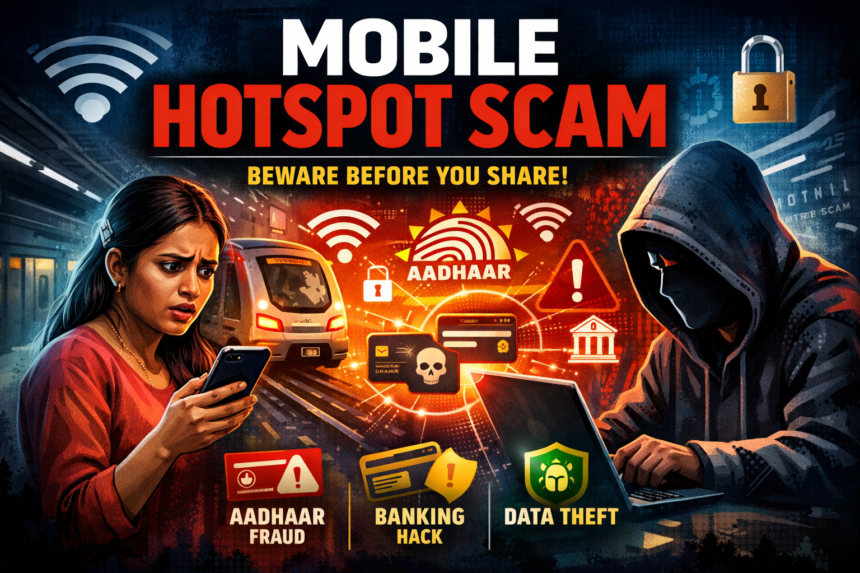
Ever shared your mobile hotspot with a stranger just for a minute? It might sound harmless, but in todays world, that simple act could open the door to a cyber nightmare. Recently, a new kind of fraud, dubbed the Hotspot Scam, has taken Mumbai by storm, emerging as a dangerous example of hotspot fraud in India and its a chilling reminder of how trust and technology can collide in the worst way possible.
About the Viral Case That Started It All
It started like something out of an everyday story. A woman waiting at a metro station in Mumbai was approached by another woman who said her Paytm app wasnt working because of a poor network. Sound familiar? Weve all met someone who needed a quick hotspot fix.
Moved by kindness, the 35-year-old commuter shared her hotspot password without hesitation. They entered the metro together and soon parted ways. But minutes later, her phone buzzed with strange alerts Aadhaar authentication attempts had failed. Thats when reality hit hard. Her trust had been exploited, and she had become the victim of a hotspot scam.
What Happened Next
Shaken but quick to act, she visited the official Aadhaar website, notified authorities by email, and reset every major password from her banking apps to digital wallets. After searching online, she realized this wasnt an isolated incident. Cyber experts had already started warning people about data theft via shared hotspots.
What Exactly Is a Hotspot Scam?
In simple terms, a hotspot scam happens when someone uses your shared mobile network to access or intercept your data. Think of your mobile network as a private highway. Once you open it up, someone can easily slip in and follow your digital trail and in some cases, even steal information hitching a ride on your connection.
How the Scam Works
Heres where it gets scary. When you share your hotspot:
-
Others connect to your personal data network.
-
Hackers can track online activity in real time.
-
They can even trigger unauthorised Aadhaar or financial authentications.
-
In worst cases, they can install malware through vulnerabilities in your device.
Essentially, youre letting them open a backdoor into your phone and you might not even notice until its too late.
Experts Raise the Red Flag
Mobile Hotspot Scam, Cybercrime lawyer Pankaj Bafna described it best: Hotspot scams are the new phishing calls except they happen face-to-face in public spaces.
He explained that criminals can mask their identity behind your IP address, meaning if they commit any illegal activity, you could be the one under suspicion.
He also added that in crowded places like metros or cafes, such scams can double as distraction techniques. While youre busy helping, the scammer might watch you enter your banking PIN, steal your phone, or scan passwords through shoulder surfing.
Is It Always Dangerous? Experts Debate
Not everyone completely agrees on the level of danger, though. Cyber expert Mayur Kulkarni believes full-scale hacking through a hotspot connection is rare. According to him, Professional hackers dont generally rely on in-person tricks or public Wi-Fi setups to steal small amounts of money.
Still, Kulkarni warns that data interception can happen accidentally especially when people reuse passwords across multiple apps. The risk may not always come from the scammer themselves, but from how exposed your device becomes, he notes.
Why Cybercriminals Target Public Spaces
Places like metro stations, cafes, airports, or parks are perfect hunting grounds for such scams. Why? Because crowds bring distraction and anonymity.
People are in a hurry, devices are connected to open networks, and the urge to help out often overrides caution. Its the perfect digital pickpocketing scenario only this time, the theft happens quietly in the background.
The Hidden Dangers of Shared Networks
Connecting to another persons hotspot or sharing yours means your online traffic flows through their device. Hackers can exploit that pathway to:
-
Capture private data packets (like passwords and OTPs).
-
Access your social media or banking apps.
-
Clone your devices IP address for illegal use.
-
Drop spyware or adware onto your phone.
Even if nothing happens right away, the attacker might still have enough digital fingerprints to exploit later.
How to Protect Yourself From the Hotspot Scam
Fortunately, a little awareness goes a long way. Heres how you can stay safe:
-
Never share your hotspot with strangers even if it seems urgent.
-
Use WPA2 or WPA3 security protocols on your hotspot settings.
-
Regularly change your hotspot password and make it complex.
-
Disable auto-connect to public Wi-Fi networks.
-
Keep your phones OS and security software updated.
-
If you must use public Wi-Fi, use a reliable VPN.
-
Avoid accessing banking or Aadhaar-linked apps over shared networks.
Remember: your mobile hotspot is like your wallet lending it to someone could cost you far more than just mobile data.
What To Do If Youve Been Targeted
If you suspect youve been scammed:
-
Turn off your hotspot immediately.
-
Reset all active passwords (banking, email, UPI, etc.).
-
Visit uidai.gov.in to check Aadhaar authentication logs.
-
File a complaint on cybercrime.gov.in or your nearest police cyber cell.
-
Inform your bank or wallet support to freeze suspicious transactions.
Time matters. Acting fast can prevent significant damage.
The Bigger Picture: Trust Meets Technology
The hotspot scam is a wake-up call about digital trust in public spaces. Cybercriminals are adapting fast, moving from fake calls and phishing links to physical interactions. The real weapon here isn’t a virus its our willingness to trust.
So next time someone asks, Could I use your hotspot for a minute? think again. That single gesture of kindness could open the floodgates to cyber theft.
Similar Articles: 19 Minute Viral MMS: Why Sharing This Video Can Lead to Serious Legal Trouble
Conclusion
Mobile Hotspot Scam, The rise of the hotspot scam highlights how our daily convenience can become a cybercriminals playground. The lesson is simple protect your network like you protect your identity. Never share your mobile hotspot with strangers, no matter how genuine their story sounds. In the digital age, even generosity needs a firewall.