
On what should have been just another ordinary school day, Ahmedabad woke up to fear, confusion, and a sudden rush of police sirens. Parents dropped their children off as usual, teachers planned lessons, and classrooms buzzed with routine chatter. Then, within minutes, everything changed. Bomb threat emails landed in the inboxes of several prominent schools, triggering mass evacuations and citywide alarm.
The chilling message was short but terrifying: We will take revenge.
That was enough to bring an entire education network to a standstill.
This is the complete, in-depth account of the Ahmedabad bomb threat, detailing what happened on the ground, which schools were affected by the Ahmedabad bomb threat emails, how police responded to the Ahmedabad bomb threat situation, why a Khalistan angle is being investigated in the Ahmedabad bomb threat case, and whether the Ahmedabad bomb threat is part of a larger pattern of hoax threats sweeping across India.
A Normal Morning Turns Into a Citywide Emergency
December 17 started like any other weekday in Ahmedabad. Students were settling into classrooms, some preparing for exams, others for sports practice or assemblies. But shortly after mid-morning, administrators at multiple schools received threatening emails warning of bomb blasts.
Within moments, panic rippled through school corridors. Administrators didnt waste time. Emergency protocols were activated, parents were informed, and children were moved out of classrooms.
Think of it like pulling a fire alarm in a packed buildingnobody waits around to confirm if theres smoke. Safety comes first.
The Terrifying Message That Sparked the Panic
Bomb Threat in Ahmedabad Schools, The bomb threat emails were brief but deeply disturbing. They contained ominous language and warnings of violence, with the phrase We will take revenge standing out as particularly alarming.
Authorities immediately treated the threats as credible. In todays security environment, even a single threatening email is enough to trigger a full-scale responseand rightly so.
Full List of Schools That Received Bomb Threat Emails
As panic spread, details began to emerge about the institutions targeted. According to police confirmations and school authorities, the following schools received bomb threat emails:
Affected Schools in Ahmedabad
Maharaja Agrasen School
Zydus School for Excellence
Zebra School
Nirman High School
DAV School (associated campuses reported)
Other nearby educational institutions placed on alert
While not all schools received direct emails, many in surrounding areas were placed on high alert as a precaution.
Swift Evacuations: How Schools Handled the Crisis
To their credit, school administrations acted decisively. Students were evacuated building by building, class by class. Teachers guided children calmly, ensuring no stampede or chaos.
Parents received urgent messages like this:
Due to an unforeseen security concern, we are vacating the school premises. Kindly collect your child at the earliest.
For parents, those messages hit like a punch to the stomach. Phones rang nonstop. Traffic outside schools swelled as families rushed to pick up their children.
But the system worked. No injuries. No chaos. Just controlled urgency.
Police, Dog Squads, and Anti-Sabotage Teams Deployed
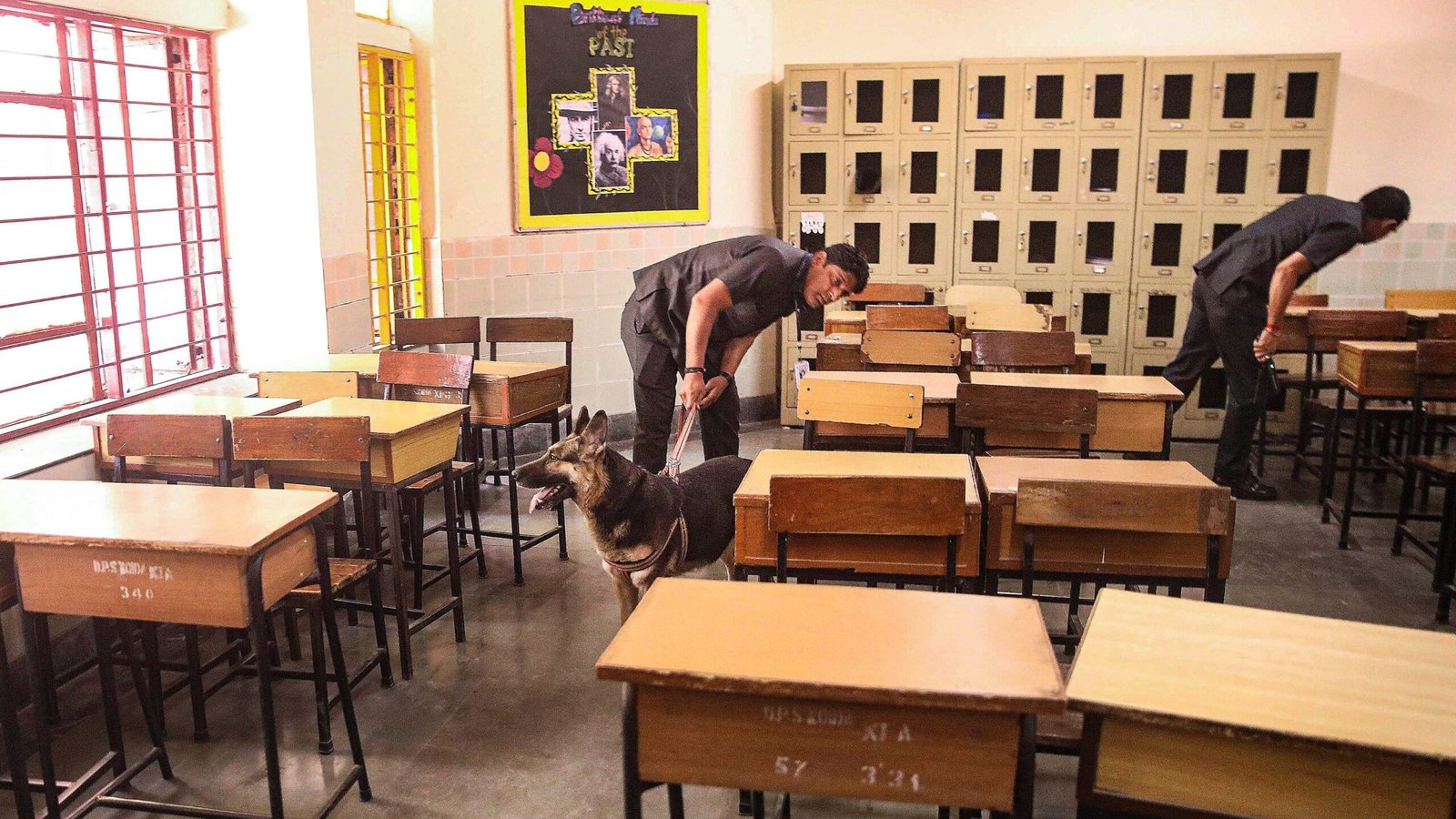
Within minutes of the threats being reported, Ahmedabad Police swung into action. Bomb detection and disposal squads, dog units, and anti-sabotage teams were deployed to every affected campus.
What Authorities Did on the Ground
Thorough classroom-by-classroom inspections
Sniffer dogs checking corridors, bags, and common areas
Securing entry and exit points
Crowd control to prevent panic outside school gates
Sharad Singhal, Joint Police Commissioner of the Ahmedabad Crime Branch, confirmed the rapid response, stating that public safety was the top priority.
In situations like this, police dont assume anything. They verify everything.
Were the Bomb Threats Real or Just Another Hoax?
By late afternoon, preliminary searches found no explosives or suspicious objects at the schools. That brought some reliefbut not closure.
Authorities stressed that even if nothing is found, such threats cannot be dismissed lightly. A hoax today can inspire something real tomorrow.
Police investigations are ongoing to determine whether the emails were malicious pranks or part of a larger ideological strategy.
The Khalistan Angle: Why Investigators Are Concerned
Bomb Threat in Ahmedabad Schools, One of the most serious aspects of this case is the possible Khalistan extremist connection. According to early intelligence inputs, the language and tone of the emails bear similarities to previous threats linked to pro-Khalistan groups.
Investigators believe the threats may have been designed to:
Spread fear among civilians
Disrupt daily life
Test police response systems
This suspicion isnt coming out of thin air. Theres precedent.
Similar Threat in Delhi Raises Red Flags
Just a week earlier, on December 10, a school in Delhi received a bomb threat email referencing the Khalistan Referendum. The message contained explicit threats and inflammatory language related to alleged fake encounters in Punjab.
The email reportedly warned of a bomb blast at a specific timeyet nothing was found.
The similarities between the Delhi and Ahmedabad cases have made investigators uneasy.
Is This Part of a Nationwide Pattern of Hoax Threats?
Unfortunately, Ahmedabad and Delhi are not isolated incidents.
Recent Similar Cases Across India
Amritsar (December 12): Multiple schools received bomb threats; later declared hoaxes
Delhi (December 10): Two schools targeted with ideological messages
Ahmedabad (December 17): Multiple schools evacuated in a single morning
Put together, these incidents paint a worrying picture. Someoneor some groupmay be testing how far fear can travel through an email.
How Police Are Tracing the Email Source
Cybercrime units have now taken center stage in the investigation. Authorities are tracking:
IP addresses
Email servers
VPN usage
Possible foreign links
Modern hoaxers rarely operate from their real locations. Many hide behind layers of digital anonymity. Still, investigators are confident that trailshowever faintcan be follow.
Officials have also warned that anyone found responsible will face serious legal consequences, including charges under anti-terror and cybercrime laws.
Impact on Students, Parents, and Teachers
While no physical harm occurred, the emotional toll is undeniable.
Children were frighten. Parents were shaken. Teachers had to become crisis managers instead of educators.
For many families, the question lingered: What if this hadnt been a hoax?
Schools have since announced counseling support, reassurance meetings, and tighter security protocols to help students feel safe returning to class.
What Happens Next for Ahmedabad Schools?
In the days following the incident, schools across Ahmedabad have:
Reviewed emergency evacuation procedures
Increased surveillance and gate security
Coordinated more closely with local police
Conducted mock drills to prepare for future emergencies
The message is clear: education must continue, but not at the cost of safety.
Why Even Hoax Threats Are Take Seriously
Some people might ask, If its a hoax, why all the fuss?
Heres the simple answer:
Because real attacks often begin as false alarms.
Every threat is treat as real until proven otherwise. Thats not paranoiaits preparedness.
Public Reaction: Fear, Anger, and Demands for Action
Social media quickly filled with reactions. Many praised the police and school staff for acting swiftly. Others expressed frustration and anger over repeated hoax threats disrupting daily life.
Theres also growing demand for stricter punishment for those who misuse terror threats as tools of mischief or propaganda.
Similar Articles: Ahmedabad Bomb Threat: Panic After Multiple Schools Receive Chilling Emails
Conclusion
Bomb Threat in Ahmedabad Schools, The Ahmedabad bomb threat scare may not have resulted in physical damage, but it delivered a powerful warning. In an age where a single email can paralyze a city, vigilance is no longer optionalits essential.
From schools to police departments, everyone played their role. The system held. The children were safe.
But the incident also reminds us that peace is fragile, and maintaining it requires constant alertness.
Beyond headlines and panic, this episode leaves us with an important lesson: security isnt just about armed forces and surveillance camerasits about coordination, trust, and readiness.
Ahmedabad passed the test this time. The hope is that such tests wont keep repeating.