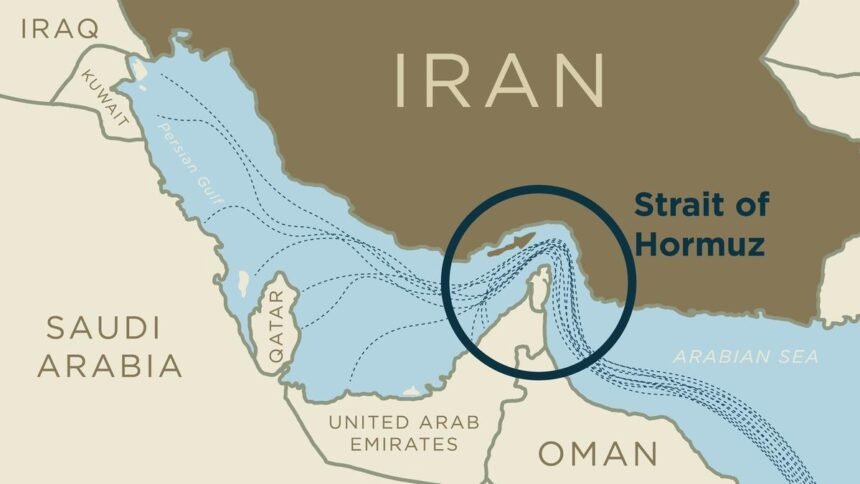
Strait of Hormuz Crisis, The Strait of Hormuz—ever heard of it being called the “artery of global oil”? Well, that’s not an exaggeration. This narrow waterway connects the Persian Gulf to the rest of the world, and any disruption here sends shockwaves across global markets. Now, with tensions escalating between Iran and the United States, this vital route has become the epicenter of a looming energy crisis.
Oil prices are already climbing, supply chains are tightening, and countries are beginning to feel the pressure. But in the middle of all this chaos, there’s a twist—India has been listed among “friendly nations” granted passage through the strait.
Iran’s Strategic Move: Who Gets a Free Pass?
Iran’s Foreign Minister Abbas Araghchi recently made a significant announcement: select countries—including India, China, Russia, Pakistan, and Iraq—are being allowed to use the Strait of Hormuz despite the ongoing tensions.
Why these countries? It’s simple—geopolitics. Iran is signaling that while it’s willing to restrict access, it won’t completely isolate allies or neutral partners. Think of it like a selective gatekeeping system: the door isn’t shut for everyone, just for those seen as adversaries.
Why the Strait of Hormuz Matters So Much
Let’s break it down. Nearly 20% of the world’s oil supply passes through this narrow stretch of water. That’s one in every five barrels of oil globally. Imagine a highway where every fifth truck carries fuel for the entire planet—and suddenly, that highway is partially blocked.
That’s exactly what’s happening.
Even a partial disruption can:
- Spike global oil prices
- Trigger fuel shortages
- Increase inflation worldwide
- Impact industries from aviation to agriculture
So yes, this isn’t just a regional issue—it’s everyone’s problem.
India’s Position: A Strategic Lifeline
For India, this development is both a relief and a warning.
India relies heavily on oil imports, especially from the Middle East. Being grant access to the Strait of Hormuz ensures that fuel supplies—at least for now—continue to flow.
But let’s not get too comfortable. This access depends on maintaining diplomatic balance. India has to walk a tightrope between global powers while securing its own energy needs.
Indian Ships Reportedly Safe Amid Rising Tensions
Strait of Hormuz Crisis, Amid growing concerns, the Indian government has stepped in to reassure the public.
Officials confirmed that all Indian ships and crew members in the Gulf region are safe. In fact, two LPG carriers—Pine Gas and Jag Vasant—have already successfully crossed the Strait of Hormuz and are currently on their way to India.
No incidents, no disruptions—for now.
But in a volatile situation like this, things can change overnight.
The US-Iran Conflict: The Bigger Picture
At the heart of this crisis lies the ongoing conflict between Iran and the United States. The Strait of Hormuz has become a bargaining chip in a larger geopolitical game.
Iran has included control over the strait as part of its demands in response to a proposed peace plan from former US President Donald Trump. One controversial claim—that both sides would jointly control the strait—was firmly rejected by Tehran.
So what does Iran want? Recognition of its sovereignty over the strait. In other words, Iran wants the world to acknowledge: “This is our turf.”
Conditional Access: Not a Free Ride for Everyone
Iran has made it clear that access to the strait isn’t unconditional.
Only “non-hostile” vessels—those that do not support or participate in actions against Iran—will be allowed safe passage. And even then, ships must coordinate with Iranian authorities before crossing.
It’s like entering a controlled zone: permission is mandatory, and rules are non-negotiable.
United Nations Raises Alarm Over Global Impact
The international community isn’t staying silent. The United Nations has expressed serious concern over the situation.
UN Secretary-General António Guterres warned that prolonged disruption in the Strait of Hormuz could choke the global flow of oil, gas, and even fertilizers—yes, fertilizers. That means agriculture could take a hit too, especially during critical planting seasons.
His message was clear: end the conflict before the consequences spiral out of control.
Iran’s Bold Plan: Charging Toll for Passage
Now here’s where things get even more interesting.
Strait of Hormuz Crisis, Iran is reportedly considering a plan to charge ships a fee for safe passage through the strait. Think of it as turning a global trade route into a toll road.
According to reports, Iran’s parliament is drafting a bill that would:
- Formalize Iran’s control over the strait
- Introduce toll charges for ships
- Generate revenue for the country
If implemented, this could redefine global shipping economics. Oil might not just be expensive because of scarcity—but also because of transit costs.
What This Means for Global Energy Markets
The ripple effects of this situation are already visible.
- Oil prices are rising
- Shipping insurance costs are increasing
- Supply chains are becoming uncertain
And here’s the kicker—markets hate uncertainty more than anything. Even the possibility of disruption can trigger price spikes.
For consumers, this could mean higher fuel prices, increased transportation costs, and eventually, pricier everyday goods.
A Fragile Balance Between Diplomacy and Crisis
The situation in the Strait of Hormuz is like a tightly wound spring—any sudden move could release massive pressure.
Countries like India are navigating carefully, maintaining diplomatic ties while securing essential resources. Meanwhile, global powers are watching closely, weighing their next moves.
It’s not just about oil anymore—it’s about influence, control, and survival in a high-stakes geopolitical chess game.
Read More: Saudi Aramco Oil Facility Attack: Ras Tanura Hit by Drone Debris Amid Iran–US–Israel Escalation
Conclusion
Strait of Hormuz Crisis, The Strait of Hormuz has once again proven how a narrow strip of water can hold the world’s economy hostage. Iran’s decision to allow “friendly nations” like India to pass through offers temporary relief, but the larger crisis remains unresolved.
With tensions still high and new policies like toll charges on the horizon, the global energy landscape is entering uncertain territory.
Let’s be honest—this situation isn’t going away anytime soon.
The real question is: how prepared are we for prolonged instability? Whether you’re a policymaker, a business owner, or just someone filling up their car, the effects of this crisis could reach you sooner than you think.
Because when the world’s energy lifeline is at risk, no one is truly unaffected.