
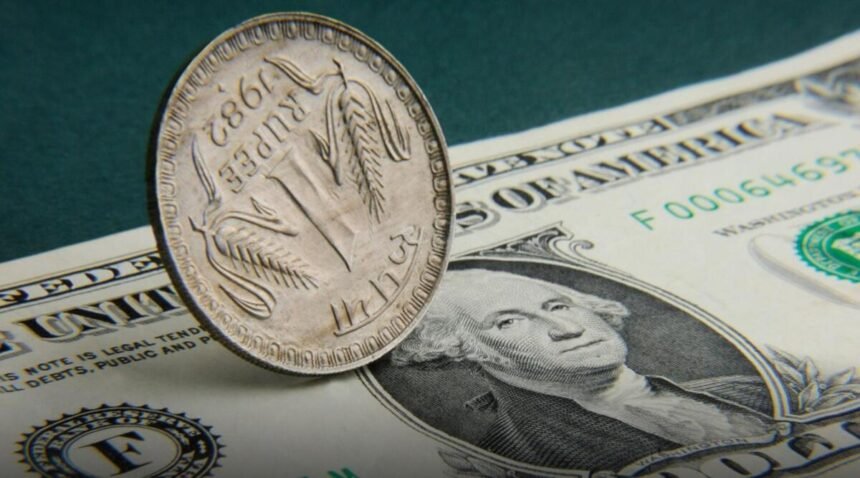
Rupee Exchange Rate, The Indian rupee kicked off the week on a slightly stronger note—but don’t let that modest 10 paise gain fool you. Beneath the surface, there’s a fascinating mix of central bank intervention, global tensions, and trader behavior shaping the currency’s trajectory. So what’s really going on? And more importantly—where is the rupee headed next?
The Indian rupee vs US dollar trend is becoming a key indicator for investors and traders trying to understand the broader direction of the currency market.
Let’s break it down in simple, conversational terms.
Rupee Opens Higher: A Positive Start to the Week
The rupee opened at 93 against the US dollar on April 6, marking a 10 paise gain compared to its previous close of 93.10. It may sound like a small move, but in currency markets, even tiny shifts can signal larger trends.
This uptick comes after markets were closed on Good Friday, giving traders a brief pause before jumping back into action.
What’s Driving the Rupee’s Strength?
So why is the rupee gaining ground? The answer lies in a mix of domestic policy and trader behavior.
At the heart of this movement is the Reserve Bank of India (RBI). Over the past week, the central bank has taken bold steps to stabilize the currency—and it’s working.
The rupee has surged nearly 2% in just a week. That’s not random—it’s a direct response to policy changes.
RBI Cracks Down on Offshore Speculation
Rupee Exchange Rate, Think of the currency market like a crowded highway. Too many speculative trades? That’s like reckless drivers causing chaos.
The RBI stepped in to restore order by tightening rules around offshore non-deliverable forwards (NDFs)—a market where traders bet on currency movements without actually exchanging money.
This is one of the strictest crackdowns in over a decade. And guess what? It’s forcing traders to rethink their strategies.
Unwinding Arbitrage Bets: What Does That Mean?
Let’s simplify this.
Arbitrage is when traders exploit price differences between markets to make quick profits. In this case, they were betting on differences between onshore and offshore rupee markets.
Now, due to RBI’s stricter rules, banks and traders are “unwinding” these positions—basically closing those bets.
It’s like everyone rushing to exit the same trade at once. The result? The rupee gets a boost.
How Far Can the Rupee Go?
According to market experts, the rupee might not be done strengthening yet.
Amit Pabari, MD of CR Forex Advisory, suggests the currency could move toward the 91.50–92 range as traders continue exiting their dollar positions ahead of the April 10 deadline set by the RBI.
Sounds promising, right? But hold on—there’s a catch.
Global Risks Still Loom Large
Currency markets don’t operate in isolation. What happens globally can easily shake things up.
One major concern right now is geopolitical tension involving the United States and Iran.
Donald Trump has reportedly issued a fresh warning to Iran regarding the Strait of Hormuz—a critical oil shipping route.
Why does this matter?
Because when global tensions rise, investors tend to flock to safer assets like the US dollar. And that can weaken emerging market currencies like the rupee.
Why Brent Crude Prices Matter So Much
Here’s a simple analogy: India importing oil is like a household buying groceries. If prices go up, your expenses rise.
India imports a large portion of its crude oil. So when oil prices increase, it puts pressure on the rupee.
Right now, Brent crude is trading around $110 per barrel, up nearly 1% from the previous session.
That’s not great news for the rupee.
FII Selling Adds More Pressure
Foreign Institutional Investors (FIIs) are another key factor.
When FIIs pull money out of Indian markets, they convert rupees into dollars—putting downward pressure on the currency.
Right now, continued FII selling is weighing on market sentiment. It’s like a slow leak in a tire—you might not notice immediately, but it eventually affects performance.
All Eyes on the MPC Meeting
Rupee Exchange Rate, Another big event on traders’ radar is the upcoming monetary policy review by the RBI’s Monetary Policy Committee (MPC).
The meeting begins today, with the outcome expected on April 8.
Most analysts believe the RBI will keep interest rates unchanged. But even a small surprise could shift currency markets dramatically.
Short-Term vs Long-Term Outlook
So what’s the bigger picture?
In the short term, the rupee may continue to strengthen due to:
- RBI’s aggressive intervention
- Unwinding of speculative positions
- Improved domestic sentiment
But in the long term, global factors like oil prices, geopolitical risks, and capital flows will play a crucial role.
Is This a Temporary Rally or a Trend Reversal?
That’s the million-dollar question.
Is the rupee’s rise just a short-term reaction—or the start of a sustained recovery?
Honestly, it’s a bit of both.
The RBI has clearly set the tone for stability. But external risks could easily derail progress.
What Should Investors and Businesses Watch?
If you’re an investor or business owner, here’s what you should keep an eye on:
- RBI policy updates
- Brent crude price movements
- Global geopolitical developments
- FII investment trends
These factors will act like signposts, guiding the rupee’s direction.
Strait of Hormuz: A Critical Flashpoint
The Strait of Hormuz is one of the most important oil transit chokepoints in the world.
Over 20% of global crude oil passes through this narrow waterway.
Recent disruptions following military actions on February 28 have kept the route partially restricted. Any escalation here could send oil prices soaring—and that’s bad news for India’s currency.
Read More: RBI Amendment Directions 2026 Delayed to July: Full Breakdown for Banks & Investors
Conclusion
Rupee Exchange Rate, The rupee’s recent rise is encouraging, but it’s walking a tightrope.
On one side, strong RBI intervention is boosting confidence. On the other, global uncertainties threaten to undo those gains.
It’s a classic tug-of-war between domestic strength and international pressure.
If there’s one thing we know about currency markets, it’s this—they’re unpredictable.
The rupee may continue its upward journey in the near term, especially as speculative trades unwind. But don’t expect a smooth ride.
Think of it like sailing in choppy waters. The ship is मजबूत (strong), but the waves? Still unpredictable.
So whether you’re a trader, investor, or just someone curious about the economy, keep watching this space. The rupee’s story is far from over.