
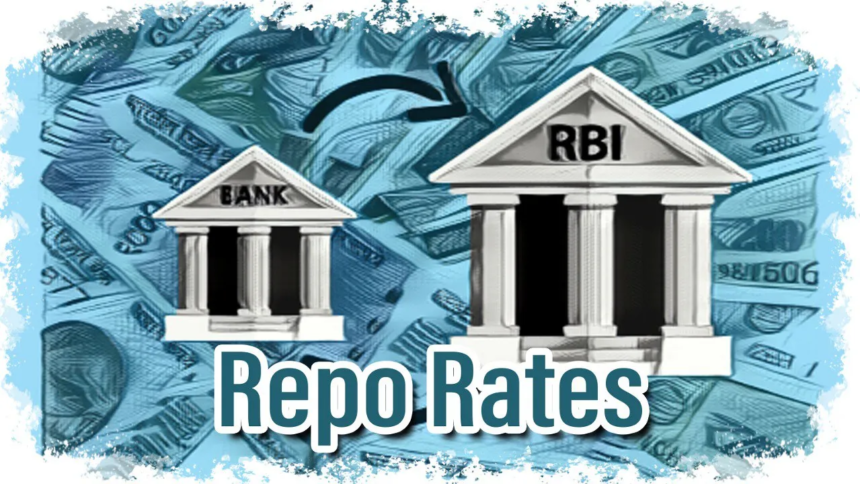
RBI Repo Rate, When the Reserve Bank of India (RBI) makes a move—or decides not to—it sends ripples across the entire financial system. This time, the central bank has chosen stability over action, keeping the repo rate unchanged at 5.25% for the second consecutive time. Sounds uneventful? Not quite.
Behind this decision lies a mix of global tensions, volatile oil prices, and cautious economic strategy. So, what does this really mean for you—especially if you’re paying a home loan EMI or planning to take one? Let’s break it down in simple terms.
What Is the Repo Rate and Why Should You Care?
Think of the repo rate as the interest rate at which banks borrow money from the RBI. When this rate goes up, loans become expensive. When it drops, borrowing gets cheaper.
So, if you’re repaying a home loan or considering one, the repo rate directly influences your EMI (Equated Monthly Installment). In short—it affects your monthly budget.
Why Did RBI Keep the Repo Rate Unchanged?
You might be wondering: why no change?
The answer lies in global uncertainty. Rising crude oil prices and geopolitical tensions—especially between the US and Iran—are creating economic unpredictability. Instead of reacting hastily, the RBI has chosen a “wait-and-watch” approach.
It’s a bit like driving in fog—you slow down, stay alert, and avoid sudden moves.
A Strategic Pause, Not a Routine Decision
This isn’t just another policy pause. Experts believe it reflects a shift in economic conditions.
Supply chain disruptions, oil price spikes, and global instability have made the RBI cautious. The Monetary Policy Committee’s unanimous decision shows that policymakers want more clarity before making their next move.
What Does This Mean for Home Loan Borrowers?
Here’s the good news—nothing changes immediately.
If you already have a home loan linked to the repo rate, your EMI remains stable. No sudden hikes. No unpleasant surprises.
In times when inflation and expenses are unpredictable, this stability is like having a fixed anchor in rough waters.
How Much Are Borrowers Already Saving?
RBI Repo Rate, Thanks to earlier rate cuts in 2025 (totalling 125 basis points), borrowers are already enjoying noticeable savings.
Let’s put it into perspective:
- On a ₹50 lakh loan (20 years):
- Monthly EMI savings: around ₹3,050
- Total interest savings: approx. ₹7.34 lakh
- On a ₹75 lakh loan:
- Monthly savings: about ₹5,800
- Lifetime savings: nearly ₹13.94 lakh
And guess what? The current rate hold ensures these benefits continue.
Repo-Linked vs MCLR Loans: What Should You Choose?
Not all loans are created equal.
- Repo-linked loans adjust quickly with RBI rate changes
- MCLR-linked loans are slower to reflect changes
If you’re still on an older MCLR-based loan, you might be missing out. Switching to a repo-linked loan could help you benefit faster from future rate cuts.
It’s like upgrading from a slow internet connection to high-speed broadband—you notice the difference instantly.
Impact on First-Time Home Buyers
Planning to buy your first home?
This is actually a favorable window. Stable interest rates mean predictable EMIs, making it easier to plan your finances.
You won’t have to constantly worry about your monthly outflow suddenly increasing. That peace of mind is invaluable when making such a big financial commitment.
How Stable Rates Support the Economy
It’s not just about home loans.
When interest rates remain steady:
- Consumers feel more confident spending
- Businesses can plan long-term investments
- Housing demand stays strong
In simple terms, stability fuels growth.
Inflation vs Growth: RBI’s Balancing Act
RBI Repo Rate, The RBI is walking a tightrope here.
On one side is inflation—if rates are cut too soon, prices could rise again. On the other side is economic growth—which needs lower rates to thrive.
By holding rates steady, the RBI is trying to strike the perfect balance without tipping the scale too far in either direction.
Should You Refinance Your Home Loan?
If you’re paying a higher interest rate than what’s currently available, refinancing might be a smart move.
It’s like renegotiating your deal to get a better price. Lower rates can significantly reduce your total repayment burden over time.
The Importance of Financial Planning
Taking a home loan isn’t just about getting approval—it’s about long-term financial discipline.
Consider:
- Your credit score
- Existing debts
- Emergency savings
- Future income stability
Consulting a financial advisor can help you make a well-informed decision that aligns with your goals.
5 Key Factors to Consider Before Taking a Home Loan
Before you jump into a home loan, take a step back and evaluate these crucial factors:
1. Understand Your Loan Type
Know whether your loan is repo-linked or MCLR-based. Repo-linked loans offer faster benefits when rates change.
2. Compare Interest Rates Carefully
Don’t settle for the first offer. Compare rates across platforms and lenders to get the best deal.
3. Check EMI Affordability
Can you comfortably pay your EMI every month? Don’t stretch your finances too thin.
4. Watch the Global Economic Trends
Events like oil price fluctuations or geopolitical tensions can impact future interest rates. Stay informed.
5. Think Long-Term, Not Just Monthly
A lower EMI might look attractive—but what about total interest paid over 20 years? Always look at the bigger picture.
Read More: Rupee Exchange Rate Today: Why the Indian Rupee Is Rising Against the Dollar
Conclusion
RBI Repo Rate, The RBI’s decision to hold the repo rate at 5.25% offers something rare in uncertain times—predictability.
For borrowers, this means steady EMIs and continued savings. For aspiring homeowners, it creates a favorable environment to plan big financial moves.
In a world full of economic surprises, a little stability goes a long way.
At the end of the day, a home loan is one of the biggest financial commitments you’ll ever make. While the RBI’s decision provides short-term clarity, your long-term success depends on careful planning and smart choices.
Ask yourself: Can you afford it not just today, but 10 or 20 years down the line?
Because owning a home isn’t just about buying property—it’s about building a secure financial future.