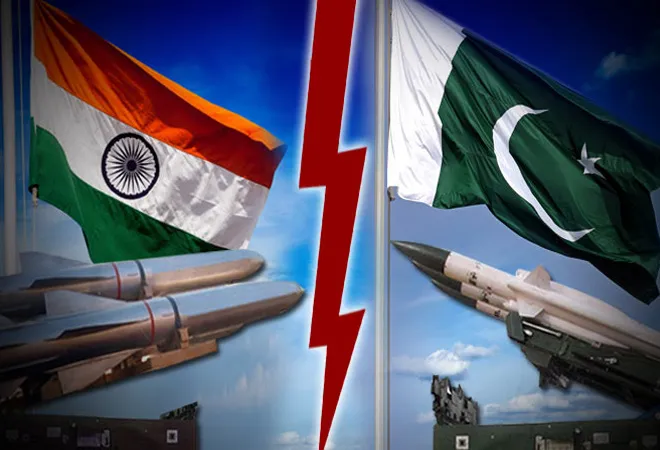
Introduction: A Nuclear Poker Game in South Asia
What happens when two nuclear-armed neighbors lock horns? Well, you get the kind of dangerous standoff the world just witnessed. In a high-stakes diplomatic and military drama, Pakistan reportedly pulled its ultimate trump card the nuclear threat to corner the United States into intervening in a conflict with India. The aim? To stop the war in its tracks and avoid complete annihilation. And according to sources close to the events, Pakistan knew exactly what it was doing.
Lets walk through how Pakistan used its nuclear arsenal not just for defense, but as a powerful bargaining chip, making the world sit up and take notice and ultimately, back off.
Operation Sindoor: The Spark That Lit the Fuse
It all started when India launched Operation Sindoor, a series of surgical military strikes aimed at neutralizing terrorist launch pads along the Line of Control. This wasnt just a routine scuffle. India was dead serious, and its strikes made it loud and clear.
In response, Pakistan didnt just mobilize troops. It summoned the National Command Authority (NCA) the apex body that handles Pakistans nuclear arsenal. Thats when things went from tense to terrifying.
The Nuclear Card Gets Played
nuclear threat, According to top intelligence sources, during the NCA meeting, Pakistan Army Chief General Asim Munir made a chilling move. He reportedly communicated to U.S. Senator Marco Rubio that if things escalated further, Islamabad might just go nuclear. Yes, he didnt exactly say were pushing the red button, but the message was crystal clear.
It wasnt an empty threat. It was a calculated attempt to make Washington panic and it worked.
Yes, We Blackmailed America A Startling Admission
In a rare and stunning confession, a senior Pakistani military official openly told journalists, We threatened America to stop the war or we would press the button. Thats right Pakistan admitted to using nuclear blackmail.
He went on to say, We assessed our downside and acted accordingly. Translation? They knew what they were doing, weighed the risks, and decided the bluff was worth it. The logic? When two nuclear giants stare each other down, nobody really wins. Its mutual destruction plain and simple.
Kirana Hills: A Chilling Reminder of Pakistan’s Nuclear Backbone
Lets take a quick detour here. The name Kirana Hills might not mean much to the average person, but in the world of defense and nuclear strategy, its a big deal. Tucked away in Punjab province, this is where Pakistan quietly conducted its early nuclear weapons testing back in the late 1980s.
The significance? It shows just how long Pakistan has been planning, perfecting, and polishing its nuclear deterrent and how that legacy still influences its modern-day military strategy. The recent standoff proves that Kirana Hills isnt just a piece of history. Its the root of Pakistans current nuclear swagger.
The U.S. Bends Under Pressure
Initially, many in Washington shrugged off the India-Pakistan standoff as just another border flare-up. Senator JD Vance and others saw it as a regional problem until Pakistan dropped the nuclear hint. Suddenly, this wasnt just South Asias mess. It became a global crisis.
Realizing the gravity of the situation, the U.S. administration sprang into action, placing calls to New Delhi and Islamabad. The pressure paid off a ceasefire was announced, bringing an end to over 100 hours of dangerous military escalation.
A Strategic Bluff or Reckless Gamble?
Now heres the million-dollar question was this a case of reckless nuclear brinkmanship or a masterstroke of strategic diplomacy?
A senior Pakistani official claims the latter. He described the whole episode as an example of mature escalation control. According to him, Pakistan never intended to start a nuclear war it only wanted to raise the stakes just enough to make the world take notice. Think of it like poker: they didnt show their hand, but they sure made it seem like they had a royal flush nuclear threat.
India’s Response: Calculated, Controlled, but Watching Closely
India, for its part, didnt bite the bait. It stuck to conventional military responses and didnt engage in nuclear saber-rattling. But make no mistake New Delhi took notes.
Indian defense planners are now rethinking their playbook. How do you deal with a neighbor who uses the threat of mutual destruction as a negotiation tactic? Thats the kind of question Indias top strategists are now trying to answer and it might mean major changes to Indias future military doctrine.
The Bigger Picture: Nuclear Deterrence vs. Nuclear Diplomacy
What this episode shows us is that nuclear weapons arent just tools of mass destruction theyre tools of psychological warfare. And in South Asia, theyre being used more for diplomacy than for actual combat.
Pakistans approach shaped in part by its early tests at Kirana Hills reflects a broader trend. Its not about dropping bombs. Its about dropping hints strong enough to freeze your opponent in their tracks. And in this case, it did exactly that.
Chinas Silent Hand: A Strategic Shadow
Wed be remiss not to mention China here. Though not directly involved, China looms large in the background. Pakistan and China share a close strategic partnership, and that relationship likely gave Islamabad the confidence to push the envelope.
Chinas indirect influence in South Asias power play adds another layer of complexity, making future standoffs even more unpredictable.
What This Means for the World
This entire episode from Operation Sindoor to the veiled threats and the eventual ceasefire highlights the fragile nature of peace in nuclear-armed regions. It also raises tough questions for the international community regarding the nuclear threat:
-
Should nuclear threats be allowed as a legitimate tool of diplomacy?
-
How should the U.S. and other global powers respond next time?
One thing is clear: the old rules no longer apply. And as long as nuclear blackmail is on the table, every flare-up in South Asia is a potential flashpoint for global disaster.
Read More: Forex Trading in India: Everything You Need to Know in 2025
Conclusion
In the end, Pakistan’s use of the nuclear threat was a high-risk move that achieved its immediate goal avoiding full-scale war with India. Whether it was a smart play or a dangerous gamble is still up for debate. But one thing’s for sure: this wasnt the last time nuclear weapons will be used as leverage.
And as the dust settles, countries around the world especially India and the United States are reevaluating their strategies, redrawing red lines, and bracing for whatever comes next.
The legacy of Kirana Hills lives on not as a memory of explosions, but as a blueprint for strategic coercion in a nuclear world.