Pakistan Afghanistan War, Tensions between Pakistan and Afghanistan have exploded into one of the most serious crises in years. Islamabad has openly declared what it calls “open war” against the Afghan Taliban government, after a wave of cross‑border attacks and retaliatory strikes that have left scores dead on both sides.
In a dramatic escalation, Pakistan launched airstrikes on Afghanistan’s capital Kabul and the southern city of Kandahar, just hours after Afghan forces attacked Pakistani border positions. Both governments are now releasing sharply different casualty figures, each claiming to have inflicted heavy losses on the other. For a region already on edge, this confrontation is ringing alarm bells far beyond the Af‑Pak border. This Kabul airstrike news has rapidly become a major international headline, drawing urgent attention from regional powers and global observers monitoring the conflict.
Pakistan’s “Open War” Declaration
Pakistan’s Defence Minister Khawaja Asif made the most explosive statement of the crisis so far, taking to social media platform X to announce that Islamabad’s patience had run out.
“Our patience has reached its limit. Now it is open war between us and you,” he wrote, as Pakistan’s military unveiled a new campaign, code‑named Operation Ghazab lil‑Haq, targeting what it says are Afghan Taliban defence installations.
That phrase, “open war”, is not something you hear every day from a sitting defence minister. It signals a dramatic shift from uneasy tension and sporadic skirmishes to a more formalized, sustained military confrontation. Whether that translates into a long conflict or a short, sharp exchange will depend on what both sides do next.
What Triggered The Latest Escalation?
You might be wondering: what exactly pushed things over the edge this time?
According to both governments, the latest round of fighting began after Pakistan carried out airstrikes last Sunday on Afghan border regions. Islamabad insisted it was targeting militant hideouts allegedly sheltering groups attacking Pakistan. Kabul, however, accused Pakistan of violating Afghan airspace and killing civilians, including women and children.
In apparent retaliation, Afghan forces launched a cross‑border offensive late Thursday, hitting Pakistani military posts along the frontier. Afghan officials claimed they captured more than a dozen Pakistani army positions during this operation.
Pakistan responded within hours, striking deep inside Afghanistan on Friday, including in Kabul, Kandahar, and the southeastern province of Paktia. That tit‑for‑tat cycle, which has been building for months, is now threatening to spiral into a much wider conflict.
Airstrikes On Kabul, Kandahar, And Paktia
Pakistan Afghanistan War, Residents in Kabul reported hearing at least three loud explosions on Friday morning. There was no immediate clarity on the exact targets in the capital, or on the full number of casualties, but Afghan officials quickly blamed Pakistan for carrying out the strikes.
Taliban government spokesperson Zabihullah Mujahid said Pakistani aircraft also struck targets in Kandahar—the Taliban’s traditional power base in the south—as well as in Paktia province in the southeast.
Pakistani Information Minister Attaullah Tarar confirmed that the Pakistani military hit what he described as Afghan Taliban defence sites. State broadcaster PTV News went further, claiming:
-
Key Afghan Taliban military installations were struck in Kabul, Kandahar, and Paktia
-
At least two brigade headquarters were destroyed in Kabul
-
One corps headquarters and one brigade headquarters hit in Kandahar
-
An ammunition depot and logistics base allegedly destroyed in Kandahar
-
A corps headquarters targeted in Paktia
These sweeping claims have not been independently verified. Afghan officials have not publicly confirmed the scale of damage to their infrastructure, and as is often the case in conflict zones, the truth likely lies somewhere between the competing narratives.
Afghanistan’s Cross‑Border Offensive And Claims
Pakistan Afghanistan War, On the Afghan side, officials say their forces launched a large‑scale attack across the Durand Line late Thursday night, targeting Pakistani border positions in response to last Sunday’s airstrikes.
Afghanistan’s Defence Ministry claims:
-
55 Pakistani soldiers were killed
-
Several Pakistani troops were captured alive
-
19 Pakistani army posts and 2 bases were destroyed
-
Fighting lasted for about four hours, ending around midnight
-
Afghan losses amounted to 8 soldiers killed and 11 wounded
Afghan forces also released night‑time video footage showing military vehicles moving and heavy gunfire echoing in the background, along with claims that several Pakistani posts had been overrun. However, as is so often the case in conflict reporting, this material could not be independently verified.
Afghan officials further alleged that they shot down a Pakistani F‑16 fighter jet, posting a video of what appeared to be a burning aircraft carcass. Pakistan has not publicly acknowledged the loss of any fighter jet, and independent confirmation remains elusive.

Pakistan’s Counter‑Narrative: “Unprovoked Firing” And Heavy Afghan Losses
Pakistan Afghanistan War, Islamabad has pushed back hard against Afghanistan’s version of events. Pakistani authorities describe the Afghan attack as “unprovoked firing” and flatly reject Kabul’s claims of capturing Pakistani military posts or killing dozens of soldiers.
Information Minister Attaullah Tarar initially stated:
-
Only 2 Pakistani soldiers were killed
-
3 others were wounded
-
36 Afghan fighters were confirmed killed
Later, Mosharraf Ali Zaidi, spokesperson for Prime Minister Shehbaz Sharif, significantly raised those figures on the Afghan side. In a post on X, he claimed:
-
At least 133 Afghan fighters were killed
-
More than 200 Afghan fighters were wounded
-
27 Afghan posts were destroyed
-
9 Afghan fighters were captured
He did not specify where these casualties occurred, only adding that “many more casualties” were expected from the strikes on Kabul, Paktia, and Kandahar.
Zaidi also firmly denied Afghan claims that Pakistani soldiers had been captured. The mismatch in numbers from each side reflects not only the fog of war, but also the political stakes in shaping public perception at home and abroad.
Civilians Caught In The Crossfire
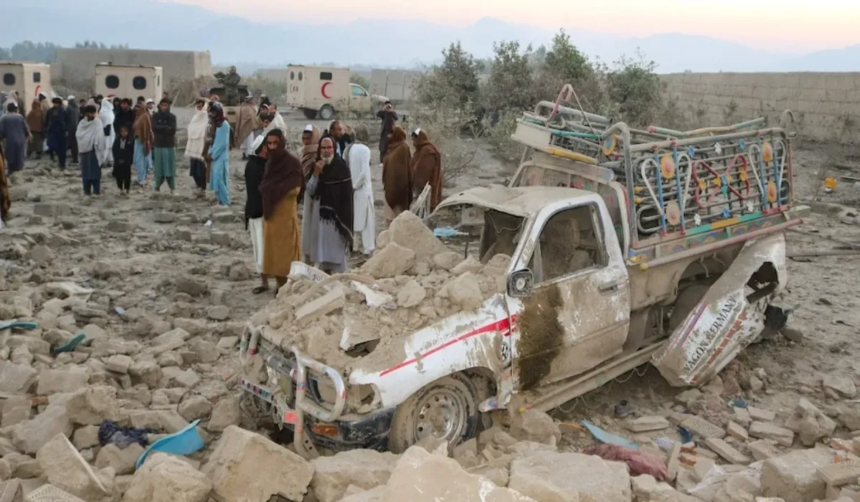
Pakistan Afghanistan War, Behind the competing military claims, civilians along the border are paying a heavy price.
On the Afghan side, officials reported:
-
Multiple civilians wounded near the Torkham border crossing
-
A mortar shell hitting a camp for returnees from Pakistan, injuring at least seven refugees
-
One woman in critical condition, according to Qureshi Badlun, the information chief in Nangarhar province
-
13 civilians wounded in a missile strike on the refugee camp, including women and children
Authorities began evacuating the refugee camp near Torkham as the fighting intensified, trying to move families to slightly safer locations.
On the Pakistani side, police reported that:
-
Residents in border villages were moving to safer areas
-
Some Afghan refugees waiting to cross back into Afghanistan were relocated to secure zones
-
Mortar shells fired from Afghanistan landed in Pakistani villages, though there were no immediate reports of civilian casualties
Pakistan’s Information Ministry said Islamabad would take “all necessary measures” to safeguard its territorial integrity and protect its citizens, signalling that further military action remains on the table.
For families suddenly caught between artillery fire and airstrikes, these statements offer little comfort. The border region, already strained by deportations and refugee movements, is now facing a new wave of instability.
Refugees, Deportations, And A Closed Border
The crisis is unfolding against a broader backdrop of migration and forced returns. Since October 2023, Pakistan has been implementing a sweeping crackdown on undocumented migrants, many of them Afghans. Hundreds of thousands have already been expelled or pressured to leave.
The Torkham crossing—one of the main gateways between the two countries—has been largely close since deadly clashes in October. While some Afghan returnees have been allow to cross, trade, travel, and humanitarian access have all been disrupt.
When shells start falling near refugee camps, the situation becomes even more precarious. Imagine being a displace family, already force to leave one home, suddenly facing fresh airstrikes and artillery fire at what was suppose to be a transit point to safety. That’s the reality on the ground for many Afghans right now.
Operation Ghazab lil‑Haq: Pakistan’s Message
Pakistan Afghanistan War, By branding its latest campaign Operation Ghazab lil‑Haq, Pakistan is sending a clear political and military message to the Taliban government in Kabul. Islamabad says it is responding “befittingly” to what it sees as open aggression from Afghan territory.
Interior Minister Mohsin Naqvi—who also heads the Pakistan Cricket Board—condemned the Afghan Taliban for allegedly targeting civilians. In a statement on X, he said:
-
“The cowardly enemy struck in the darkness of night. The Afghan Taliban made a despicable attempt to target innocent civilians.”
-
“The nation stands shoulder to shoulder with the armed forces.”
-
“The Afghan Taliban made a terrible mistake by attacking. They will have to face serious consequences. We will not allow our security to be compromise.”
This language is deliberately tough. It is meant to rally domestic support and signal to Kabul, and to regional players, that Pakistan believes it has both the right and the resolve to hit back hard if it feels threaten.
The Deeper Roots: TTP, Militants, And Old Grievances
To really understand why the situation has deteriorated so sharply, you have to look at the deeper context.
For years, Pakistan has accused the Tehreek‑e‑Taliban Pakistan (TTP)—often called the Pakistani Taliban—of using Afghan territory as a safe haven. The TTP is ideologically align and closely link with the Afghan Taliban, but it is a separate group focused on attacking the Pakistani state.
Islamabad also blames outlawed Baloch separatist groups for conducting cross‑border operations, and argues that Afghanistan has not done enough to act against militants operating from its soil. Kabul and the TTP deny these allegations.
On the other side, Afghan officials and many Afghans point to Pakistan’s long history of involvement in Afghan affairs, from supporting various militant factions to alleged interference in politics and security. For them, Pakistani airstrikes deep inside Afghan territory feel like a continuation of that pattern.
Add to this the fact that militant violence inside Pakistan has surged in recent years, and you can see why Islamabad is under growing domestic pressure to show strength. Sunday’s strikes along the border were justified by Pakistan as an operation that killed at least 70 militants, a claim Afghanistan rejected, insisting that many of the victims were civilians.

A Fragile Ceasefire And Failed Talks
Pakistan Afghanistan War, This is not the first time in recent months that the two countries have stood on the brink of a serious confrontation. Tensions have been simmering since at least October, when deadly clashes along the border killed soldiers, civilians, and suspected militants.
In response to rising alarm in the region, Qatar stepped in to mediate. A Qatari‑brokered ceasefire has been in place, at least on paper, and has helped prevent a complete breakdown in relations. However, even under that ceasefire, both sides have repeatedly traded fire across the border.
Several rounds of peace talks in November failed to produce a lasting agreement. Instead, the ceasefire has been more of a thin thread holding back open conflict. With Pakistan now using the term “open war”, that thread is looking dangerously frayed.
UN Secretary‑General Antonio Guterres has urged both sides to protect civilians and to resolve their disputes through diplomacy, as required under international law. But in the heat of battle, those calls can easily be drown out by roaring jets and artillery.
Mismatched Casualty Claims: Fog Of War Or Information War?
One thing that stands out in this crisis is the enormous gap in casualty figures report by each government. Let’s line them up:
-
Afghan claims about Pakistan:
-
55 Pakistani soldiers killed
-
Several Pakistani troops captured
-
19 posts and 2 bases destroyed
-
-
Pakistani claims about itself:
-
Initially 2 soldiers killed, 3 wounded
-
Claims of no soldiers captured
-
-
Pakistani claims about Afghanistan:
-
36 Afghan fighters killed at first
-
Later revised to 133 killed, over 200 wounded
-
27 Afghan posts destroyed, 9 fighters captured
-
-
Afghan claims about itself:
-
8 soldiers killed, 11 wounded
-
Such stark differences are not unusual in conflict zones. In fact, they are almost the norm. Each side has strong incentives to downplay its own losses and exaggerate the enemy’s, both for domestic audiences and international consumption.
However, the scale of the discrepancy here suggests that independent verification will be crucial. Until neutral observers can access the affected areas—something that may not happen any time soon—these numbers will remain part of the broader information war.
Regional And Global Concerns
Why does this matter beyond Pakistan and Afghanistan?
Because the Af‑Pak region sits at the crossroads of multiple global interests. Instability there can affect:
-
Counter‑terrorism efforts
-
Regional trade routes
-
Refugee flows into neighbouring countries and beyond
-
The security calculations of powers like China, Iran, India, and Russia
Pakistan Afghanistan War, Pakistan is a nuclear‑armed state. Afghanistan is still emerging from decades of conflict, with a fragile economy and limited international recognition of its Taliban rulers. A prolonged confrontation between the two could create fresh safe havens for transnational militant groups, disrupt economic projects, and set back any hope of regional cooperation.
Think of the region as a tightly wound spring. Every new clash, strike, or retaliatory action tightens that spring just a bit more. At some point, without meaningful diplomacy, it becomes very hard to unwind.
What Happens Next?
So where does this leave things?
In the short term, both sides appear determined to show strength. Pakistan’s launch of Operation Ghazab lil‑Haq and its “open war” language suggest it is prepare for more strikes if it believes Afghan territory is be use against it. The Afghan Taliban, for their part, have framed their actions as legitimate defence of their sovereignty, and they are unlikely to back down easily.
Key questions now include:
-
-
Will Qatar or another mediator manage to revive serious talks?
-
-
Can the UN and regional powers pressure both sides to step back from the brink?
-
Will the border remain closed, deepening the humanitarian crisis for refugees and border communities?
-
And critically, will militant groups exploit this chaos to expand their operations?
The answers will shape not only the future of Af‑Pak relations, but also the broader security landscape of South and Central Asia.
Read More: Iran Full-Scale War With West Declared Ahead of Trump-Netanyahu Meeting
Conclusion
Pakistan Afghanistan War, The rapid escalation between Pakistan and the Afghan Taliban government is more than just another border skirmish. It is a multidimensional crisis driven by old grievances, new security threats, and fragile diplomacy. With Kabul and Islamabad trading airstrikes, artillery fire, and sharply conflicting narratives, the risk of miscalculation is rising by the day.
Civilians, as so often in this region, are the ones bearing the brunt—whether in refugee camps near Torkham, villages along the frontier, or crowded neighbourhoods in cities that now fear becoming the next target. Unless both sides step back and recommit to real dialogue, the phrase “open war” may stop being rhetoric and start becoming a grim reality.