
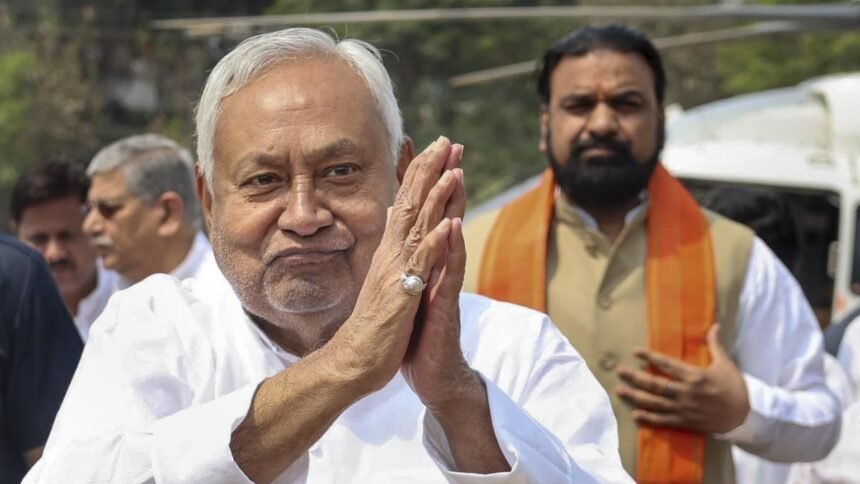
Nitish Kumar resignation, In a move that has stirred political conversations across India, Nitish Kumar has officially resigned from his membership in the Bihar Legislative Council. This development marks a turning point in Bihar’s political landscape, signaling a transition from state-level leadership to a more prominent national role.
The resignation, confirmed on March 30, 2026, by Council Chairman Awadhesh Narayan Singh, comes at a time when speculation about Kumar’s political future had already reached a fever pitch.
Why Did Nitish Kumar Resign?
So, what prompted this sudden move?
Simply put, it wasn’t entirely unexpected. Kumar recently secured a seat in the Rajya Sabha, India’s upper house of Parliament, through elections held on March 16, 2026. According to constitutional rules, any individual elected to Parliament must relinquish their seat in the state legislature within 14 days.
That deadline? March 30.
Kumar’s resignation was therefore less of a surprise and more of a legal necessity.
The Process Behind the Resignation
The formalities were handled swiftly. JD(U) leader Sanjay Gandhi submitted Kumar’s resignation letter to the Legislative Council, ensuring compliance with constitutional requirements.
But behind the scenes, things were far from routine.
Behind Closed Doors: Political Buzz Intensifies
Nitish Kumar resignation, On the eve of his resignation, Kumar’s official residence in Patna became the center of intense political activity. Senior leaders from the Janata Dal (United) (JD-U) gathered for closed-door discussions.
Why the urgency?
Because this isn’t just about one resignation—it’s about what comes next.
Some party members reportedly urged Kumar to stay in Bihar, highlighting concerns about leadership continuity. Others seemed resigned to the inevitable shift, focusing instead on succession planning.
End of an Era: 20 Years of Leadership
Let’s pause for a moment.
Nitish Kumar has been a dominant force in Bihar politics for nearly two decades. His tenure as Chief Minister has shaped the state’s governance, infrastructure, and political identity.
Now, with his move to the Rajya Sabha, it feels like the closing chapter of a long-running political saga.
Is this the end of his influence in Bihar? Not quite—but it certainly marks a transformation.
What Happens to the Chief Minister Post?
Here’s where things get interesting.
Technically, Kumar was required to resign from his state legislature position—but stepping down as Chief Minister is a separate matter. According to constitutional provisions, he could continue as Chief Minister for up to six months without being a member of the state legislature.
This interpretation was reinforced by Bihar Rural Development Minister Sharwan Kumar, who clarified that Kumar could remain in office temporarily.
So, will he stay or step aside?
That question remains unanswered.
Nomination Signals: A Planned Transition
Nitish Kumar resignation, Kumar’s political pivot didn’t happen overnight.
Back on March 5, 2026, he filed his nomination papers for the Rajya Sabha in the presence of Amit Shah, India’s Union Home Minister. That moment effectively confirmed what many had suspected: Kumar was preparing to shift to national politics.
Think of it like a seasoned captain moving from steering a single ship to navigating an entire fleet.
Swearing-In Date: What to Expect
Nitish Kumar is expected to take oath as a Rajya Sabha member on April 10, 2026.
This event will officially mark his transition from state politics to the national stage—a move that could reshape alliances, strategies, and power dynamics.
Leadership Vacuum in Bihar?
Here’s the million-dollar question: Who will lead Bihar next?
As of now, there’s no clear successor. The lack of clarity has sparked speculation and concern within political circles.
Leadership transitions are rarely smooth, especially when a long-standing figure steps aside. It’s like removing the central pillar of a structure—everything else needs recalibration.
Political Implications Beyond Bihar
This isn’t just a Bihar story—it’s a national one.
Kumar’s entry into the Rajya Sabha could influence parliamentary debates, coalition dynamics, and policy decisions. Given his experience and political acumen, his role at the national level could be significant.
Will he become a key strategist? A power broker? Or perhaps something even bigger?
Only time will tell.
Constitutional Nuances Explained Simply
Let’s break down the rule that triggered all this.
When a person is elected to Parliament, they cannot simultaneously hold a seat in a state legislature. They must resign from one within 14 days.
It’s a bit like holding two full-time jobs—you’ve got to choose one.
Kumar chose Parliament.
Public Reaction and Political Sentiment
Public and political reactions have been mixed.
Some see this as a natural progression in Kumar’s career—a leader expanding his influence. Others worry about instability in Bihar’s governance.
After all, transitions often come with uncertainty.
What Lies Ahead?
As Nitish Kumar prepares to step into his new role, several questions remain:
- Will he continue as Chief Minister temporarily?
- Who will succeed him in Bihar?
- How will this shift impact national politics?
The answers will unfold in the coming weeks.
Read More: Nitin Nabin Takes Charge as BJP National President, Succeeds J.P. Nadda
Conclusion
Nitish Kumar resignation from the Bihar Legislative Council is more than just a procedural step—it’s a strategic pivot that could redefine his political legacy.
Moving to the Rajya Sabha opens new doors, but it also leaves behind a leadership gap in Bihar. Whether this transition proves to be a masterstroke or a miscalculation will depend on how effectively both Kumar and his party navigate the road ahead.
Politics, much like chess, is about timing and positioning. Nitish Kumar has made his move—calculated, deliberate, and potentially transformative.
Now, all eyes are on the next move.
Will Bihar find stable leadership? Will Kumar rise as a national heavyweight once again?
The game is far from over.