
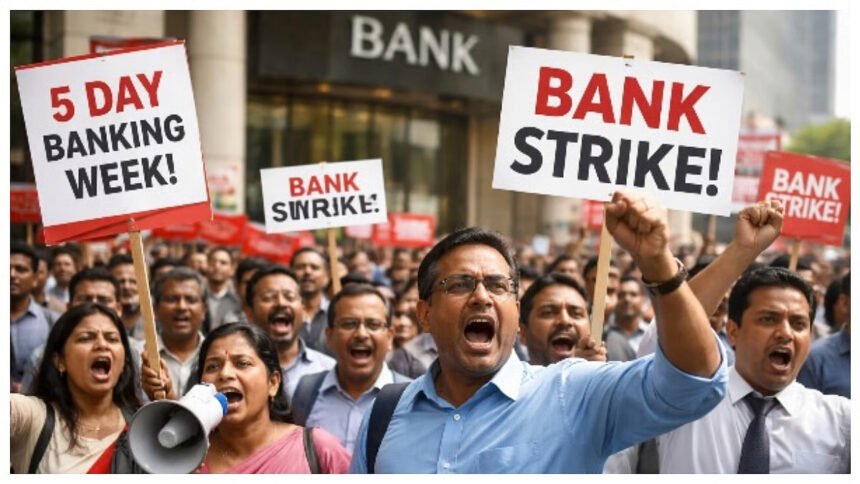
Nationwide Bank Strike Today, Wondering whether your bank will be open today, January 27? You’re certainly not alone. With public sector bank employees across India calling for a nationwide strike, many customers are preparing for possible delays, crowded branches, or complete shutdowns. While government-owned banks are expected to be most affected, most private banks are likely to operate normally.
The strike has been announced by bank unions demanding a five-day workweek, a long-standing issue that has gained fresh momentum after recent wage negotiations. Let’s take a closer look at what’s happening, which banks are impacted, and how this may affect you as a customer.
This nationwide protest is widely being referred to as the Public sector bank strike India, as it primarily involves government-owned and nationalised banks across the country.
Which Banks Are Likely To Be Hit Today?
The strike is mainly being observed by unions representing employees of public sector banks. This means state-owned and nationalised banks are where disruptions are most likely.
Major public sector banks expected to be affected include:
-
State Bank of India (SBI)
-
Punjab National Bank (PNB)
-
Bank of Baroda
-
Canara Bank
-
Union Bank of India
-
Indian Bank
-
And other nationalised banks
Several of these banks have already alerted customers that normal services may not be possible if the strike proceeds as planned on January 27.
Private Banks: Will They Function Normally?
A common concern among customers is about private banks.
Since the strike call comes from unions under the United Forum of Bank Unions (UFBU) — which mainly represents public sector banks and some old-generation private banks — most large private lenders are expected to continue operations as usual. These include:
-
ICICI Bank
-
HDFC Bank
-
Kotak Mahindra Bank
-
Axis Bank
-
Other new-generation private sector banks
Simply put, if your account is with one of these major private banks, your branch is likely to remain open today. However, some inter-bank transactions or shared ATM services could experience minor slowdowns.
Why Today’s Strike Feels Worse For Customers
Nationwide Bank Strike Today, The timing of the strike has added to customer frustration. It potentially marks the third consecutive day of limited or no in-branch banking services.
Here’s how the days lined up:
-
Sunday, January 25: Banks closed for the regular weekly holiday
-
Monday, January 26: Banks shut for Republic Day
-
Tuesday, January 27: Nationwide strike by public sector bank employees
This means customers needing services like cash deposits, cheque clearance, passbook updates, or in-person assistance have faced a prolonged disruption — especially challenging for elderly customers, small traders, and rural residents.
SBI’s Stand: Trying, But No Guarantees
India’s largest lender, State Bank of India (SBI), has acknowledged possible disruptions.
In a statement released on January 23, SBI said it had made arrangements to ensure normal functioning where possible but also admitted that operations may be impacted by the strike.
In short, while SBI is making efforts to minimise inconvenience, actual branch functioning may depend on employee participation levels locally.
What Exactly Are Bank Employees Demanding?
The key demand driving the strike is straightforward but significant — a five-day workweek for banks.
Currently, banks remain closed on:
-
All Sundays
-
Second Saturday of every month
-
Fourth Saturday of every month
Branches remain open on the first, third, and sometimes fifth Saturdays. Bank unions now want all Saturdays declared holidays, shifting banking operations strictly to Monday through Friday.
Who Is UFBU And Why Are They Important?
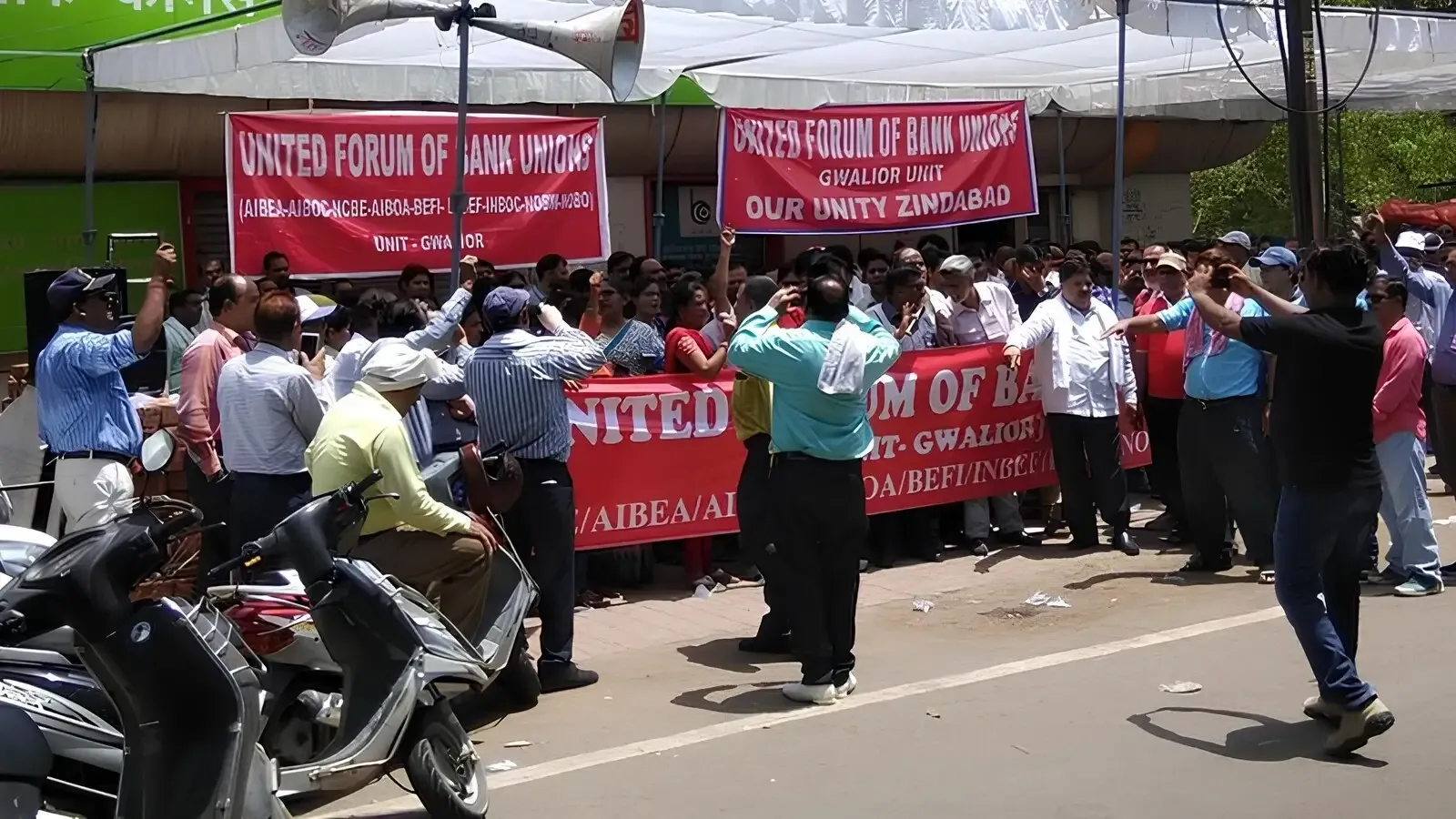
The United Forum of Bank Unions (UFBU) is a coalition of nine major banking unions representing:
-
Public sector bank employees and officers
-
Some old-generation private sector banks
UFBU plays a major role in wage settlements, working conditions, and policy discussions. Historically, when UFBU calls for a strike, participation across public sector banks tends to be substantial.
Recently, UFBU held discussions with the Chief Labour Commissioner on two consecutive days in hopes of resolving the matter. However, with no breakthrough achieved, the forum decided to proceed with today’s strike.
When Did The Five-Day Week Demand Start?
Nationwide Bank Strike Today, The demand gained strong traction during wage revision talks in March 2024. As part of settlement negotiations, UFBU proposed declaring all Saturdays as holidays.
They highlighted that several major institutions already follow a Monday-to-Friday schedule, including:
-
Reserve Bank of India (RBI)
-
Life Insurance Corporation (LIC)
-
General insurance companies (GIC)
-
Stock exchanges
-
Most government offices
Their argument: if the wider financial and government ecosystem can function efficiently on a five-day workweek, banks should too.
Will A Five-Day Week Reduce Service?
One major concern is whether customers would lose access to services.
UFBU insists this won’t happen.
The unions have proposed working an extra 40 minutes each weekday from Monday to Friday. They argue this would fully compensate for the hours lost by closing Saturdays, ensuring no reduction in total working hours.
According to them, it would simply redistribute working time while allowing employees a full weekend break.
How Today’s Strike Could Affect You
If participation is widespread, customers may experience:
-
Closed or minimally staffed public sector bank branches
-
No over-the-counter services such as deposits or withdrawals
-
Delays in loan processing, KYC updates, and paperwork
-
Slower back-end transaction processing
However, ATMs, mobile banking apps, internet banking, and UPI services are expected to function largely as normal.
How You Can Manage During The Strike
To reduce inconvenience:
-
Use ATMs, especially those linked to private banks
-
Depend on digital payments like UPI and net banking
-
Postpone non-urgent branch visits
-
Follow your bank’s website or social media updates for local branch information
This situation highlights the growing importance of digital banking solutions.
Why This Strike Matters Beyond One Day
While the disruption may feel temporary, the broader implications are significant.
A shift to a five-day workweek could:
-
Align banks with global and domestic institutional norms
-
Improve employee well-being and morale
-
Make banking careers more attractive to younger professionals
At the same time, authorities must ensure banking access remains strong, particularly in areas with limited digital infrastructure.
Similar Articles: Auto Equity Loans vs. Title Loans: Which Is Safer?
Conclusion
Nationwide Bank Strike Today, January 27 is proving challenging for customers of public sector banks, following a weekend and national holiday. While private banks are mostly operational, government-owned banks may face serious disruptions due to the strike.
The central issue is the long-standing push for a five-day workweek, which unions argue is practical and fair. With negotiations failing so far, today’s strike serves as pressure on policymakers.
For now, customers should plan around disruptions, rely on digital services, and stay informed through official bank updates.
The bigger question — whether Indian banks will eventually adopt a full five-day workweek — remains open, and the aftermath of this strike may play a key role in shaping that decision.