
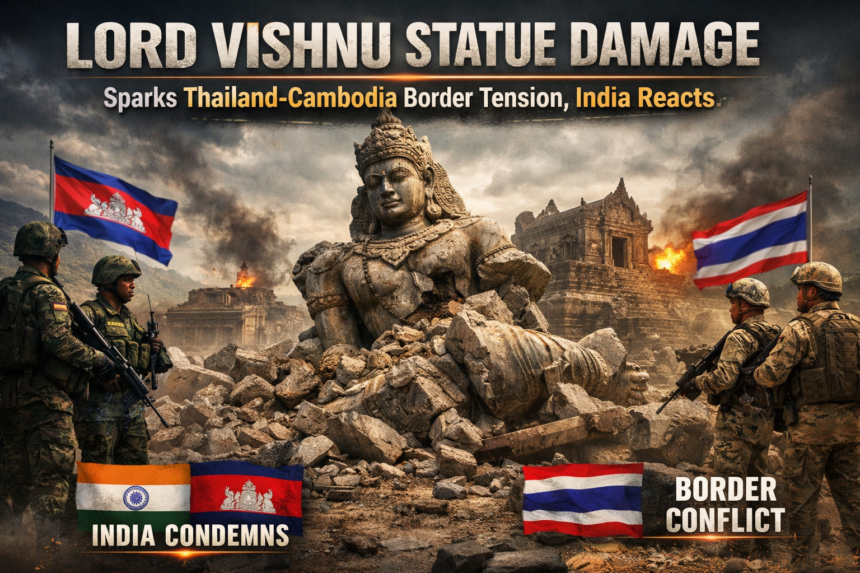
A recent act of alleged vandalism on the Thailand-Cambodia border has ignited Thailand Cambodia border tension, triggering diplomatic outrage across Asia. Reports claiming that the Thai Army demolished a statue of Lord Vishnu a revered Hindu deity have led to strong condemnation from both India and Cambodia. The incident has further intensified Thailand Cambodia border tension , deepening the long-standing dispute between the two nations while striking at the heart of millions of devotees worldwide.
What Exactly Happened?
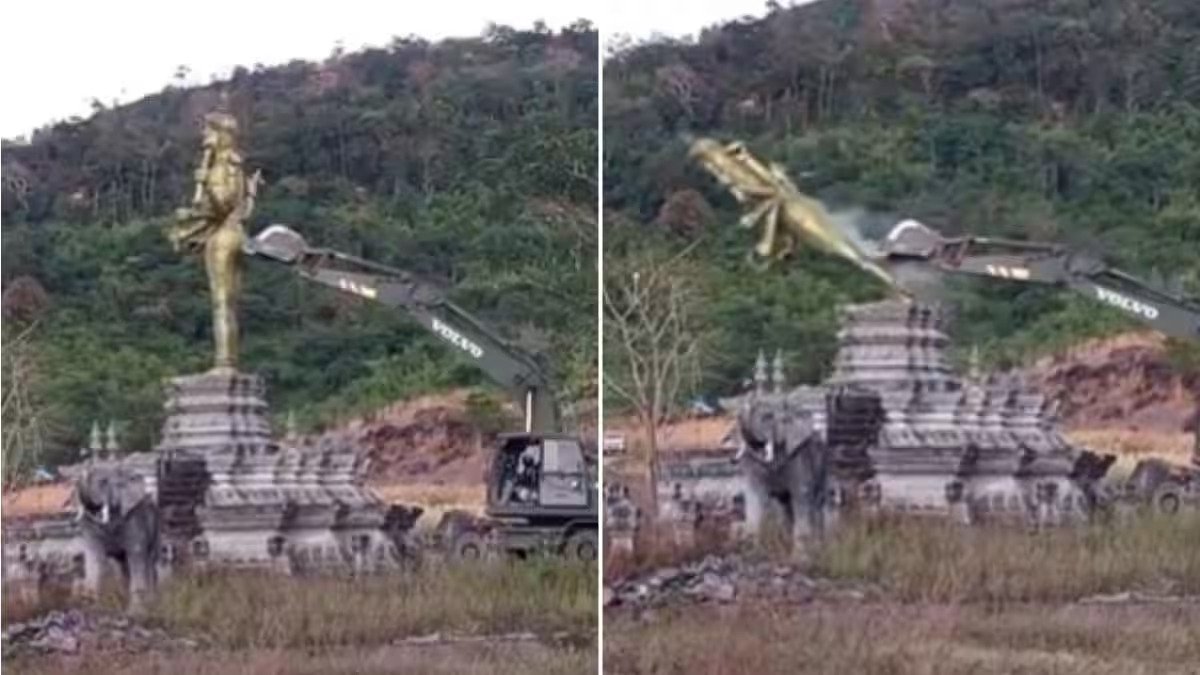
The controversy began when local Cambodian officials accused the Thai Army of destroying a statue of Lord Vishnu located near the An Ses area, close to the Preah Vihear province. The statue, built in 2014, was considered a symbol of shared spiritual and cultural identity between neighboring nations.
According to the AFP news agency, Cambodias government spokesperson Kim Chanpanha stated that the statue was inside our territory in the An Ses area. Satellite images reportedly placed the location roughly 400 meters inside Cambodian land a detail that Cambodia insists confirms the violation.
Cambodias Strong Reaction
The Cambodian government did not hold back in its criticism. Kim Chanpanha condemned the destruction, calling it an unacceptable assault on spiritual heritage. He emphasized that the act insulted both Buddhist and Hindu communities that have revered such deities for generations.
We condemn the destruction of ancient temples and statues that are worshipped by Buddhist and Hindu followers, Chanpanha said, describing the move as a blow to centuries of shared Southeast Asian civilization.
Indias Response: Deep Concern and a Call for Peace
India quickly stepped in, voicing its displeasure and concern over the reported incident. The Ministry of External Affairs (MEA) issued a statement through spokesperson Randhir Jaiswal, stressing that such disrespectful acts hurt the sentiments of worshippers around the world.
Jaiswal added that Hindu and Buddhist idols form an intrinsic part of Indias and Southeast Asias shared cultural fabric. Notwithstanding territorial claims, such acts should not take place, he urged, calling for both Thailand and Cambodia to resolve their dispute through dialogue and diplomacy.
The Shared Civilizational Thread
Lord Vishnu statue damage, Indias statement also underlined an often-overlooked aspect of regional diplomacy the deep cultural and religious ties linking India, Thailand, and Cambodia. These nations share a common spiritual heritage rooted in Hinduism and Buddhism, traditions that have coexisted and influenced each other for centuries.
The Lord Vishnu statue wasnt merely a border monument; it represented this ancient cultural kinship. Destroying it, therefore, is seen not just as a political act but an emotional rupture.
Border Conflict: A Legacy of Tension
The Thailand-Cambodia border region has been a flashpoint for decades, particularly around the historically significant area near the Preah Vihear temple a UNESCO World Heritage site. The roots of the conflict trace back to the colonial-era maps that left parts of the border poorly defined, giving rise to ongoing disputes over ownership of temples and territory.
This year, the situation escalated once again. Reports suggest that more than 40 people have lost their lives in clashes, and nearly a million civilians have been displaced. Each side blames the other for the violence with Cambodia claiming Thai forces have damaged heritage sites, while Thailand accuses Cambodia of militarizing sacred temple zones.
Why Heritage Sites Become War Zones
But why do sacred sites like these become the epicenter of such conflicts? In border regions, temples and statues often serve as both cultural landmarks and territorial claims. When emotions and nationalism intertwine, heritage can turn into a battlefield symbol.
The Vishnu statue, for instance, wasnt a mere religious artifact it stood as a marker of identity and influence. Its destruction, therefore, went beyond a physical loss; it wounded millions emotionally, especially those who see Lord Vishnu as a protector of peace and order.
International Implications
Diplomatic observers believe that such incidents could complicate ASEAN dynamics. Both Thailand and Cambodia are key members of the regional bloc, and tensions like these strain collective efforts to maintain stability and cooperation.
For India, the matter also holds symbolic importance. As a nation that champions cultural diplomacy and interfaith harmony, Indias statement underscores its broader commitment to protecting shared heritage and promoting peace across Asia.
Call for Dialogue and Preservation
Experts believe the best path forward is open communication and mutual respect. Border disputes can be resolve, but cultural wounds take longer to heal. Dialogue, back by UNESCOs involvement or neutral mediation, could help restore balance and rebuild trust between the two neighbors.
Cambodia has already urge Thailand to cooperate in investigating the incident and to ensure that religious and historical sites along the border are protect from future harm. Many hope this will mark a turning point toward reconciliation rather than further hostility.
Global Reaction: A Shared Mourning
Lord Vishnu statue damage, Indian communities across Southeast Asia have also expressed shock and sadness over the news. Temples in Singapore, Malaysia, and even within India have held prayers for peace and resolution. Social media users from around the world have voiced their hope that both nations act maturely and uphold their shared spiritual legacy.
A Symbol of Faith, Now a Symbol of Diplomacy
The Vishnu statue might have stood on contested soil, but its meaning transcends borders. It represented harmony, coexistence, and the timeless bond between ancient cultures. Its demolition now serves as a stark reminder that while borders can divide, shared faith can and should unite.
Similar Articles: Explosions at the Edge: Why Thailand and Cambodia Are at War Again
Conclusion
Lord Vishnu statue damage, The alleged destruction of the Lord Vishnu statue near the Thailand-Cambodia border is more than a territorial dispute. Its a moment that calls for empathy, respect, and reflection. While Cambodia condemns the act and India calls for dialogue, the larger lesson lies in guarding humanitys collective heritage.
When nations recognize that preserving culture is as important as maintaining boundaries, peace can truly take root. Because in the end, no border is higher than the bridge of shared history and faith.