
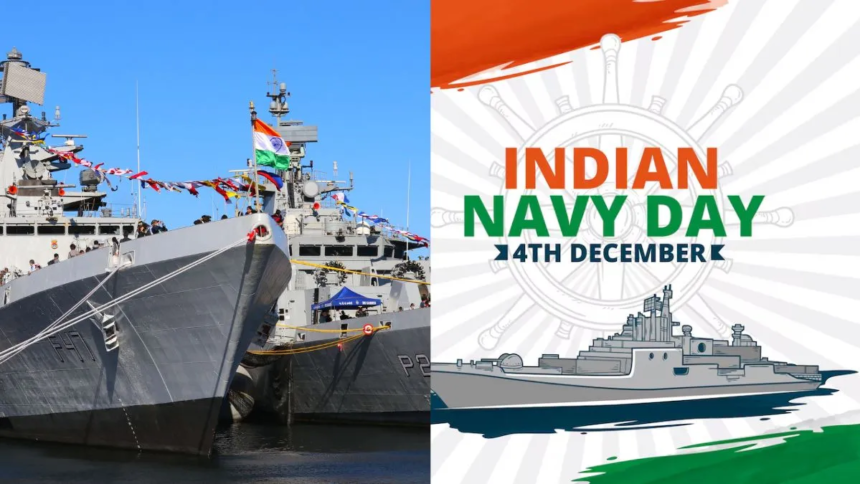
Indian Navy Day is one of those occasions that instantly fills every Indian with pride. Celebrated every year on December 4, this day is more than just a ceremonial tribute—it’s a reminder of India’s incredible maritime strength and the bravery of the men and women guarding our coastline. But there’s always one question people ask as the day approaches: Who exactly is known as the Father of the Indian Navy—and why?
Let’s dive deep into the story, the history, and the legacy behind this title, and understand why Navy Day holds such immense significance for India.
What Is Indian Navy Day and Why Is It Celebrated?
Indian Navy Day is observed every year on December 4 to honour the courage, achievements, and service of India’s naval forces. This date is not random—it marks the anniversary of Operation Trident, one of the most successful naval operations carried out by India during the 1971 Indo-Pak War.
Operation Trident showcased the Indian Navy’s strategic brilliance and fearlessness, as Indian missile boats launched a surprise attack on the Karachi harbour, inflicting heavy damage on the Pakistani Navy. The operation didn’t just shift the course of the war—it also demonstrated to the world that the Indian Navy was a formidable maritime force.
How India Celebrates Navy Day
If you’ve ever watched the Navy Day celebrations, you know they’re nothing short of spectacular. Across various naval bases, the day is marked with:
-
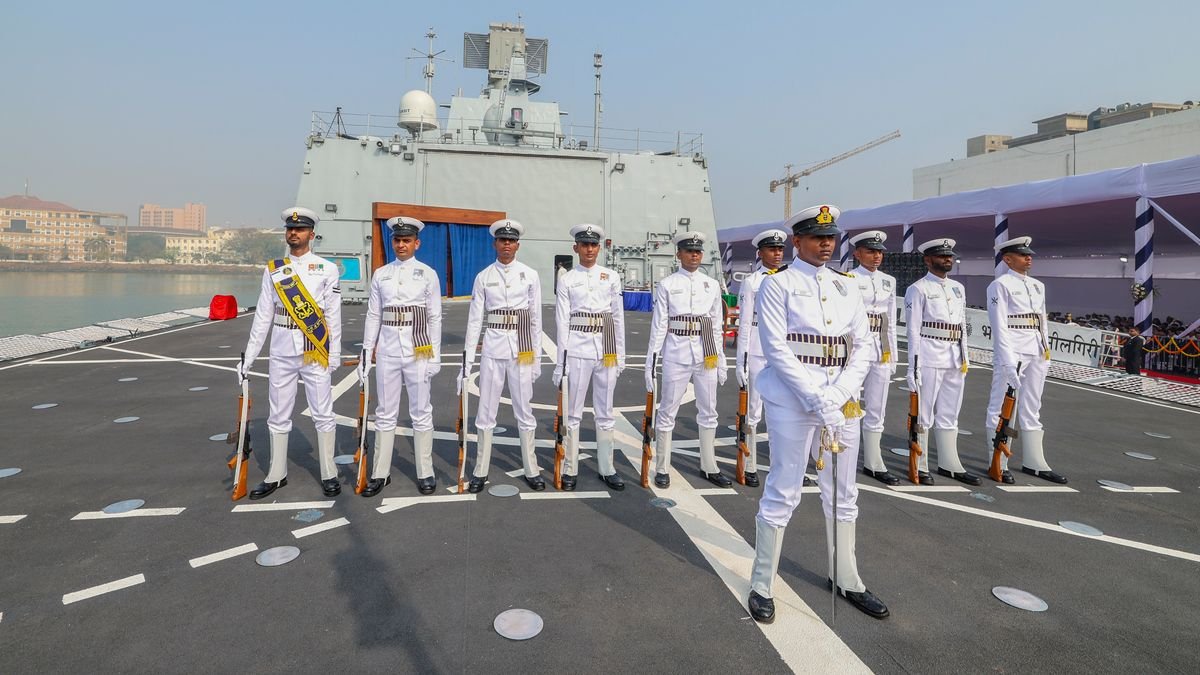
Grand parades and ceremonial events
-
Live demonstrations of naval capabilities
-
Showcases of warships, aircraft, submarines, and naval weaponry
-
Special performances by naval personnel
-
Public exhibitions highlighting India’s naval history and achievements
Top officials of the armed forces attend the event, and millions of Indians watch the telecast proudly from home. The celebrations are not just symbolic—they reflect India’s growing maritime strength and the Navy’s vital role in safeguarding the nation.
Who Is Known as the Father of the Indian Navy?
The title of the Father of the Indian Navy goes to Chhatrapati Shivaji Maharaj, the legendary Maratha warrior king. While many know Shivaji for his land-based military expertise, few realize how much he contributed to India’s maritime history.
At a time when most Indian kingdoms ignored naval power, Shivaji did the opposite—he embraced the sea.
Why Chhatrapati Shivaji Maharaj Holds This Title
Shivaji Maharaj’s visionary leadership completely changed India’s maritime outlook. Here’s why he is celebrated as the Father of the Indian Navy:
He Recognized the Strategic Importance of the Sea
Most rulers of his time focused only on land warfare. But not Shivaji.
He understood that India’s long coastline was not just a border—it was a gateway to trade, prosperity, and danger. With European powers like the Portuguese, Dutch, and British dominating the seas, Shivaji saw the ocean as a frontier that needed strong protection.
He Built India’s First Organized Naval Force
Shivaji built a formidable naval fleet from the ground up. His ships included:
-
Lightweight, fast-moving vessels suited for coastal battles
-
Bigger, well-armed ships designed to protect trade routes
-
Specially crafted warships capable of surprising enemy fleets
This wasn’t just a group of boats—it was a professionally organized naval force with strategic command and control.
He Established Iconic Sea Forts
If you’ve ever visited Sindhudurg, Vijaydurg, or Suvarnadurg, you’ve seen Shivaji’s maritime brilliance firsthand.
These forts were engineering marvels:
-
Built on rocky islands
-
Nearly impossible to breach
-
Strategically placed to monitor enemy movement
These sea forts served as naval bases, training centres, and protective shields for the coastline.
He Protected India’s Maritime Trade
At a time when maritime trade was a major source of revenue, Shivaji made sure traders could move safely along the Konkan coast. His navy guarded:
-
Local merchants
-
Fishing communities
-
International trade routes
This boosted the Maratha economy and helped secure coastal livelihood.
He Fought European Naval Powers
Shivaji didn’t just build a navy—he used it.
His forces battled:
-
Portuguese fleets
-
British ships
-
Dutch naval forces
He challenged European dominance at sea, something no other Indian kingdom was able to achieve at that time.
He Introduced Guerrilla Warfare at Sea
We’ve all heard of Shivaji’s guerrilla tactics on land, but he applied the same genius at sea.
His strategy?
-
Fast, agile ships
-
Element of surprise
-
Deep knowledge of coastal waters
-
Swarming attacks rather than direct confrontation
It was revolutionary—and highly effective.
How Shivaji’s Maritime Vision Shapes the Modern Indian Navy
The modern Indian Navy still draws inspiration from Shivaji Maharaj’s principles:
-
Strategic coastal defence
-
Self-reliant naval development
-
Protection of sea trade routes
-
Strong maritime bases and infrastructure
His legacy acts as a powerful reminder of India’s deep maritime heritage.
The Relevance of Shivaji’s Legacy on Navy Day 2025
As India celebrates Navy Day 2025, Shivaji Maharaj’s contributions become even more meaningful. Today’s Indian Navy is among the world’s strongest, equipped with:
-
Modern warships
-
Advanced submarines
-
Aircraft carriers
-
State-of-the-art missiles
-
Highly trained personnel
Yet the roots of this maritime strength can be traced back to a visionary king who lived centuries ago.
A Nation Inspired by a Maritime Pioneer
Every Navy Day celebration is not just a salute to today’s heroes—it’s also a tribute to the man who imagined India as a powerful maritime nation long before anyone else.
Shivaji Maharaj’s naval strategies, courage, and foresight continue to inspire naval officers, historians, and citizens across the country.
Read More: INS Vikrant: India’s First Indigenous Aircraft Carrier – Full Details
Conclusion
Indian Navy Day 2025 is a moment to reflect on the immense power, discipline, and patriotism of the Indian Navy. But it’s also a moment to remember the foundation on which this great maritime force stands.
Chhatrapati Shivaji Maharaj didn’t just build ships—he built India’s maritime confidence. His legacy reminds us that true strength lies not just in weapons or warships, but in vision, courage, and the determination to defend the motherland from every frontier, including the sea.