
Best FAQ Templates, Customers expect fast, accurate answers, and they expect to find them on your website without opening a support ticket or waiting on hold. A smart, well-designed FAQ page design does more than just reduce support workload it improves user experience, builds trust, and can bring in serious organic traffic when optimized correctly.
Why FAQ Pages Matter So Much
An FAQ page is no longer a nice-to-have tucked away in your footer its a core selfservice tool your visitors genuinely depend on.
-
Modern customers prefer finding answers on their own instead of contacting support for every small issue.
-
Self-service hubs like FAQ pages, help centers, and AI chatbots are now standard expectations, not fancy extras.
Think of your FAQ page as the front desk of your digital experience: always open, always ready, and ideally answering questions before users even ask.
What Is an FAQ Template?
Best FAQ Templates, An FAQ template is a reusable structure or layout you use to organize frequently asked questions and answers on your website. Instead of reinventing the wheel every time, you plug your own questions, categories, and links into a proven format.
A solid FAQ template usually:
-
Groups questions around themes like accounts, billing, shipping, or troubleshooting.
-
Presents short, clear questions with direct answers that are easy to scan.
-
Reduces the need for support tickets by giving users fast, self-serve help.
In simple terms, your FAQ template is the blueprint; your questions and answers are the building materials.
Main Types of FAQ Templates
Best FAQ Templates, You dont have to limit yourself to just one FAQ layout. Different parts of your site, funnel, or product may need different FAQ formats.
1. General Q&A Layout
This is the classic FAQ: a simple list of questions and answers on a single page.
-
Ideal for: Small sites or early-stage products with a concise set of common questions.
-
Typical structure: Question list + accordion toggles or jump links for quick scanning.
2. Product-Specific FAQ
Here, each product or service gets its own targeted FAQ section.
-
Ideal for: Ecommerce, SaaS, or agencies with multiple offerings.
-
Benefits: Reduces friction at the decision stage by addressing objections like Whats included? or Is there a trial?
3. Troubleshooting Guide FAQ
This format focuses on something went wrong type questions.
-
Ideal for: Software, apps, tools, hardware devices, and technical services.
-
Often organized by error codes, symptoms, or user tasks (for example: Cant log in, Payment failed).
4. Customer Service FAQ
This template focuses on support-related processes rather than product features.
-
Covers: Response times, support channels, refund policies, complaint handling, and escalation steps.
-
Great for setting expectations and reducing repeated How do I contact support? queries.
5. Policy & Compliance FAQ
This FAQ type answers legal and policy questions in plain language.
-
Use it for: Terms, privacy, refunds, warranties, and compliance topics.
-
Helps you stay transparent while keeping legal jargon out of your main pages.
6. PrePurchase Inquiry FAQ
This one targets prospects who are still deciding.
-
Focus on: Pricing, features, guarantees, integrations, use cases, and social proof.
-
Goal: Remove buying anxiety and nudge users closer to conversion.
7. Single FAQ Page
Everything lives on one master FAQ page, often with navigation aids.
-
Best for: Sites that want one central help hub thats easy to discover and maintain.
-
Usually includes: Search, categories, and anchored headings.
8. Homepage FAQ Section
A short FAQ block on the homepage can answer the top 37 questions new visitors always ask.
-
Good for: Addressing key objections near CTAs or pricing details.
-
Often used for: Is there a free trial?, Do I need a credit card?, Who is this for?
9. Blog Post FAQ
Here you add a small FAQ section at the end of blog posts.
-
SEO perk: You can target People Also Ask queries and related longtail questions.
-
UX perk: You handle related questions without bloating your main article.
10. Video FAQ
Some brands answer FAQs via short, embedded videos.
-
Works well for: Visual demos, onboarding steps, or tricky workflows that are easier to show than tell.
-
Can be paired with text summaries so users can skim and search.
11. AIPowered FAQ
AI-powered FAQs combine a structured FAQ with conversational search or a chatbot.
-
Users can ask questions in natural language and get instant answers drawn from your knowledge base.
-
Great for large or complex products where a static list is not enough.
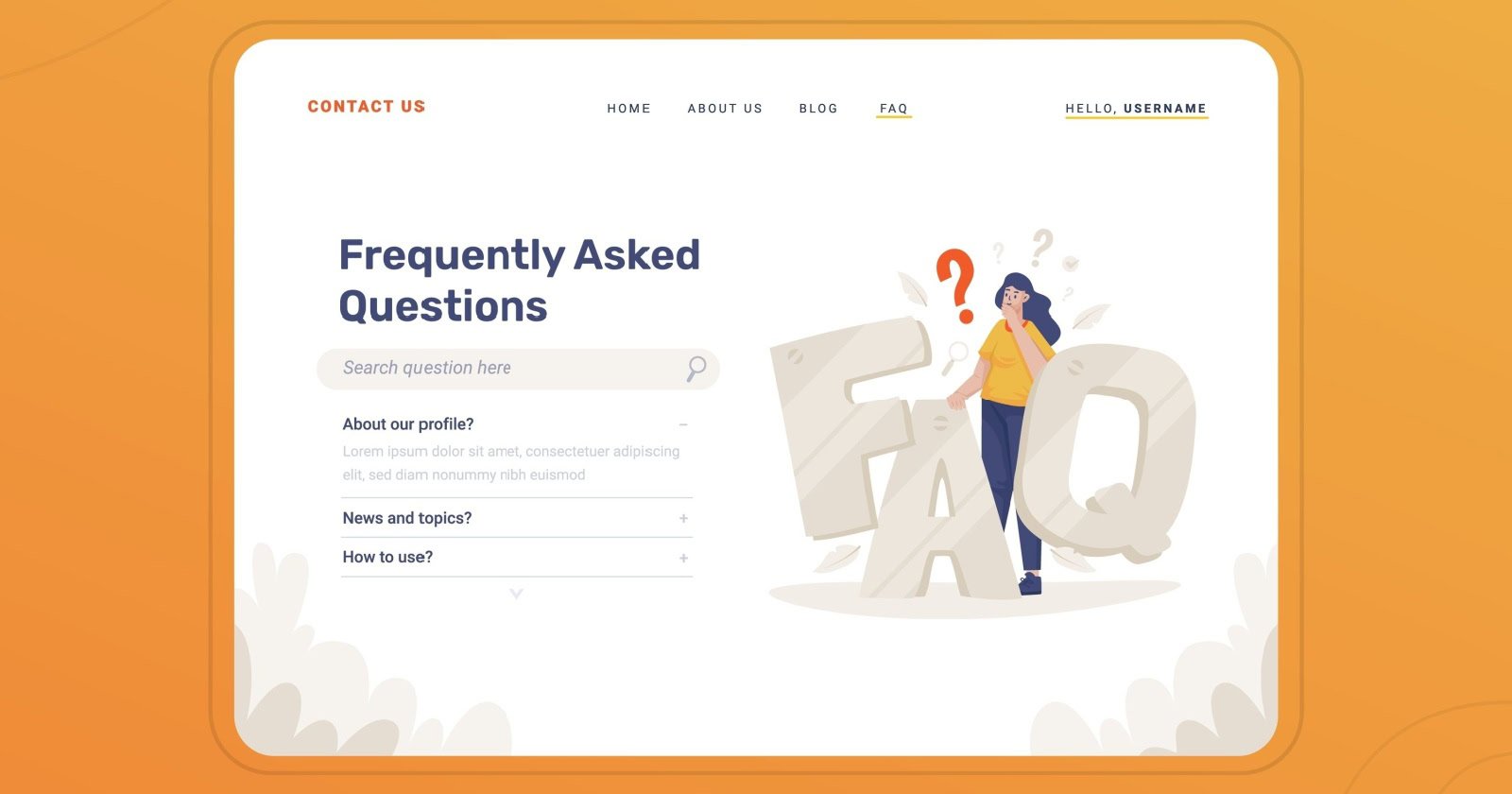
How FAQ Templates Improve Customer Service
Best FAQ TemplatesA well-built FAQ isnt just a dumping ground for random questions. Done right, it becomes a true service asset.
1. 24/7 Accessibility
-
Customers want help at all hours, including nights and weekends, and FAQs deliver that without additional staffing.
-
This matters even more for global audiences spread across time zones.
2. Higher Accuracy and Consistency
-
A central FAQ becomes the single source of truth for common answers.
-
Support teams, sales reps, and users can all rely on the same up-to-date info instead of conflicting responses.
3. Faster Problem Resolution
-
Users are able to troubleshoot simple issues themselves within minutes.
-
This cuts down wait times, live chat queues, and ticket volume, which tends to boost satisfaction.
When your FAQ page does its job, customer service shifts from firefighting to finetuning.
Core Elements Every FAQ Page Needs
Best FAQ Templates, If you strip an FAQ down to the essentials, there are a few elements you absolutely cannot skip.
-
Clear, natural questions
Use the exact language your customers use, not your internal jargon. -
Concise, direct answers
Get to the point fast, then link to deeper guides if users want more detail. -
Logical categories
Group questions under headings like Billing, Account, Orders, or Technical issues so people dont have to read everything. -
Search functionality
A simple, visible search bar dramatically improves navigation on larger FAQ pages. -
Links to extra resources
Point to docs, tutorials, blog posts, terms pages, or videos for users who need more context. -
Visible contact info
Make sure users can easily escalate to live chat, email, or phone support if the FAQ doesnt solve their problem.
Think of these as the musthave checklist before your FAQ page goes live.
Best Places to Publish Your FAQ
Best FAQ Templates, Creating a strong FAQ is only half the job; you also need it to be effortlessly discoverable.
1. Main Website Navigation
-
Add FAQ or Help to your main menu or footer so visitors always know where to go.
-
For larger sites, a Support or Help Center link with FAQ inside works well.
2. Product or Service Pages
-
Embed mini FAQ sections directly on key product pages to address objections in context.
-
Focus on questions specific to that product: sizing, features, limits, warranties, or compatibility.
3. Checkout and Cart
-
Drop in brief FAQs or links for questions around shipping, returns, payment methods, taxes, and promo codes.
-
This small step can prevent cart abandonment driven by uncertainty or confusion.
4. Customer Account Area
-
Use an FAQ section inside dashboards or portals for topics like billing, plan changes, and account security.
-
This makes it easier for existing customers to help themselves without leaving the app.
5. Social Media & Email Signatures
-
Include FAQ or help-center links in social bios, pinned posts, and email signatures.
-
This gives support teams a one-click way to redirect recurring questions to well-crafted answers.
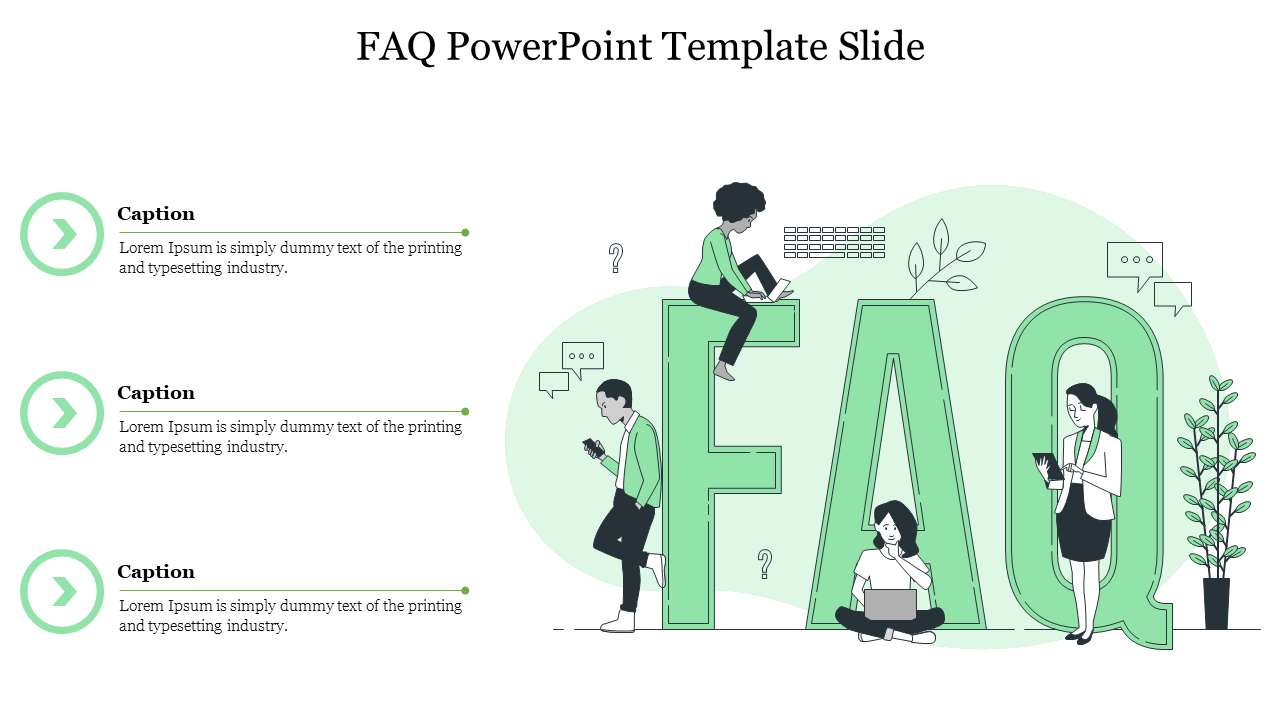
18 Real-World FAQ Template Examples
Best FAQ Templates, Heres a quick tour of how different brands use FAQs in clever, user-friendly ways.
1. AdEspresso: Simple and Focused
AdEspresso uses a minimalistic FAQ layout with a handful of focused questions that click through to short, detailed articles. The page remains clean, distraction-free, and keeps users just one step away from deeper resources or the contact page.
2. Adobe Creative Cloud: SearchFirst Design
Adobe Creative Cloud puts a search bar front and center on its FAQ page and organizes content by topics such as getting started, account management, and technical questions. This makes it easy to either search or browse without wading through irrelevant information.
3. Airbnb: Split by Audience
Airbnb divides its FAQ content into sections specifically tailored for hosts and guests. This simple split means each group sees questions that actually apply to them, often paired with helpful visuals, resources, and links to deeper help content.
4. Airtable: Integrated Help Center
Airtable blends FAQ content with a full help center, combining tutorials, guides, and troubleshooting in one place. The search function and topic categories together help users find answers quickly without guessing where to click next.
5. Ancestry: Personalized FAQ Experience
Ancestry uses account-aware content so logged-in users see FAQ info thats more relevant to their own results and settings. This personalized approach is especially useful in a niche where questions depend heavily on individual data.
6. DoggieLawn: FAQ + Live Chat
DoggieLawn pairs a straightforward FAQ layout with an embedded live chat option during business hours. If a customer cant find what they need in the text answers, they can instantly escalate to a human without leaving the page.
7. Etsy: Buyer and Seller Paths
Etsy clearly separates FAQs for buyers and sellers, with a prominent search bar and contextual links like Get help with an order. This keeps each user group focused on relevant workflows instead of wading through the wrong side of the marketplace.
8. Fabletics: Category-Based Navigation
Fabletics organizes FAQ topics around customer goals like orders, returns, membership, and shipping. After choosing a category, users see a curated list of the most common questions, often with related-question links that reduce unnecessary page hopping.
9. Liquid Death: On-Brand Humor
Liquid Death turns its FAQ section into a brand moment by mixing humor with clear information. Despite the jokes, the page still uses practical patterns like accordions and bold headings, so users get answers fast without feeling lost.
10. Mailchimp: Educational FAQs
Mailchimp structures FAQs into clear sections and frequently pairs answers with tutorials and starter guides. At the end of sections, users are nudged toward live chat or email options if they still need help.
11. McDonalds: Filterable Content
McDonalds FAQ allows users to filter questions by themes like nutrition, locations, and business opportunities. This is particularly helpful given the brands size and the variety of reasons someone might land on the page.
12. Microsoft: Expandable Knowledge Base
Microsoft groups FAQs into categories with expandable sections so the page stays clean while still offering detailed information. Users can also jump directly from FAQ entries to specific support channels when necessary.
13. Nintendo: Product-Centric Sections
Nintendos support center organizes FAQs around hardware, games, and account support. This product-first approach lets users quickly zero in on the device or title theyre having trouble with.
14. Upwork: Strong Search and Filters
Upworks FAQ hub uses a large search bar plus segmented content for freelancers, clients, and account issues. Related-topic links and community access help users dig deeper without starting from scratch each time.
15. Vrbo: Tailored for Travelers and Hosts
Vrbo splits its FAQ area into separate tracks for travelers and property owners, each with categories like bookings and payments. Accordion sections, visuals, and rating tools make it easy for users to navigate and signal whether answers were helpful.
16. Wandering Bear: Playful but Clear
Wandering Bear Coffee uses a quirky, humorous voice throughout its FAQ but still delivers structured, practical answers. The brand balances personality with clarity and links to guides for users who want more detailed information.
17. WhatsApp: Topic Directory and Search
WhatsApps FAQ section uses a table-of-contents style layout, with clear topics for features, accounts, security, and privacy. A search bar and popular topics area help new users jump directly into the questions most people ask.
18. Wistia: Floating Help Footer
Wistias support hub includes a floating footer with search and a quick link to submit a ticket. This keeps support one click away at all times while users browse articles on video hosting, analytics, and integrations.
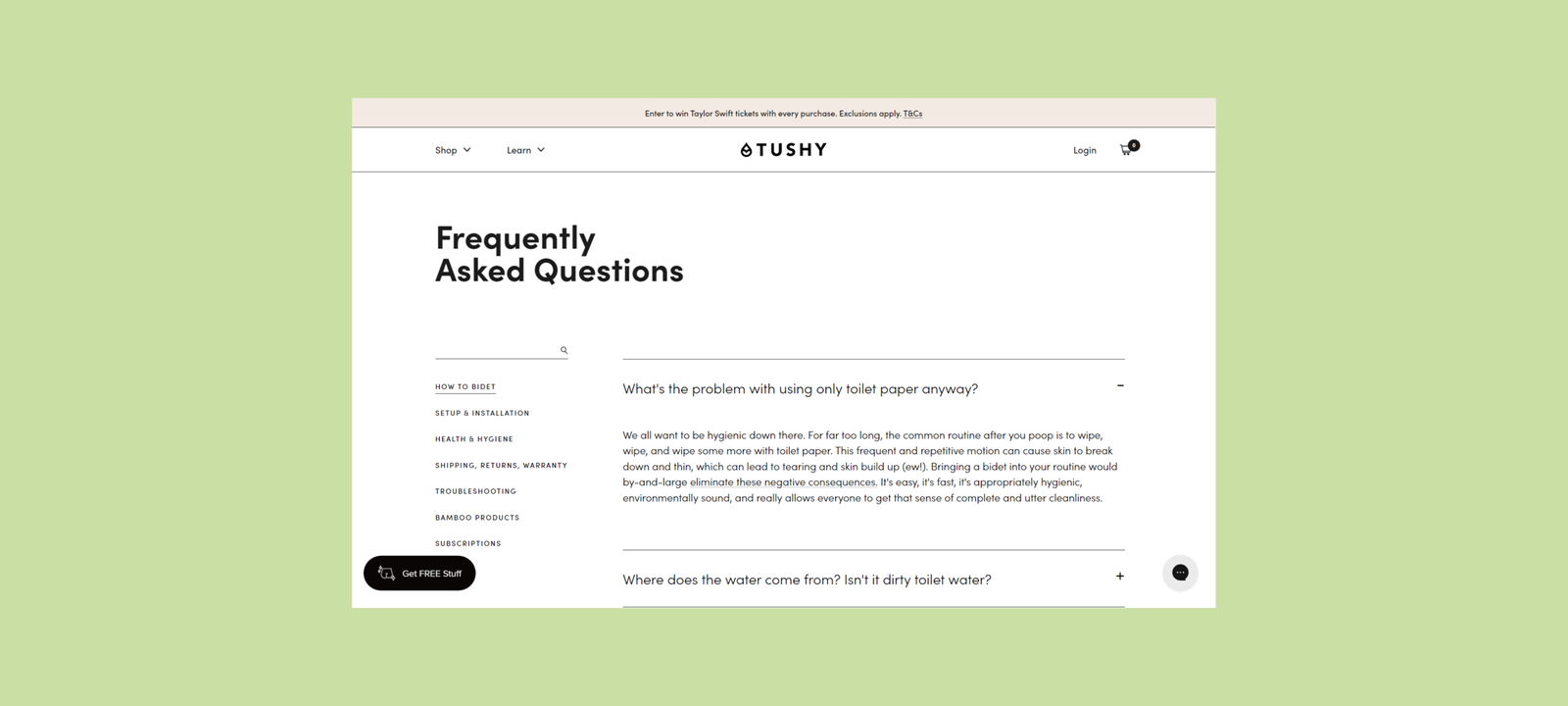
5 Best Practices for Creating a High-Impact FAQ Page
Best FAQ Templates, You cant just list a few questions and call it a day. Use these practices to turn your FAQ into a powerful asset.
1. Let Data Shape Your Questions
-
Pull questions from search queries, support tickets, live chat logs, and tools like Google Analytics or Search Console.
-
Prioritize questions that appear frequently and directly affect conversions, churn, or support load.
2. Keep the Content Simple
-
Avoid long-winded answers and jargon; write like youre explaining it to a smart friend, not a legal team.
-
If a topic needs depth, give a short answer and then link to a full guide rather than overloading the FAQ itself.
3. Make It Mobile-Friendly
-
Many users will hit your FAQ from their phones, so ensure text is readable, buttons are tappable, and accordions are easy to toggle.
-
Test the page on multiple devices to check layout, spacing, and loading speed.
4. Always Offer Contact Options
-
Even the best FAQ wont cover every scenario. Clearly show how to reach live chat, email, or phone support.
-
Consider placing a small Still need help? block at the bottom of each section or article.
5. Monitor, Iterate, and Improve
-
Review search logs to see which FAQ queries users enter and whether they find what they need.
-
Update or expand answers regularly, and remove questions that are no longer relevant to keep the page fresh and trustworthy.
Common FAQ Mistakes You Should Avoid
Best FAQ Templates, Even well-meaning FAQ pages often fall into the same traps.
-
Overloading users with walls of text
Long, dense paragraphs make users give up. Break answers into short paragraphs or bullet lists and use headings or accordions. -
Messy, unstructured layouts
A random list of questions with no categories is hard to scan. Always group questions logically and add navigation aids. -
Ignoring updates and version changes
Outdated information damages trust fast. Review FAQs regularly, especially when you change pricing, features, or policies.
Avoid these pitfalls and your FAQ will feel like a thoughtfully designed tool instead of a forgotten dumping ground.
How to Start Building Your Own FAQ (Step-by-Step)
Want a quick blueprint you can follow right now?
-
Collect real questions
-
Pull from support email, live chat logs, sales calls, and on-site search queries.
-
-
Cluster them into categories
-
Group similar questions under headings like Pricing, Shipping, Technical, Account.
-
-
Draft short, clear answers
-
Aim for one core answer plus optional links or examples.
-
-
Choose a suitable FAQ template
-
For small sites, a single page with accordions may be enough; for complex products, consider a full help center with search.
-
-
Add search, links, and contact options
-
Make it dead-simple to jump from FAQs to tutorials, docs, or support forms.
-
-
Optimize for SEO
-
Use natural language in questions, add schema markup, and align with People Also Ask queries where relevant.
-
-
Review, test, and iterate
-
Track usage, look for content gaps, and refine your FAQs based on real behavior, not guesswork.
-
Think of your FAQ as a living asset: launch it quickly, then keep tuning it.
Similar Articles: Marketing Fundamentals 101: A Complete Guide to Building a Winning Strategy
Conclusion
Best FAQ Templates, A modern FAQ page is much more than a list of random questions it is a strategic blend of UX, customer service, and SEO. By choosing the right template, organizing content thoughtfully, and learning from strong examples across industries, you can turn your FAQ into a 24/7 problem-solver that reduces workload and builds trust. Pair that with data-driven improvements and mobile-friendly design, and your FAQ page can quietly become one of the hardest-working assets on your entire site.