
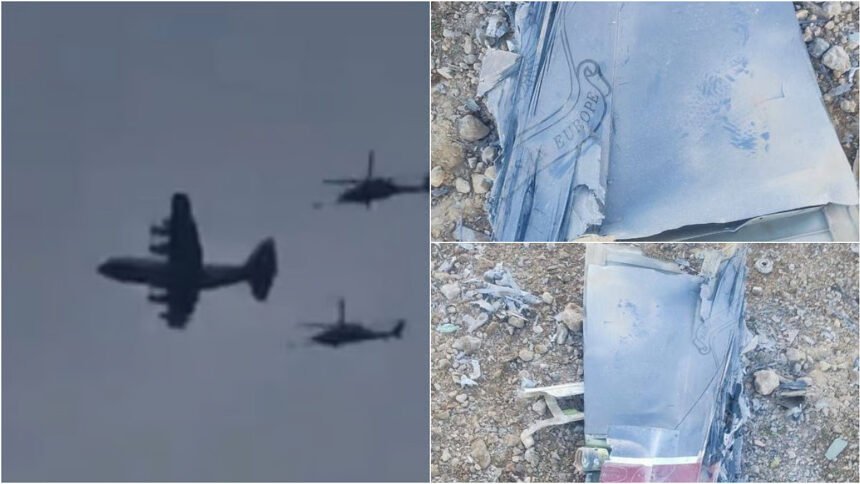
Iran Downed US Fighter Jets, When a nation like Iran manages to shoot down advanced American fighter jets, it’s not just another headline—it’s a signal. A signal that even under sustained pressure, a military can adapt, improvise, and strike back. After weeks of relentless US-Israeli airstrikes, many believed Iran’s defenses had been crippled beyond recovery. But recent events tell a different story.
This unfolding Iran vs US air conflict highlights a dramatic shift in modern warfare dynamics, where resilience and tactical innovation can challenge even the most advanced air power.
Let’s unpack what really happened, how Iran pulled it off, and why this matters more than it seems at first glance.
A Rare and Shocking Turn of Events
It’s been over two decades since the United States lost fighter aircraft in this kind of hostile engagement. That alone makes this incident extraordinary. Iran reportedly brought down a US F-15E Strike Eagle, while also claiming to have hit an A-10 Warthog in the Persian Gulf region.
One crew member from the F-15E was rescued, but another remains missing—adding a human dimension to an already tense geopolitical moment.
So, what changed? Was this luck, or something more strategic?
Despite Heavy Bombing, Iran Isn’t Out of the Fight
For over a month, US and Israeli forces have conducted intense air campaigns targeting Iran’s military infrastructure. According to US officials, more than 13,000 missions have been flown, striking over 12,300 targets.
That’s massive.
Yet, despite this barrage, Iran has proven it still has teeth. Think of it like a boxer who’s taken heavy hits but still manages to land a surprising counterpunch. That’s exactly what this shootdown represents.
How Did Iran Target Advanced US Jets?
Now here’s where things get interesting.
Instead of relying on traditional radar systems—which are often the first to be destroyed in airstrikes—Iran appears to have shifted to passive detection technologies. These include electro-optical and infrared (EO/IR) systems.
In simple terms? They tracked heat, not signals.
Understanding Infrared Tracking Systems
Iran Downed US Fighter Jets, Imagine trying to spot a candle in a dark room—that’s essentially what infrared systems do, but at a much more advanced level.
These systems detect the heat emitted by aircraft engines and even the friction caused by air moving across the jet’s surface. Once locked onto that heat signature, the missile can follow it with precision.
The key advantage? No radar emissions.
That means no warning for the pilot.
Why Passive Systems Are a Game-Changer
Traditional radar systems send out signals that can be detected by enemy aircraft, giving pilots time to react. Passive systems, on the other hand, are silent hunters.
Iran’s use of these systems suggests a tactical evolution. Instead of trying to rebuild destroyed radar networks, they adapted—using what couldn’t be easily detected or jammed.
It’s like switching from a loud alarm system to a silent tripwire.
The Role of the Majid Missile System
A major player in this scenario is believe to be Iran’s indigenous Majid (AD-08) surface-to-air missile system.
This system isn’t just mobile—it’s stealthy and efficient.
Mount on Aras-2 tactical vehicles, the Majid system is design for short-range defense against low-flying aircraft, drones, and cruise missiles. It uses infrared homing and electro-optical tracking to detect targets up to 15 kilometers away—without using radar.
Each missile can travel at speeds of up to Mach 2 and engage targets within a range of 700 meters to 8 kilometers.
Even more impressive? It can track and engage multiple targets simultaneously.
Exploiting Small Windows of Opportunity
Success in these situations often comes down to timing.
Iran likely engaged these aircraft at close range and low altitude—conditions where even advanced countermeasures can be less effective. If a pilot has already deployed flares or is maneuvering aggressively, there may be brief moments when the aircraft becomes vulnerable.
Think of it like trying to catch a fast-moving train—you can’t do it head-on, but if you anticipate its path and act at the right moment, you just might succeed.
A Pattern of Increasing Confidence
This wasn’t an isolated incident.
In recent weeks, Iran has claimed multiple successful engagements:
- Early March 2026: Several Israeli drones reportedly downed
- March 13: US MQ-9 Reaper shot down near Bandar Abbas
- Late March: Additional US and Israeli drones destroyed over Shiraz and Isfahan
- April 3: F-15E Strike Eagle downed
- April 3: A-10 Warthog reportedly hit
This pattern suggests growing confidence—and capability—in Iran’s air defense operations.
Challenging Air Superiority Narratives
Iran Downed US Fighter Jets, US and Israeli forces have operated with near-total air superiority in the region. But this incident challenges that assumption.
If Iran can successfully target advanced fighter jets—even occasionally—it changes the risk calculus.
Airspace that was once considered “controlled” now looks contested.
And in military strategy, perception matters just as much as reality.
What This Means for Future Conflicts
This development could have far-reaching implications.
First, it highlights the effectiveness of decentralized and adaptive defense systems. Even after losing major infrastructure, Iran managed to reorganize and strike back.
Second, it underscores the vulnerability of even the most advanced aircraft when facing unconventional tactics.
Finally, it signals a shift in modern warfare—where stealth, passive detection, and rapid adaptation may outweigh sheer technological superiority.
Why Shooting Down Fighter Jets Is Extremely Difficult
Let’s be clear—this isn’t easy.
Modern fighter jets like the McDonnell Douglas F-15E Strike Eagle and A-10 are equipped with advanced countermeasures. These include:
- Heat-reducing engine designs
- Low-observability coatings
- Flares to confuse incoming missiles
- High-speed maneuverability
All of these features are design to make them incredibly hard to hit.
So how did Iran succeed?
Read More: Strait of Hormuz Crisis: India Among Nations Allowed Safe Passage by Iran
Conclusion
Iran Downed US Fighter Jets, was this a fluke? Possibly. But more likely, it’s a glimpse into the evolving nature of warfare.
Iran’s ability to down US aircraft after weeks of sustained attacks shows that military strength isn’t just about firepower—it’s about resilience, adaptability, and timing.
In a world where technology is constantly advancing, sometimes the biggest advantage comes from using it differently.
And that’s exactly what Iran appears to have done.
If there’s one takeaway here, it’s this: no system is invincible.
Even the most advanced fighter jets can be brought down under the right conditions. And when that happens, it forces everyone—from military planners to global observers—to rethink what dominance in the skies really means.
Because in modern warfare, control isn’t absolute—it’s constantly being challenged.