
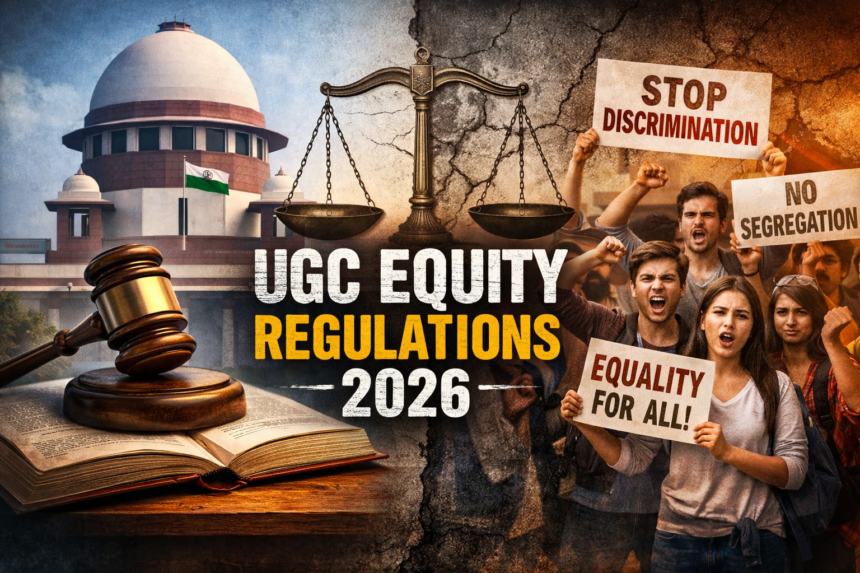
UGC Equity Regulations 2026, India recently found itself at the center of a heated conversation about equality, inclusion, and the future of higher education. The University Grants Commission (UGC) introduced new Equity Regulations for 2026, aimed at promoting fairness and addressing discrimination across colleges and universities.
Sounds great on paper, right?
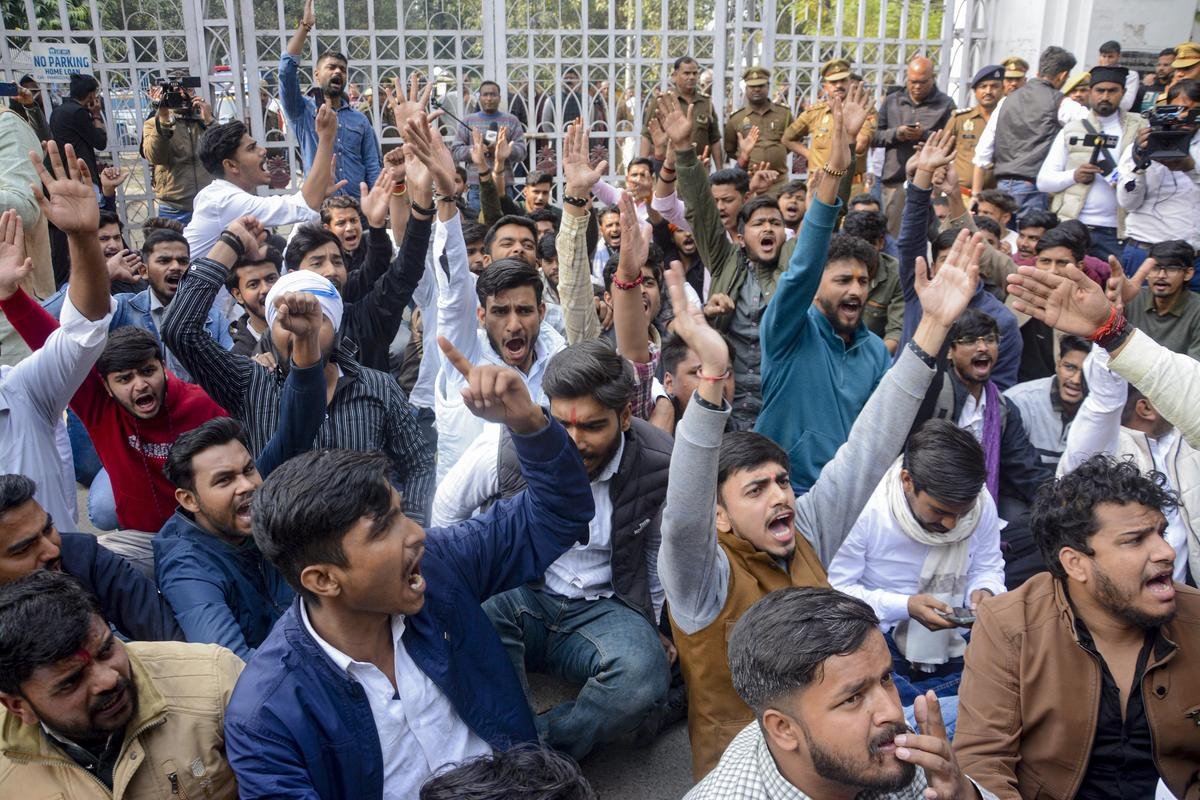
But soon after their announcement, protests erupted—especially among general category students—claiming the rules were vague, biased, and potentially harmful.
The controversy surrounding the UGC new rules quickly spread across campuses, social media platforms, and political circles, turning the regulations into a nationwide debate.
Now, the Supreme Court has stepped in, putting the regulations on hold and raising a bigger question that echoes across society:
Are we moving forward—or slowly slipping backward?
Let’s break it all down in simple terms.
Understanding the UGC’s New Equity Regulations 2026
The UGC’s updated framework was designed to strengthen equity and inclusion in educational institutions.
At the heart of these rules were:
Mandatory Equal Opportunity Centres (EOCs) in every university
Campus-level committees to address discrimination complaints
A push toward creating safer and more inclusive learning environments
The idea?
Make sure every student—regardless of background—has fair access to opportunities.
But as often happens with sweeping reforms, the execution raised more questions than answers.
Why Did Students Start Protesting?
Not everyone welcomed the new regulations.
A large section of students, particularly from the general category, argued that:
The rules lacked a clear complaint mechanism for them
The definition of caste discrimination excluded certain groups
The framework could unintentionally increase division instead of reducing it
In simple words, many felt the system was tilted.
Instead of creating equal ground for all, it seemed to focus protection on specific communities while leaving others out.
That’s when legal challenges began pouring in.
Supreme Court Steps In: Regulations Put on Hold
UGC Equity Regulations 2026, The Supreme Court took up a batch of petitions challenging the UGC Regulations 2026.
A bench led by Chief Justice of India Surya Kant didn’t mince words.
The court:
- Stayed the implementation of the new rules
- Directed UGC and the Centre to re-examine the regulations
- Flagged “complete vagueness” in their language
According to the bench, unclear rules are dangerous because they’re easily misused.
And when it comes to sensitive topics like caste and discrimination, even small loopholes can cause major damage.
A Strong Statement From the Chief Justice
During the hearing, CJI Surya Kant made a remark that struck a chord nationwide.
He questioned whether India, after 75 years of independence, was truly progressing toward a classless society—or drifting backward.
He said:
“Are we becoming a regressive society?”
The Chief Justice also highlighted troubling trends like:
Cultural mockery in hostels
Ragging rooted in regional and caste differences
Talks of separate hostels based on background
He reminded everyone that universities should be places where students live together, learn together, and grow together—regardless of caste or culture.
Not divided spaces.
The Fear of Segregation in Education
Justice Joymalya Bagchi, who was also part of the bench, added an important perspective.
He expressed concern about India heading toward a segregated education system—similar to the racial divisions once seen in American schools.
Remember when Black and White students attended separate schools in the U.S.?
That kind of separation, he warned, leads to long-term social damage.
CJI Kant agreed, pointing out that such situations could easily be exploited.
The message was clear:
⚠ Equity should unite, not divide.
What Exactly Is Being Challenged in the Regulations?
One of the main legal issues revolves around Section 3(c) of the UGC rules.
This section defines caste-based discrimination—but only in relation to:
Scheduled Castes (SC)
Scheduled Tribes (ST)
Other Backward Classes (OBC)
What about the general category?
They’re not included.
And that’s where petitioners raised the red flag.
Advocate Vishnu Shankar Jain’s Key Argument
UGC Equity Regulations 2026, Representing the petitioners, Advocate Vishnu Shankar Jain argued that the definition itself violates Article 14 of the Constitution—which guarantees equality before the law.
His point was simple:
Discrimination is discrimination.
It shouldn’t be limited to one group.
By excluding general category students from the definition, the regulations:
Create unequal protection
Ignore real cases where others may face bias
Risk legal inconsistency
In other words, fairness shouldn’t be selective.
What Happens Now? Back to the Old Rules
With the 2026 regulations stayed, universities must continue following the 2012 UGC rules.
These older regulations already had provisions for:
Addressing grievances
Preventing discrimination
Promoting inclusive practices
The court made it clear that nothing new should be enforced until the current framework is thoroughly reviewed and clarified.
The next hearing is scheduled for March 19.
Balancing Social Justice and Equality: A Tough Act
Let’s be real.
India’s caste system has left deep scars.
Affirmative action and protective laws exist for a reason—to uplift communities that faced centuries of oppression.
Article 15(4) of the Constitution specifically allows special provisions for SCs and STs.
But here’s the tricky part:
How do you uplift one group without unintentionally sidelining another?
It’s like trying to balance a see-saw—lean too much one way, and the other side goes flying.
The Supreme Court seems to be pushing for that balance.
Are We Fixing Discrimination—or Reinventing It?
This whole controversy brings up a bigger philosophical question.
If policies are designed only for specific communities:
Do they truly eliminate discrimination?
Or do they create new lines of division?
Think of society like a garden.
If you water only one section while ignoring the rest, some plants will thrive—but others will wither.
Real equity means nurturing the whole garden.
Not just selected patches.
Why Clear Laws Matter More Than Ever
One major issue highlighted by the court was vagueness.
Unclear laws are like blurry road signs—you don’t know which direction to go.
This can lead to:
- Misuse of authority
- False accusations
- Increased campus tensions
- Endless legal disputes
In sensitive environments like universities, ambiguity can turn small conflicts into massive crises.
That’s why the Supreme Court emphasized expert review of the regulations’ language.
What This Means for the Future of Indian Education
This case could reshape how equity policies are designed moving forward.
Possible outcomes include:
More inclusive definitions of discrimination
Clearer complaint mechanisms for all students
Balanced protection across social groups
Stronger oversight to prevent misuse
If done right, India could set an example for fair and inclusive education.
If done wrong, it could deepen divisions.
The stakes are high.
A Nation at a Crossroads
The Chief Justice’s question lingers:
Are we becoming a regressive society?
India has made remarkable progress since independence—economically, technologically, and socially.
But social harmony remains a work in progress.
Policies meant to heal wounds must not create new ones.
True equality isn’t about choosing sides.
It’s about standing in the middle and lifting everyone together.
Public Reaction: Mixed Emotions Everywhere
Across social media and news platforms, reactions have been intense.
Some people believe:
- The UGC rules are necessary to protect marginalized students
- Strong equity frameworks are long overdue
Others argue:
- The regulations are one-sided
- They ignore discrimination faced by general category students
Many simply want one thing:
A system that treats everyone fairly—without bias, confusion, or political influence.
Similar Articles: New UGC Bill 2026: Equity Rules, OBC Controversy, and Major Changes for Colleges