

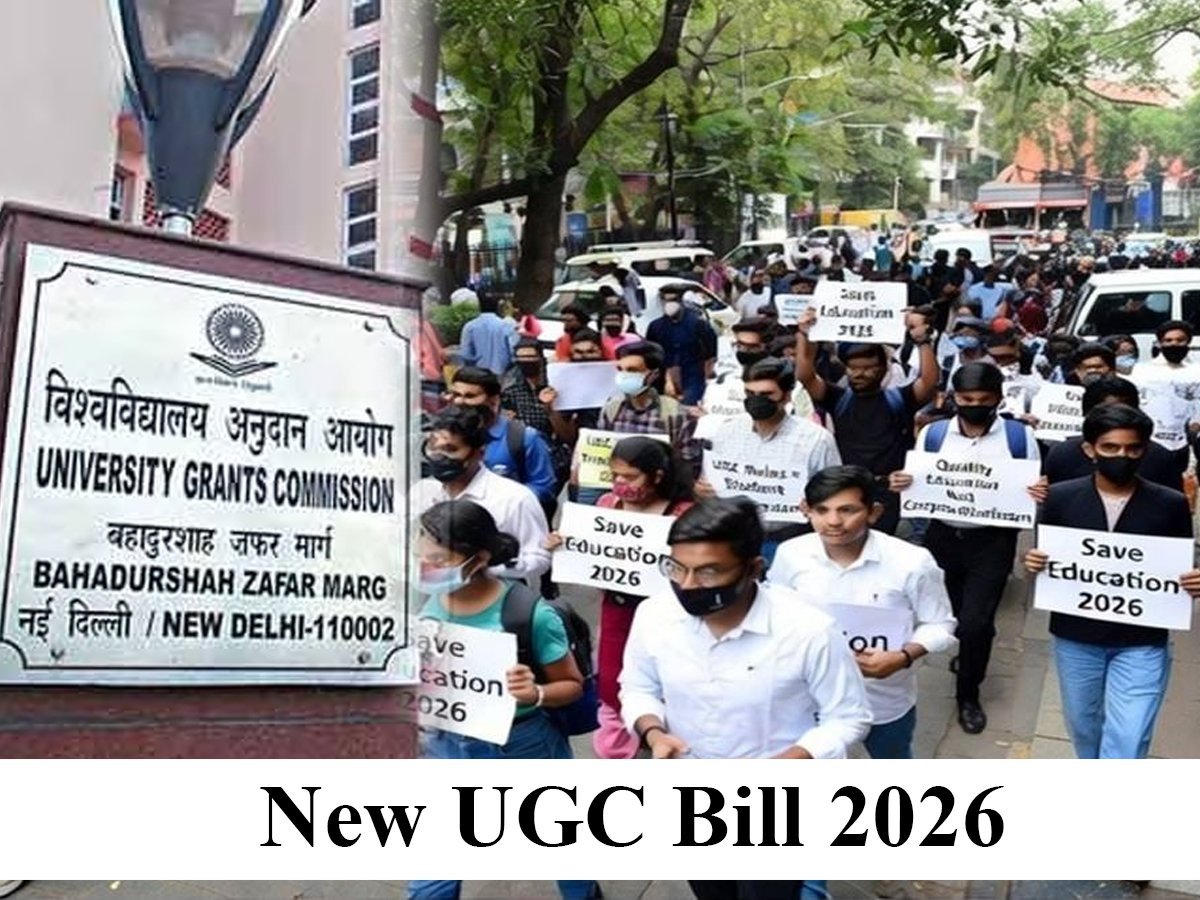
New UGC Bill 2026, The University Grants Commission (UGC) has introduced the Promotion of Equity in Higher Education Institutions Regulations, 2026, and it has stirred intense debate across campuses in India. While the regulations aim to curb discrimination, safeguard students, and foster inclusive academic environments, they have also sparked widespread protests, political criticism, resignations, and even legal challenges in the Supreme Court.
At first glance, the intention seems straightforward — ensure fairness and dignity for all students. However, in practice, the new “equity rules” have become a flashpoint.
These changes form a core part of the broader UGC Regulations aimed at promoting equity in higher education institutions across India.
So, what exactly do these new regulations involve?
Why has the inclusion of Other Backward Classes (OBCs) become such a sensitive issue?
And how are colleges expected to enforce these changes without escalating campus conflicts?
Let’s explore the issue step by step.
What Is the New UGC Bill 2026 All About?
The UGC Regulations, 2026 replace the earlier 2012 anti-discrimination guidelines with a much stronger and legally binding framework.
Unlike the old advisory system, these new rules are mandatory and enforceable for every institution under the UGC.
In simple language, the regulations:
-
Broaden the definition of discrimination
-
Hold institutions legally accountable for preventing and addressing bias
-
Introduce strict penalties for failure to comply
The primary objective is clear — eliminate unfair practices in higher education and ensure a safe and respectful environment for students from all backgrounds.
Why Are These UGC Rules So Controversial?
The controversy mainly centres around who is covered under protection and how complaints will be handled.
Two major points have drawn strong reactions:
-
The explicit inclusion of OBCs along with Scheduled Castes (SCs) and Scheduled Tribes (STs) as protected groups
-
The broad and flexible definition of discrimination
Critics argue that the wide scope may lead to misuse, where everyday disagreements or academic decisions could be labelled as discriminatory acts. They fear this may disrupt academic functioning and worsen campus relations.
Why Did the UGC Introduce These Regulations Now?
According to the UGC, the move is a response to rising complaints of caste-based discrimination over recent years. Reports indicate that such complaints have more than doubled within about five years.
Additionally:
-
Courts have repeatedly directed authorities to strengthen grievance redressal systems
-
High-profile cases involving student suicides, bias allegations, and harassment have kept discrimination in the spotlight
UGC officials state that the 2026 framework aims to address serious gaps in the previous system and align with judicial expectations.
Expanded Meaning of Discrimination Under the New Rules
The New UGC Bill 2026 significantly widens what qualifies as discrimination.
It now includes unfair treatment based on:
-
Caste
-
Religion
-
Gender
-
Disability
-
Race
-
Place of birth
-
Other similar factors affecting dignity and equality
It recognises both:
-
Direct discrimination – open and obvious acts of bias
-
Indirect discrimination – neutral-looking practices that disproportionately harm certain groups
The most debated change is the formal inclusion of OBCs alongside SCs and STs as protected categories.
Supporters see this as acknowledging real social discrimination faced by OBC communities.
Critics believe it alters long-standing affirmative action frameworks.
Why the OBC Inclusion Has Triggered Major Opposition
The inclusion of OBCs has become the central point of resistance.
Key concerns include:
-
Some groups argue that SC/ST communities have historically faced deeper systemic exclusion, and merging them with OBC protections could blur crucial distinctions.
-
Others fear it may change perceptions around reservation policies and grievance mechanisms.
Protesters warn of:
-
“Reverse discrimination” against general category students
-
Rising identity-based politics on campuses
-
Confusion over how existing reservation systems align with the new equity framework
This opposition has escalated to a Public Interest Litigation (PIL) in the Supreme Court, seeking judicial scrutiny of the regulations.
Public Reaction: Protests, Legal Challenges, and Resignations
The impact has been swift and intense:
-
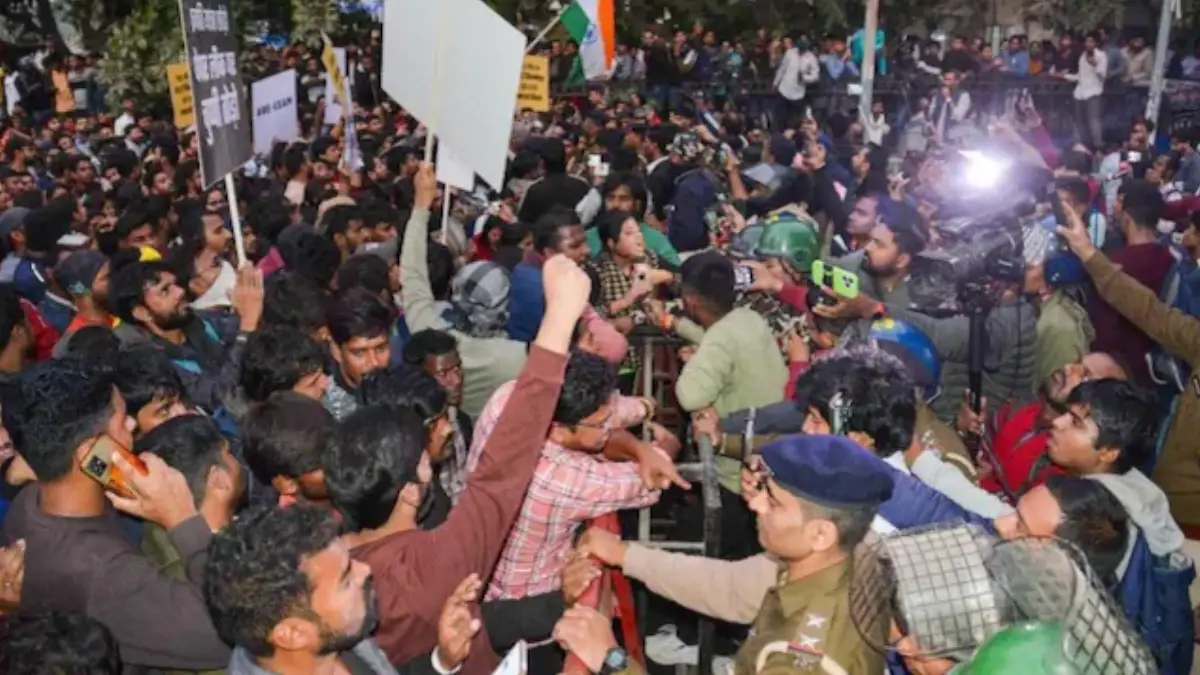
Student demonstrations across several states calling for amendments or withdrawal
-
Political criticism, with leaders labelling the rules divisive and poorly framed
-
Resignations by officials who have described the regulations as a “black law”
Critics emphasise not only the protected categories but also the ambiguous wording, which they fear may be exploited for personal or political agendas.
Who Is the Ombudsperson Under the New System?
A major structural change is the introduction of an Ombudsperson — an independent authority overseeing appeals.
The Ombudsperson:
-
Serves as a neutral adjudicator
-
Reviews cases where internal committees are alleged to have failed
-
Adds an external layer of transparency and accountability
This means students and staff are no longer limited to institutional mechanisms alone.
Mandatory Structures: Equal Opportunity Centres and Equity Committees
Under the UGC Regulations 2026, every institution must establish:
Equal Opportunity Centre (EOC)
Equity Committee under the EOC
Their responsibilities include:
-
Encouraging inclusion and awareness
-
Assisting students from disadvantaged groups
-
Receiving and processing discrimination complaints
The Equity Committee must represent:
-
SC communities
-
ST communities
-
OBC groups
-
Women
-
Persons with disabilities
The committee must:
-
Meet at least twice annually
-
Produce bi-annual reports on cases and preventive steps
Equity is now a formal, monitored responsibility, not an informal effort.
Additional Monitoring Measures: Helplines and Equity Squads
Institutions are also required to implement:
-
24/7 helplines for complaint reporting
-
Equity Squads or Equity Ambassadors
These teams are meant to:
-
Monitor sensitive areas
-
Identify early signs of harassment or exclusion
-
Prevent escalation of conflicts
They act as the frontline monitoring system for campus equity.
Strict Accountability and Penalties for Institutions
Compliance is mandatory.
Under the New UGC Bill 2026:
-
Vice-chancellors, directors, and principals are directly responsible
-
Annual compliance reports must be submitted to UGC
Penalties for non-compliance include:
-
Loss of UGC funding and schemes
-
Suspension of academic programmes
-
Removal from the recognised institutions list
In short, ignoring these rules could threaten an institution’s very existence.
Why Many Support the New Equity Framework
Several education activists, civil society groups, and student organisations support the reforms.
Their main arguments:
-
Discrimination has long plagued Indian campuses
-
Earlier systems lacked enforcement power
-
The new framework finally provides real authority to act
They view the regulations as a necessary step toward dignity, safety, and fairness.
What Lies Ahead for Colleges and Students?
All University Grants Commission-recognised institutions must now:
-
Establish Equal Opportunity Centres
-
Form Equity Committees
-
Launch helplines and monitoring teams
-
Conduct training and awareness programmes
-
Submit regular compliance reports
However, success depends on:
-
Fair interpretation of “discrimination”
-
Protection of due process for all parties
-
Balancing equity with academic freedom
The Supreme Court’s decision on the PIL will likely influence future adjustments.
Similar Articles: Nationwide Bank Strike Today: Are Banks Open or Closed Across India?
Conclusion
The New UGC Bill 2026 represents a crucial shift in Indian higher education governance.
On one hand, it aims to eliminate long-standing discrimination and create safer campuses.
On the other, concerns about overreach, unclear definitions, and social tension remain strong.
Whether these regulations become a transformative reform or a new source of conflict will depend on thoughtful, fair implementation.
One reality is certain:
Equity in higher education is now legally enforceable — and institutions can no longer ignore discrimination issues.