

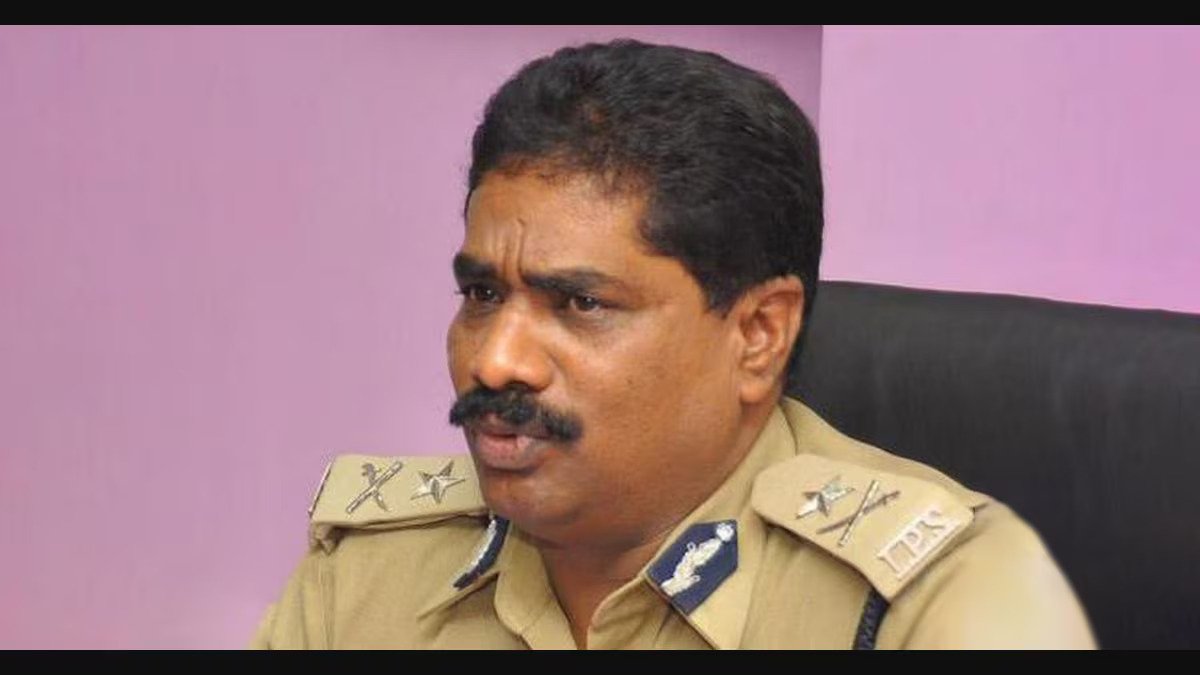
Karnataka DGP K Ramachandra Rao, Karnataka has once again found itself grappling with a major controversy, this time involving one of the highest-ranking officers in the state police. Director General of Police (Civil Rights Enforcement) Dr. K. Ramachandra Rao has been placed under suspension after alleged obscene videos and audio recordings, purportedly showing him in compromising situations with women, began circulating widely on social media.
For a state that often prides itself on strong governance and professional law enforcement, the episode has raised uncomfortable questions. How does a serving DGP land in such a scandal? What do service rules mandate? And what lies ahead for both the officer and the government?
The K Ramachandra Rao obscene video controversy has now become a defining flashpoint, raising serious concerns about accountability, ethical conduct, and credibility at the highest levels of the Karnataka police administration.
Swift Action After Viral Clips Surface
The Karnataka government acted quickly once the controversial videos and audio clips started doing the rounds online on Monday, January 19, 2026. By late evening, an official order was issued placing Dr. Rao under immediate suspension.
The suspension order states that the officer allegedly behaved in an “obscene manner,” describing such conduct as “unbecoming of a government servant” and noting that it had caused “embarrassment to the Government.” In simple terms, the administration made it clear that if the allegations are substantiated, the conduct shown in the clips crosses a serious red line—especially for someone of DGP rank.
What The Alleged Videos And Audio Clips Reveal
According to officials and media reports, several video clips surfaced that appear to show Dr. Rao in compromising situations with women, reportedly inside his official office and while wearing his police uniform. Some visuals allegedly show intimate proximity, while accompanying audio recordings are said to contain sleazy and inappropriate conversations with women.
At this stage, whether the material is genuine, manipulated, or completely fabricated is exactly what the inquiry aims to determine. However, in today’s digital age, where a single clip can spark outrage within minutes, the optics alone were enough to force immediate administrative action.
Rules Cited: What Service Law Demands
The suspension order points to a prima facie violation of Rule 3 of the All India Services (Conduct) Rules, 1968, which governs the behavior of officers from services such as the Indian Police Service (IPS) and Indian Administrative Service (IAS).
In straightforward terms, Rule 3 requires officers to:
Maintain absolute integrity
Show devotion to duty
Avoid any conduct unbecoming of a member of the service
The government has invoked Rule 3(1)(a) of the All India Services (Discipline & Appeal) Rules, 1969, which empowers it to place an officer under suspension while a detailed inquiry is conducted. Importantly, this step does not amount to a final verdict, but serves as a safeguard while facts are verified.
Conditions And Restrictions During Suspension
A suspension at this level is far from symbolic. The order imposes clear restrictions on the officer:
Dr. Rao cannot leave headquarters without prior written permission from the state government.
He will receive only a subsistence allowance, not his full salary, as per service norms.
Think of it like being benched during a decisive match—you are still technically part of the team, but sidelined, closely watched, and unable to operate freely.
Rao Denies Charges, Calls Clips ‘Fabricated’
Karnataka DGP K Ramachandra Rao, Dr. Rao has categorically denied the allegations. Speaking to the media, he described the videos as “false” and “fabricated,” claiming he had no knowledge of their source.
He hinted that in the current digital era, “anything can happen,” suggesting the possibility of doctored or manipulated content. When asked whether the clips could be old, he reportedly said they might date back around eight years, possibly from his posting in Belagavi.
As the controversy intensified, Dr. Rao reportedly rushed to the residence of Karnataka Home Minister G. Parameshwara, seemingly to present his side. However, the meeting did not take place, underscoring the political sensitivity and tense atmosphere surrounding the issue.
Chief Minister’s Stand: ‘No One Is Above The Law’
Karnataka Chief Minister Siddaramaiah responded firmly when questioned about the viral clips. He confirmed that he had been briefed on the matter and assured that disciplinary action would follow if the allegations were proven.
His message was unambiguous and politically significant: “No one is above the law, irrespective of how senior the officer is.” For a government constantly under public and opposition scrutiny, this stance reflects an attempt to project zero tolerance toward alleged misconduct at the highest levels.
Opposition Reaction: ‘A Blot On The Police Force’
The opposition was quick to react. Senior BJP MLA and former minister S. Suresh Kumar termed the alleged acts “disgraceful” and called them an “inexcusable crime.”
He argued that if the allegations are confirmed, Dr. Rao’s behavior would leave a “blot on the entire police department.” An officer of DGP rank, allegedly seen in uniform and inside an official office, he said, risks eroding public faith in the police and breeding distrust.
In political terms, perception matters, and this episode has handed the opposition a powerful narrative against the ruling government’s handling of senior officials.
Earlier Controversy: Gold Smuggling Case Lingers
This is not the first time Dr. Rao’s name has surfaced in controversy. He previously faced allegations of misusing his position to help his stepdaughter, actor Ranya Rao, who was arrest in a major gold smuggling case.
It was allege that he used official protocol and police escorts to help her bypass customs and law enforcement checks. Following the uproar, the government place him on compulsory leave in March last year, when he was serving as Chairman and Managing Director of the Karnataka State Police Housing and Infrastructure Development Corporation.
After an internal probe, he was reinstate and later appointed as DGP, Directorate of Civil Rights Enforcement in August—a role carrying immense moral and ethical responsibility. The latest controversy has revive questions about whether his return to such a sensitive post was premature.
Why This Case Matters More Than Usual
The Directorate of Civil Rights Enforcement plays a crucial role in enforcing laws related to civil rights, preventing atrocities against marginalized communities, and addressing caste- and community-based discrimination.
When the head of such a body is accuse of obscene conduct inside his own office, the impact goes beyond personal reputation. It becomes symbolic, threatening to erode trust among vulnerable communities who depend on the state for justice and protection.
It is like discovering cracks in the foundation of a building meant to shelter the most vulnerable.
Viral Scandals, Technology, And Due Process
Karnataka DGP K Ramachandra Rao, Cases like this highlight the delicate balance between public outrage and due process. Viral clips often shape opinions long before forensic experts authenticate them. With advanced editing tools and AI-driven deepfake technology, distinguishing truth from fabrication has become increasingly complex.
That is why the government opted for suspension pending inquiry rather than immediate dismissal. This allows the state to:
Signal seriousness and accountability
Prevent interference with the investigation
Ensure formal verification of evidence
Still, once such allegations enter the public domain, reputational damage can be lasting, regardless of the final outcome.
What Lies Ahead: The Inquiry And Possible Outcomes
In the coming weeks, a formal disciplinary inquiry is expect to examine:
The authenticity of the videos and audio clips
The circumstances under which they were record or create
Whether Dr. Rao’s actions violated service rules or criminal law
If the allegations are prov, consequences could range from extend suspension and denial of increments to compulsory retirement or dismissal. If he is clear, the government will face a different challenge—restoring the credibility of a senior officer already judge in the court of public opinion.
Either way, the case will serve as a critical test of Karnataka’s commitment to equal accountability, regardless of rank or influence.
Similar Articles: Amit Shah Bills Rock Parliament: J&K Twist, Gaming Crackdown, and Opposition
Conclusion
Karnataka DGP K Ramachandra Rao, The suspension of DGP K. Ramachandra Rao is more than a sensational headline. It is a litmus test for the system itself—its internal safeguards, political resolve, and ethical standards at the highest levels of law enforcement.
For citizens, the episode underscores how fragile trust in institutions can be. A few viral minutes, whether real or fake, can undo decades of reputation. For the government, it is a reminder that appointments to sensitive positions must consider both competence and credibility. And for the police force, it is a stark lesson that power, uniform, and rank demand restraint, responsibility, and integrity—always, everywhere, and especially in the digital age.